
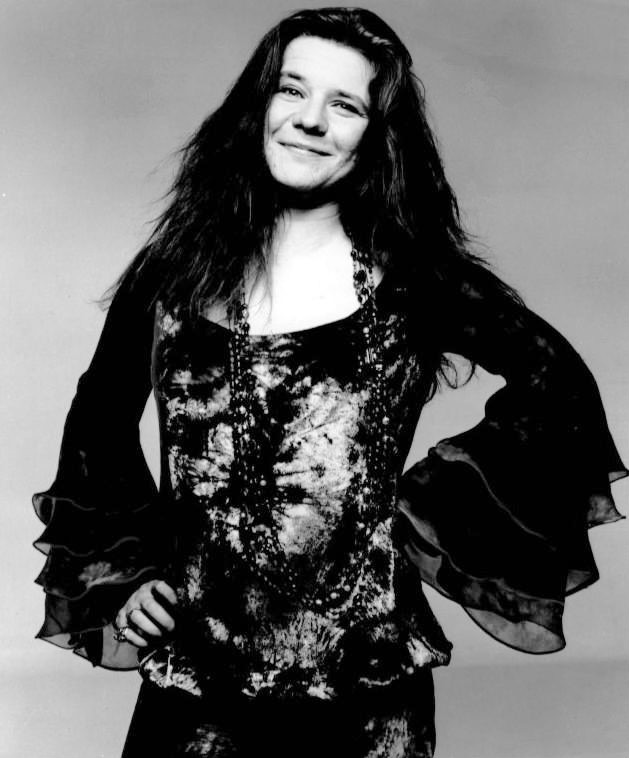
Janis Joplin, often hailed as the “Queen of Rock and Roll,” is an iconic figure in American music history. Her powerful voice, electric stage presence, and unique blend of rock, blues, and soul left an indelible mark on the music world, making her one of the most influential artists of the 1960s. Despite her tragic and untimely death at the age of 27, Joplin’s legacy continues to inspire generations of musicians and fans. This article delves deep into the life of Janis Joplin, exploring her rise to fame, personal struggles, and the impact she left on the world of music.
Early Life and Struggles
Janis Lyn Joplin was born on January 19, 1943, in Port Arthur, Texas, a small industrial town. She was the eldest daughter of Dorothy Bonita East, a registrar at a business college, and Seth Ward Joplin, an engineer at Texaco. From a young age, Janis stood out for her rebellious spirit and her deep passion for music, a passion that was not always supported by her conservative surroundings.
As a child, Janis was described as a bright and lively girl, but as she entered adolescence, she became increasingly aware of her appearance, which she felt did not conform to societal beauty standards. She struggled with acne, weight issues, and a general feeling of being an outsider. These early experiences of rejection and loneliness would later influence her music, infusing it with raw emotion and vulnerability.
By the time she was in high school, Janis had already developed a love for blues music, particularly the works of Bessie Smith, Ma Rainey, and Lead Belly. This passion for blues set her apart from her peers and led her to pursue a different path. At 17, Joplin left Port Arthur, seeking a life beyond the confines of her small-town upbringing. She briefly attended Lamar State College of Technology in Beaumont, Texas, and later the University of Texas at Austin, but her true education came from the vibrant and eclectic music scenes she immersed herself in.
The Early Years of Music
In the early 1960s, Joplin began performing in small clubs and coffeehouses in Texas, where she honed her craft and began to develop her signature style—a blend of rock, blues, and folk, delivered with an intensity that captivated audiences. During this period, she also struggled with substance abuse, a problem that would plague her throughout her life.
In 1963, Joplin made her first trip to San Francisco, where she became involved with the burgeoning counterculture movement. The city’s vibrant music scene, combined with its open acceptance of alternative lifestyles, provided a fertile ground for her artistic development. She quickly became part of the local beatnik and hippie scenes, where she found a sense of belonging that had eluded her in Texas.
However, her time in San Francisco was also marked by increased drug and alcohol use. The pressures of trying to break into the music industry, combined with her deep-seated insecurities, led her to rely heavily on substances like alcohol and amphetamines. Concerned friends eventually persuaded her to return to Port Arthur to recover, but the lure of music was too strong to keep her away for long.
The Rise to Fame: Big Brother and the Holding Company
In 1966, Joplin received a life-changing opportunity when her friend Chet Helms, a promoter and manager, invited her to join Big Brother and the Holding Company, a San Francisco-based band that was gaining traction in the local music scene. The band, known for its psychedelic rock sound, was the perfect vehicle for Joplin’s powerful voice and stage presence.
Joplin’s addition to the band was transformative. Her raw, emotional delivery and ability to convey deep feeling through her music quickly made her the focal point of the group. In 1967, the band performed at the Monterey Pop Festival, where Joplin’s rendition of Big Mama Thornton’s “Ball and Chain” stunned the audience and catapulted her to national fame. The performance was a turning point in her career, establishing her as one of the leading voices of the counterculture movement.
Later that year, Big Brother and the Holding Company released their debut album, Big Brother and the Holding Company, but it was their second album, Cheap Thrills (1968), that truly cemented their place in rock history. The album, which featured hits like “Piece of My Heart” and “Summertime,” showcased Joplin’s incredible range and emotional depth. It became a massive success, reaching the number one spot on the Billboard charts and turning Joplin into a household name.
The Kozmic Blues Period
Despite the success, Janis Joplin was not entirely satisfied with her role in Big Brother and the Holding Company. She felt constrained by the band’s limitations and longed to explore different musical styles. In 1968, she left the group to pursue a solo career, forming the Kozmic Blues Band.
The Kozmic Blues Band was a departure from the psychedelic rock of Big Brother and the Holding Company. Influenced by soul and blues, the band’s sound was more mature and introspective, reflecting Joplin’s growth as an artist. In 1969, they released the album I Got Dem Ol’ Kozmic Blues Again Mama!, which included tracks like “Try (Just a Little Bit Harder)” and “Maybe.”
While the album received mixed reviews, with some critics praising Joplin’s vocal performances and others lamenting the absence of the raw energy that characterized her work with Big Brother, it nonetheless solidified her reputation as a powerful and versatile singer. Songs like “Kozmic Blues” revealed a more vulnerable side of Joplin, as she grappled with feelings of loneliness and the pressures of fame.
The Final Chapter: Full Tilt Boogie Band and Pearl
By 1970, Joplin had dissolved the Kozmic Blues Band and formed a new group, the Full Tilt Boogie Band, which she described as her best band yet. With this group, Joplin recorded what would be her final and most acclaimed album, Pearl. Released posthumously in 1971, Pearl is considered a masterpiece and includes some of her most iconic songs, such as “Me and Bobby McGee,” “Cry Baby,” and “Mercedes Benz.”
Pearl was a commercial and critical success, showcasing Joplin at the height of her powers. Her voice, now fully matured, displayed an emotional depth and technical skill that set her apart from her contemporaries. The album’s production, by Paul Rothchild (who also produced for The Doors), was polished and professional, allowing Joplin’s voice to shine without losing the raw edge that had defined her earlier work.
However, even as she reached new artistic heights, Joplin’s personal life was unraveling. Her struggles with addiction had intensified, and she often seemed on the brink of collapse. Despite attempts to get clean, including a period of sobriety during the recording of Pearl, Joplin’s demons ultimately proved too powerful.
On October 4, 1970, Janis Joplin was found dead in her hotel room at the Landmark Motor Hotel in Hollywood. She had died of a heroin overdose, just weeks after finishing the recording of Pearl. Joplin was 27 years old, becoming one of the earliest members of the so-called “27 Club,” a group of iconic musicians who died at the age of 27, including Jimi Hendrix and Jim Morrison.
Legacy and Impact
Janis Joplin’s influence on music is immeasurable. Her powerful, soulful voice and fearless performances helped to redefine what it meant to be a female rock star in a male-dominated industry. She broke down barriers with her unapologetic approach to her art and her life, inspiring countless musicians who came after her.
Joplin’s music continues to resonate with audiences around the world. Songs like “Piece of My Heart” and “Me and Bobby McGee” remain staples of classic rock radio, and her albums continue to sell decades after her death. Her life story, marked by incredible talent, fierce independence, and tragic vulnerability, has been the subject of numerous biographies, documentaries, and films.
In many ways, Janis Joplin’s legacy is defined not just by her music but by the way she lived her life. She was a pioneer, a trailblazer who refused to conform to societal expectations, whether in her music, her appearance, or her lifestyle. Her raw honesty and emotional intensity set her apart from her peers, making her one of the most beloved and enduring figures in the history of rock music.
Conclusion
Janis Joplin’s life was a whirlwind of passion, pain, and extraordinary talent. Her journey from a small-town girl in Texas to one of the most iconic voices in rock and roll is a testament to her unwavering dedication to her craft. Despite the struggles and hardships she faced, Joplin’s music continues to inspire and move people around the world. Her legacy as the “Queen of Rock and Roll” is secure, and her influence on the music industry is profound. In the end, Janis Joplin was more than just a singer; she was a force of nature, a true original whose impact on music and culture will be felt for generations to come.


