
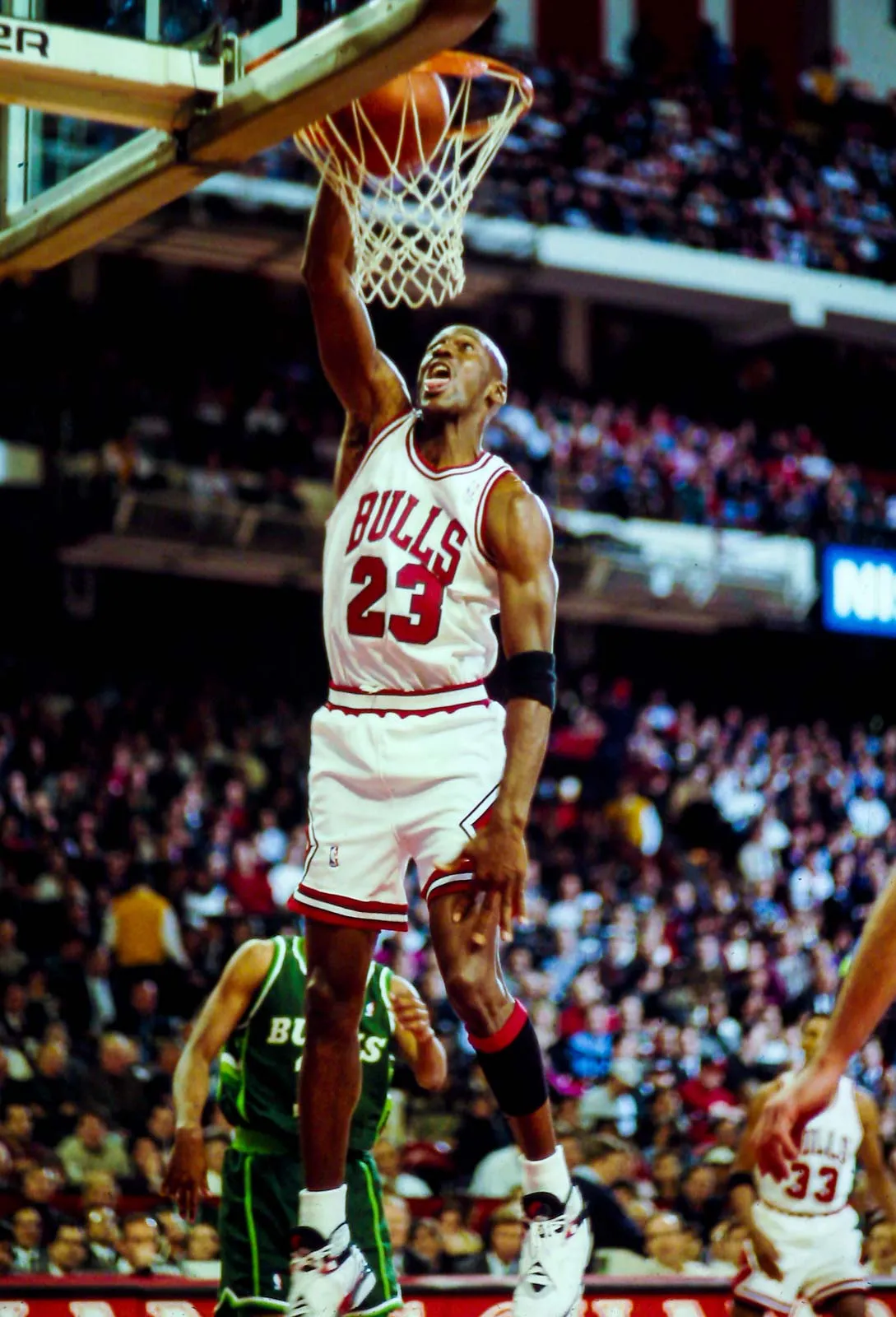
Michael Jordan, often referred to as “His Airness,” is a name that transcends the sport of basketball and has become synonymous with excellence, determination, and global influence. Born Michael Jeffrey Jordan on February 17, 1963, in Brooklyn, New York, he rose from humble beginnings to become one of the most celebrated athletes in the history of sports. This article delves into the life, career, and enduring legacy of Michael Jordan, exploring how he became a global icon and a symbol of success both on and off the basketball court.
Early Life and Influences
Michael Jordan was born to James and Deloris Jordan, a working-class family who soon moved from Brooklyn to Wilmington, North Carolina. His father worked as a mechanic, and his mother was employed at a bank. Growing up in a family that valued hard work and discipline, Jordan was the fourth of five children. He was a shy and introverted child, but his competitive spirit became evident early on.
Jordan’s early exposure to sports was varied. He played baseball, football, and basketball, excelling in each sport, but basketball eventually became his passion. His older brother, Larry, was instrumental in pushing him to improve his game, often challenging him to fierce one-on-one matches. This sibling rivalry fueled Jordan’s drive to succeed and helped shape his relentless work ethic.
High School and College Success
Michael Jordan’s journey to basketball greatness wasn’t without its challenges. As a sophomore at Emsley A. Laney High School in Wilmington, Jordan was famously cut from the varsity basketball team—a decision that only fueled his determination. He spent the next year working tirelessly on his game, growing in both skill and physical stature. By his junior year, Jordan had earned a spot on the varsity team, where he quickly made a name for himself as a formidable player.
Jordan’s high school success earned him a scholarship to the University of North Carolina at Chapel Hill, where he played under legendary coach Dean Smith. As a freshman in 1982, Jordan hit the game-winning shot in the NCAA Championship game against Georgetown, propelling him into the national spotlight. His college career was marked by numerous accolades, including being named the NCAA College Player of the Year in 1984.
The NBA Draft and Early Career
In 1984, Michael Jordan declared for the NBA draft and was selected third overall by the Chicago Bulls. Although he was not the first pick, it quickly became evident that the Bulls had secured a generational talent. Jordan made an immediate impact in the NBA, winning the Rookie of the Year award and earning a spot on the All-Star team in his first season.
Jordan’s early years with the Bulls were marked by individual brilliance, but the team struggled to find success in the playoffs. Nevertheless, Jordan’s scoring prowess was unmatched—he regularly led the league in points, and his electrifying dunks and clutch performances earned him the nickname “Air Jordan.” By his third season, Jordan had established himself as one of the league’s top players, setting numerous records and captivating fans with his high-flying style of play.
Building a Dynasty: The Chicago Bulls
The late 1980s and early 1990s saw the Chicago Bulls, led by Michael Jordan, evolve from a struggling franchise into an NBA powerhouse. The turning point came with the arrival of head coach Phil Jackson in 1989, whose implementation of the “Triangle Offense” allowed Jordan and his teammates to flourish. With a solid supporting cast that included Scottie Pippen, Horace Grant, and later Dennis Rodman, the Bulls began their ascent to the top of the NBA.
Jordan’s leadership and extraordinary performances propelled the Bulls to their first NBA championship in 1991, defeating Magic Johnson’s Los Angeles Lakers in the Finals. This victory marked the beginning of a dynasty, as the Bulls went on to win three consecutive championships from 1991 to 1993. Jordan was named Finals MVP in each of these championship runs, solidifying his status as the best player in the game.
The First Retirement and Baseball Career
In October 1993, at the peak of his career, Michael Jordan shocked the sports world by announcing his retirement from basketball. The decision was driven by a combination of factors, including the emotional toll of his father’s murder earlier that year. James Jordan had been Michael’s closest confidant and biggest supporter, and his tragic death profoundly affected the superstar.
Seeking a new challenge and to honor his father’s dream, Jordan pursued a career in professional baseball. He signed a minor league contract with the Chicago White Sox and played for their Double-A affiliate, the Birmingham Barons. Although Jordan’s baseball career was met with mixed results, he gained respect for his dedication and work ethic in attempting to succeed in a new sport. His time away from basketball also allowed him to recharge mentally and physically.
The Return: “I’m Back”
In March 1995, Michael Jordan announced his return to the NBA with a simple two-word press release: “I’m back.” The excitement surrounding his return was palpable, and he quickly resumed his role as the Bulls’ leader. While the Bulls did not win the championship in his first season back, Jordan’s return set the stage for one of the most dominant periods in NBA history.
From 1996 to 1998, the Chicago Bulls won three more consecutive championships, completing a second “three-peat” and bringing Jordan’s total to six NBA titles. His iconic performance in Game 6 of the 1998 NBA Finals against the Utah Jazz, where he scored the game-winning shot, is often cited as the defining moment of his career. Jordan was again named Finals MVP for each of these championships, further cementing his legacy as the greatest basketball player of all time.
Off the Court: Branding and Business Ventures
Michael Jordan’s influence extended far beyond the basketball court. He was a pioneer in athlete branding, transforming himself into a global icon through strategic partnerships and endorsements. His collaboration with Nike led to the creation of the Air Jordan sneaker line, which revolutionized the athletic footwear industry and remains one of the most successful and recognizable brands in the world.
Jordan’s business acumen was not limited to endorsements. He ventured into various business opportunities, including ownership stakes in professional sports teams. In 2006, Jordan became a minority owner of the Charlotte Bobcats (now the Charlotte Hornets) and took on a more significant role as the team’s head of basketball operations. In 2010, he became the majority owner of the franchise, making him the first former NBA player to become the majority owner of an NBA team.
Legacy and Impact on the Game
Michael Jordan’s impact on basketball and sports culture is immeasurable. He redefined what it means to be a superstar athlete, setting new standards for performance, competitiveness, and marketability. Jordan’s influence can be seen in the generations of players who followed him, many of whom have cited him as their primary inspiration for pursuing a career in basketball.
Jordan’s competitive drive, often referred to as the “Mamba mentality” by those who followed in his footsteps, was legendary. He was known for his intense work ethic, his refusal to accept anything less than excellence, and his ability to elevate the performance of those around him. These traits not only made him a dominant player but also a role model for aspiring athletes worldwide.
In addition to his six NBA championships and numerous individual accolades, Jordan’s contributions to the game include his role in popularizing basketball globally. The 1992 U.S. Olympic basketball team, known as the “Dream Team,” featured Jordan and other NBA superstars. Their performance in Barcelona helped elevate the sport’s profile around the world, leading to a surge in the popularity of basketball internationally.
The Second Retirement and Brief Comeback
After the Bulls’ sixth championship in 1998, Jordan retired from basketball for a second time. However, his competitive fire had not yet been extinguished. In 2001, at the age of 38, Jordan returned to the NBA, this time with the Washington Wizards, where he played two final seasons. While his physical abilities had diminished with age, Jordan still displayed flashes of brilliance and averaged over 20 points per game during his tenure with the Wizards.
Jordan’s final retirement in 2003 marked the end of an era. He left the game with an unparalleled legacy, having achieved everything possible on the court and having transformed the NBA into a global phenomenon. His career totals include five regular-season MVP awards, ten scoring titles, fourteen All-Star selections, and countless other honors that underscore his dominance in the sport.
Cultural and Societal Impact
Beyond his achievements in basketball, Michael Jordan has had a profound impact on society and culture. He broke barriers for African American athletes, becoming a symbol of success and perseverance. His influence extends to various fields, including fashion, with the enduring popularity of Air Jordan sneakers, and entertainment, with his starring role in the 1996 film Space Jam.
Jordan’s philanthropic efforts are also noteworthy. Through the Michael Jordan Foundation and other charitable initiatives, he has donated millions of dollars to support education, healthcare, and community development. His commitment to giving back reflects his understanding of the platform he has been given and his desire to use it for positive change.
The Ongoing Influence of Michael Jordan
Even after his retirement, Michael Jordan’s influence continues to be felt in the world of sports and beyond. His brand, including the Air Jordan line and his ownership of the Charlotte Hornets, remains a significant force in the industry. Additionally, Jordan has continued to serve as a mentor and inspiration to many current NBA players who grew up idolizing him.
Jordan’s story has been the subject of numerous books, documentaries, and films, including the critically acclaimed ESPN documentary series The Last Dance, which chronicles his final season with the Chicago Bulls. The series rekindled interest in Jordan’s career and introduced his legacy to a new generation of fans.
Conclusion: The Enduring Legacy of Michael Jordan
Michael Jordan’s life and career are a testament to the power of talent, hard work, and determination. He not only dominated the sport of basketball but also transcended it, becoming a global icon whose influence extends far beyond the court. Jordan’s legacy is one of excellence, perseverance, and a relentless pursuit of greatness.
As we reflect on Michael Jordan’s impact, it is clear that his contributions to basketball, culture, and society will continue to be celebrated for generations to come. He remains the standard by which all other athletes are measured, and his story serves as an inspiration to anyone who dreams of achieving greatness.


