
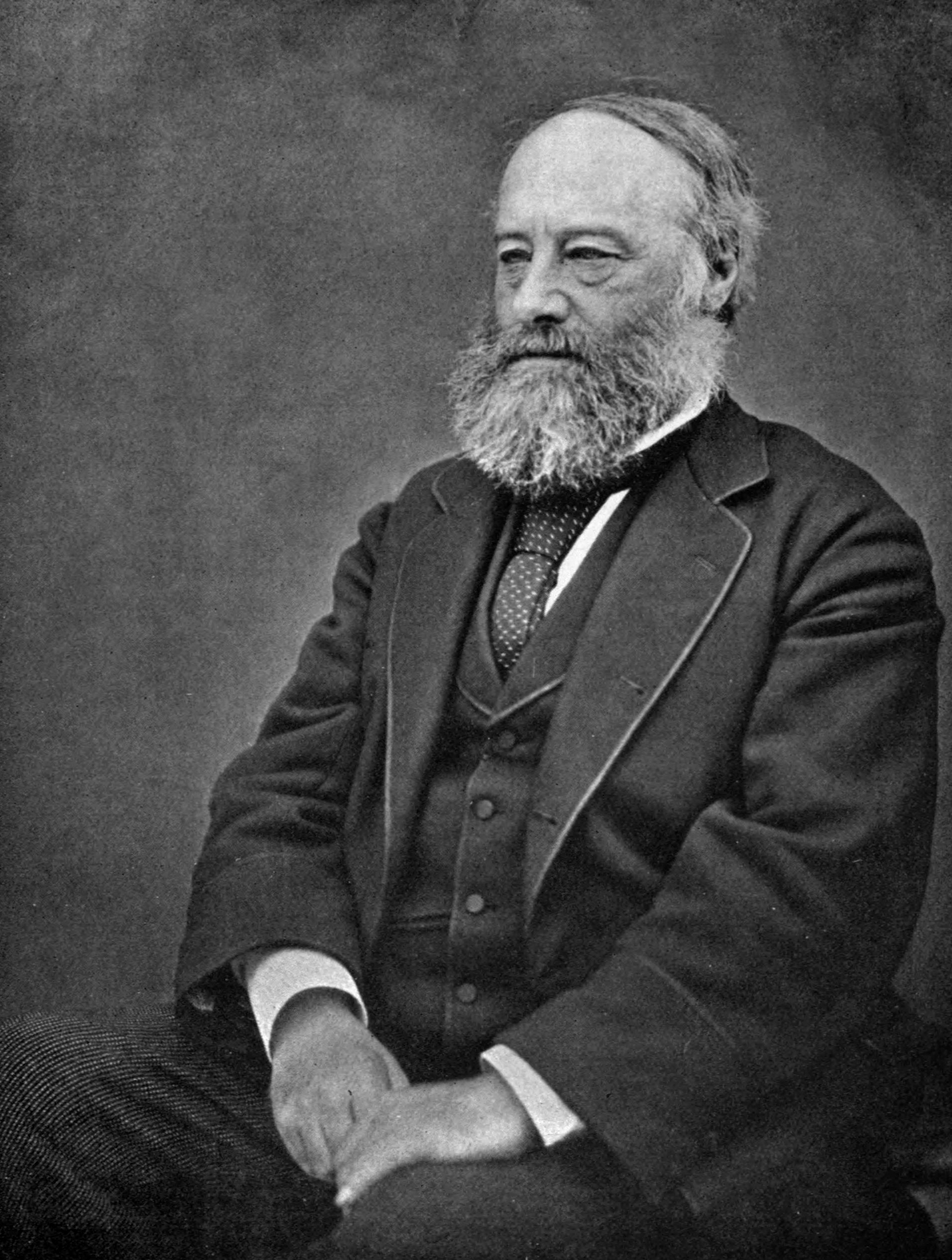
Early Life and Background
James Prescott Joule, born on December 24, 1818, in Salford, near Manchester, England, was a physicist whose pioneering work laid the foundations for the field of thermodynamics. Joule was the second of five children born to Benjamin Joule, a wealthy brewer, and Alice Prescott. Despite his frail health and delicate constitution, which limited his formal education, Joule displayed an early interest in science, particularly in the emerging fields of electromagnetism and thermodynamics.
Joule was primarily educated at home by private tutors, including the renowned scientist John Dalton, who was a family friend. Dalton’s influence on Joule was profound, sparking a lifelong passion for experimental physics. Although Joule briefly attended lectures at the University of Manchester (then Manchester College), his education was largely self-directed. His early work, conducted in a makeshift laboratory at home, focused on the relationship between electricity and heat, areas that would dominate his scientific endeavors.
Early Scientific Work and Discovery of Joule’s Law
Joule’s early experiments revolved around the efficiency of electric motors, which were a new and exciting technology at the time. In 1839, he began studying the conversion of electrical energy into heat, leading to one of his most significant discoveries. Joule found that the heat produced by an electrical conductor was proportional to the square of the current passing through it and the resistance of the conductor. This relationship, now known as Joule’s Law, was a groundbreaking discovery in the field of electricity and thermodynamics.
In 1840, Joule published a paper titled “On the Production of Heat by Voltaic Electricity,” in which he detailed his findings. He demonstrated that the amount of heat generated by a current flowing through a conductor was directly proportional to the square of the current and the resistance of the conductor. This work not only established a fundamental principle of electrical heating but also laid the groundwork for the later development of the concept of energy conservation.
The Mechanical Equivalent of Heat
Joule’s most famous contribution to science came from his work on the mechanical equivalent of heat, a concept that played a crucial role in the development of the first law of thermodynamics. Through a series of meticulous experiments, Joule sought to quantify the relationship between mechanical work and heat. He hypothesized that heat was not a substance, as was commonly believed at the time, but a form of energy that could be converted from one form to another.
In one of his most famous experiments, conducted in 1845, Joule used a device known as the “Joule apparatus” or “Joule’s paddle-wheel experiment.” The apparatus consisted of a paddle wheel submerged in water, connected to a pair of falling weights via a system of pulleys. As the weights descended, they caused the paddle wheel to rotate, thereby stirring the water. Joule carefully measured the temperature increase in the water, which he attributed to the mechanical work done by the falling weights. From this experiment, Joule calculated the mechanical equivalent of heat, establishing that a specific amount of mechanical work could generate a corresponding amount of heat.
Joule’s determination that approximately 4.41 joules of work were required to raise the temperature of one gram of water by one degree Celsius was a significant milestone. This finding provided strong evidence for the principle of energy conservation and directly contradicted the caloric theory of heat, which treated heat as a fluid rather than a form of energy.
Challenges and Recognition
Despite the groundbreaking nature of his discoveries, Joule’s work was initially met with skepticism by the scientific community. His ideas challenged the established caloric theory and proposed a new way of understanding energy, which was not immediately accepted. Many of Joule’s early papers, including his work on the mechanical equivalent of heat, were either ignored or dismissed by his contemporaries.
However, Joule’s persistence paid off. In 1847, his work caught the attention of the Scottish physicist William Thomson, later known as Lord Kelvin. Thomson recognized the significance of Joule’s findings and began collaborating with him, helping to refine and promote the ideas that would become the foundation of modern thermodynamics. Their collaboration led to the formulation of the Joule-Thomson effect, which describes the temperature change of a gas when it is allowed to expand without doing external work.
Joule’s contributions to science were eventually recognized by the broader scientific community. In 1850, he was elected a Fellow of the Royal Society, one of the highest honors in British science. The Royal Society also awarded him the prestigious Royal Medal in 1852 and the Copley Medal in 1870, recognizing his profound impact on the understanding of energy and thermodynamics.
Personal Life and Later Years
Despite his professional successes, Joule’s personal life was marked by tragedy. In 1854, he married Amelia Grimes, with whom he had two children. However, Amelia died just seven years later, in 1855, leaving Joule to raise their children alone. The loss of his wife had a profound impact on Joule, who withdrew from public life and focused increasingly on his scientific work.
In his later years, Joule’s health began to decline, partly due to the long hours he spent conducting experiments in less-than-ideal conditions. Nonetheless, he continued to work on various scientific problems, often collaborating with other scientists, including Lord Kelvin. The Joule-Thomson effect, discovered in 1862, was one of the last major contributions he made to science.
By 1872, Joule’s health had deteriorated significantly, and he began to reduce his scientific activities. He spent his final years living in relative seclusion in Sale, Cheshire, where he continued to receive visitors and correspond with other scientists. James Joule passed away on October 11, 1889, at the age of 70. His death marked the end of a remarkable career that had fundamentally changed the way scientists understood energy and its conservation.
Legacy and Historical Impact
James Joule’s legacy is immense. His work laid the foundation for the first law of thermodynamics, which states that energy cannot be created or destroyed, only converted from one form to another. This principle, often referred to as the law of energy conservation, is one of the cornerstones of modern physics and engineering.
The unit of energy, the joule, was named in his honor, a fitting tribute to his contributions to science. One joule is defined as the amount of energy expended when applying a force of one newton over a distance of one meter. This unit is now widely used in physics and engineering to quantify energy, work, and heat.
Joule’s work also had significant implications for the development of technology. His insights into the relationship between electricity, heat, and mechanical work paved the way for the development of more efficient engines, electrical generators, and heating systems. The principles he discovered are still applied today in a wide range of fields, from mechanical engineering to thermodynamics and energy management.
Beyond his scientific achievements, Joule’s story is also one of perseverance and dedication. Despite initial resistance from the scientific community and personal hardships, Joule remained committed to his work, driven by a deep curiosity and a belief in the importance of empirical evidence. His meticulous experiments and careful measurements set new standards for scientific research, emphasizing the importance of precision and reproducibility.
Historical Context and Scientific Paradigm Shift
To fully appreciate the significance of James Joule’s contributions, it is important to consider the historical context in which he worked. The early 19th century was a period of intense scientific exploration and debate, particularly in the fields of chemistry and physics. The dominant theory of heat at the time was the caloric theory, which posited that heat was a fluid that flowed from hot to cold bodies.
Joule’s work challenged this view by demonstrating that heat was not a substance but a form of energy that could be measured and quantified. His experiments provided empirical evidence for the idea that energy could be converted between different forms, laying the groundwork for the broader scientific understanding of energy conservation.
Joule’s findings were part of a larger scientific revolution that included the work of other pioneering scientists, such as Sadi Carnot, Rudolf Clausius, and Hermann von Helmholtz. Together, these scientists helped to establish the principles of thermodynamics, which would become one of the most important branches of physics in the 19th and 20th centuries.
Conclusion
James Joule’s life and work are a testament to the power of curiosity, persistence, and rigorous scientific inquiry. His discoveries fundamentally changed the way we understand energy, heat, and work, and his legacy continues to influence modern science and technology. Joule’s contributions to thermodynamics, particularly his formulation of the mechanical equivalent of heat and the law of energy conservation, remain foundational concepts in physics.
As we continue to explore new frontiers in science and technology, the principles established by Joule and his contemporaries will remain as relevant as ever. His work not only provided critical insights into the nature of energy but also set a standard for scientific experimentation that continues to inspire researchers today.


