
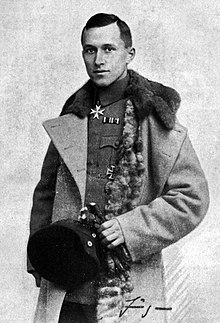
Ernst Jünger, born on March 29, 1895, in Heidelberg, Germany, is one of the most controversial and complex figures in 20th-century literature and philosophy. His life and works provide a window into the tumultuous history of Germany from the late 19th century through the post-World War II era. Jünger’s contributions to literature, his complex relationship with modernity, and his controversial political positions have made him a subject of ongoing debate among scholars, critics, and readers alike. This article delves into the life, fame, and key highlights of Ernst Jünger, offering detailed insights into his extraordinary journey and the nuances of his philosophical and literary legacy.
Early Life and Education
Ernst Jünger was born into a middle-class family in Heidelberg and spent much of his early life in Hanover. His father was a chemist, and his upbringing was comfortable and intellectually stimulating. Jünger developed an early interest in literature, philosophy, and the natural sciences, particularly entomology, which would later play a significant role in his life.
Jünger’s formal education included studies in philosophy and natural sciences at the University of Leipzig. However, his academic pursuits were interrupted by the outbreak of World War I in 1914. At the age of 19, Jünger volunteered for military service, a decision that would profoundly shape his life and worldview.
World War I and “Storm of Steel”
Jünger’s experiences in World War I were central to his development as a writer and thinker. He served on the Western Front, participating in some of the most brutal and intense battles of the war, including the Battle of the Somme and the Battle of Cambrai. Jünger was wounded multiple times and was awarded the Iron Cross for his bravery.
These experiences formed the basis of his first major work, In Stahlgewittern (Storm of Steel), published in 1920. The book is a vivid, almost detached account of the horrors of trench warfare, and it quickly established Jünger as a significant literary voice. Unlike many of his contemporaries, Jünger did not portray war as a futile or nihilistic endeavor. Instead, he presented it as a test of personal and national resolve, a crucible in which the individual could find meaning and transcendence.
Storm of Steel was controversial for its unapologetic glorification of war and its rejection of the pacifist sentiment that was prevalent in post-war Europe. Jünger’s portrayal of war as a path to self-realization and his idealization of the soldier as a new type of heroic figure resonated with the conservative and nationalist currents in Germany at the time. The book has since become a classic of war literature, but its themes continue to provoke debate and criticism.
Interwar Period and Intellectual Development
The years following World War I were a period of significant intellectual and literary activity for Jünger. He became associated with various right-wing and nationalist movements, although his relationship with these ideologies was complex and often ambivalent. Jünger was a critic of the Weimar Republic, which he saw as weak and decadent, and he was skeptical of democracy as a political system. However, he did not align himself with the emerging Nazi movement, which he viewed with disdain.
During the 1920s and 1930s, Jünger wrote extensively on a wide range of topics, including politics, philosophy, and the nature of modernity. One of his most important works from this period is Der Arbeiter (The Worker), published in 1932. In this book, Jünger explores the concept of the “worker” as a new type of human being shaped by the forces of modern technology and industrialization. He argued that the worker represented a new form of human existence that transcended traditional class distinctions and political ideologies.
The Worker is a deeply ambivalent text, reflecting Jünger’s conflicted feelings about modernity. On the one hand, he was fascinated by the power and potential of technology; on the other, he was deeply concerned about its dehumanizing effects. The book’s rejection of individualism and its embrace of a collective, almost mechanistic vision of humanity has been interpreted by some as a precursor to totalitarian ideologies, although Jünger himself remained critical of both fascism and communism.
Relationship with the Nazi Regime
Jünger’s relationship with the Nazi regime is one of the most controversial aspects of his life. Although he shared some ideological common ground with the Nazis, particularly in his nationalism and his critique of democracy, Jünger never joined the Nazi Party and kept a distance from its leadership. He declined an invitation to join the prestigious Prussian Academy of Arts and refused to participate in the Nazi-controlled literary scene.
In 1939, Jünger published Auf den Marmorklippen (On the Marble Cliffs), a novel that is widely interpreted as an allegorical critique of totalitarianism, and by extension, the Nazi regime. The book tells the story of two brothers living in a peaceful, idyllic society that is gradually overtaken by a brutal, fascistic force. The novel was a veiled warning against the dangers of totalitarianism, and it earned Jünger both praise and suspicion from various quarters.
During World War II, Jünger served as an officer in the Wehrmacht, stationed in Paris. Although he continued to write during this period, his works became increasingly introspective and philosophical, focusing on the themes of resistance, inner freedom, and the nature of evil. His wartime diaries, later published as Strahlungen (Radiations), provide a fascinating insight into his thoughts and experiences during the war, including his ambivalent feelings about the Nazi regime and his growing disillusionment with the war.
After the failed assassination attempt on Hitler in July 1944, Jünger’s position became precarious. Although he was not directly involved in the plot, some of his associates were, and he was closely watched by the Gestapo. Despite the danger, Jünger continued to write, and his works from this period reflect his deepening sense of moral and philosophical crisis.
Post-War Life and Later Works
After the war, Jünger was initially viewed with suspicion by the Allied authorities due to his association with the Nazi regime, even though he had never been a member of the party. However, his intellectual reputation and his opposition to totalitarianism helped him avoid serious repercussions.
The post-war period was one of intense literary and philosophical activity for Jünger. He continued to write and publish prolifically, exploring themes such as technology, modernity, and the relationship between humanity and the natural world. One of his most significant works from this period is Eumeswil (1977), a novel set in a dystopian future that reflects Jünger’s concerns about the dehumanizing effects of modern technology and the loss of individual freedom.
Jünger’s later works also reflect his growing interest in mysticism, religion, and the possibilities of transcendence. He became increasingly preoccupied with the idea of the “anarch,” a figure who maintains inner freedom and autonomy in the face of external control and oppression. This concept is explored in works such as Der Waldgang (The Forest Passage) and An der Zeitmauer (At the Time Barrier), in which Jünger reflects on the possibility of spiritual resistance in an increasingly totalitarian world.
Legacy and Controversy
Ernst Jünger lived to the remarkable age of 102, passing away on February 17, 1998, in Wilflingen, Germany. His long life and prolific literary output have left a complex and controversial legacy. Jünger’s works continue to be the subject of intense debate, with some critics viewing him as a proto-fascist and others defending him as a profound thinker who grappled with the deepest questions of modernity.
Jünger’s exploration of war, technology, and modernity has had a significant influence on a wide range of thinkers, from existentialists to postmodernists. His critique of modernity and his ambivalence towards technological progress resonate with contemporary concerns about the impact of technology on society and the environment.
However, Jünger’s legacy is also deeply problematic. His early glorification of war and his nationalist sentiments have led some to view him as a dangerous figure whose ideas contributed to the intellectual climate that made fascism possible. Others, however, argue that Jünger’s later works demonstrate a clear break with his earlier views and reflect a deepening concern with questions of ethics, freedom, and the human condition.
Conclusion
Ernst Jünger remains one of the most enigmatic and controversial figures in 20th-century literature and philosophy. His life and works offer a profound and often unsettling exploration of the modern condition, grappling with the themes of war, technology, and the search for meaning in an increasingly complex and dehumanized world. Whether viewed as a proto-fascist, a critic of modernity, or a visionary thinker, Jünger’s legacy continues to provoke debate and reflection, making him an enduring and significant figure in the history of ideas.


