
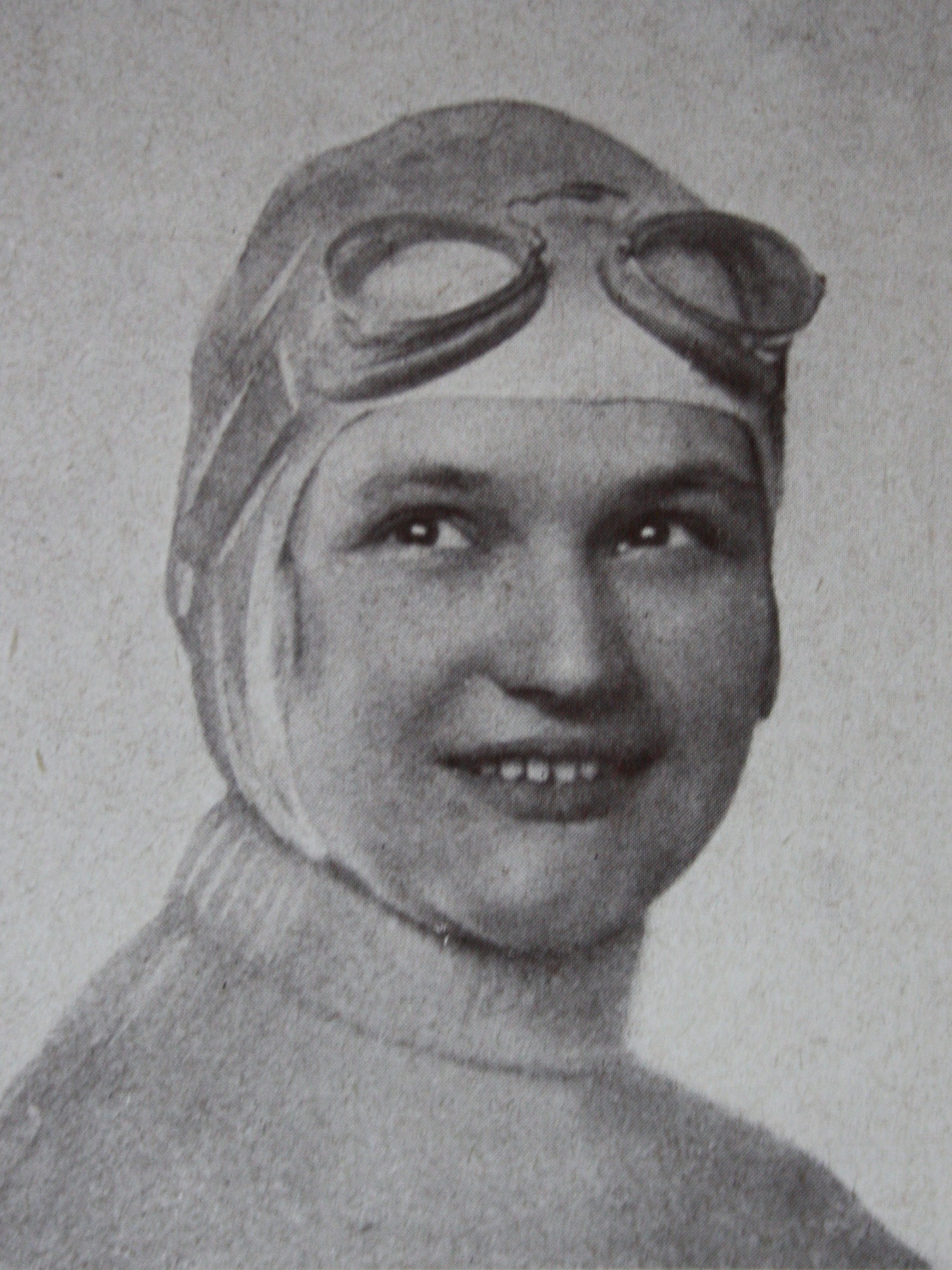
Eliška Junková, born Alžběta Pospíšilová on November 16, 1900, in Olomouc, then part of the Austro-Hungarian Empire, is a name that resonates powerfully in the annals of motorsport history. Known for her unparalleled prowess behind the wheel, she became the first woman to win a race in the prestigious Formula Grand Prix, setting a standard that few women have matched in the world of auto racing. This article delves deep into the life of this extraordinary woman, exploring her age, rise to fame, and the life highlights that defined her legacy.
Early Life and Background
Eliška was the sixth of eight children in a modest family; her father was a blacksmith. She grew up in Moravia, in what is today the Czech Republic, during a time when the region was under the rule of the Austro-Hungarian Empire. Despite the limitations of her environment, Eliška showed an early aptitude for languages and a profound curiosity about the world beyond her immediate surroundings.
Her childhood was marked by the turbulent events of World War I, after which her homeland became part of the newly formed Czechoslovakia. At just sixteen, she secured a job at the local Prague Credit Bank in Olomouc, where her multilingual skills were put to good use. It was here that she met Vincenc “Čeněk” Junek, a young banker several years her senior, who would later become her husband and the catalyst for her entry into the world of motorsport.
Entry into the World of Automobiles
Eliška’s journey into the world of automobiles was largely influenced by her husband, Čeněk Junek, whose passion for cars was infectious. Čeněk had already begun racing, and his enthusiasm soon rubbed off on Eliška. Recognizing that her future was intertwined with this new love, she took clandestine driving lessons in Prague and eventually obtained her driving license, becoming one of the first women in Czechoslovakia to do so.
The couple returned to Prague in 1922, where Eliška began to immerse herself in the world of automobiles. They purchased a Mercedes and later a Bugatti Type 30, a car that had already competed in the French Grand Prix. Initially, Eliška worked as a mechanic in her husband’s racing team, but an injury to Čeněk’s hand during the war prevented him from effectively changing gears, giving Eliška the opportunity to take the wheel.
The Rise of a Racing Legend
Eliška Junková’s first professional race took place in 1923, with Čeněk by her side. However, it wasn’t long before she began competing on her own. In 1924, she won her class at the Lochotín-Třemošná hill climb event, a victory that made her a national celebrity. Her success at the Zbraslav-Jíloviště race in 1925 further cemented her status, and she celebrated by purchasing a second Bugatti.
Her growing fame brought her into close contact with Ettore Bugatti, the founder of the iconic car brand. The two developed a strong friendship, and Eliška began to compete in races across Europe, earning the nickname “Queen of the Steering Wheel.” The international press often referred to her by her anglicized name, Elizabeth.
The Pinnacle of Her Career: Targa Florio 1928
Eliška’s career peaked in 1928 when she participated in the Targa Florio, one of the most challenging road races of its time, held on the treacherous roads of Sicily. Driving a Bugatti T35B, she not only finished the race but also placed fifth, a remarkable achievement given the era’s gender norms and the difficulty of the race. Her performance at the Targa Florio was so impressive that even the event’s namesake, Vincenzo Florio, recognized her as the moral victor of the day, despite the official win going to Albert Divo.
René Dreyfus, a famous driver of the time, detailed her determination in his biography “My Two Lives,” noting how she spent a month in Sicily, meticulously learning every twist and turn of the course. Her preparation was so thorough that she knew the track better than any of her competitors, many of whom were taken aback by the prospect of being outpaced by a woman. Although mechanical issues ultimately cost her the victory, her fifth-place finish was hailed as a triumph.
Tragedy and Transformation
The triumph of Targa Florio was followed by tragedy. Just two months after the race, Eliška and Čeněk returned to the Nürburgring in Germany to compete in the German Grand Prix. During the race, Čeněk took over the driving after a tire change but tragically lost control of the car, which hit a rock and flipped over, ejecting him from the vehicle. He died shortly after from severe head trauma, leaving Eliška devastated.
The loss of her husband marked the end of Eliška’s racing career. She sold all her cars and withdrew from the racing scene, returning to her first love—travel. Ettore Bugatti, her friend and mentor, gifted her a new touring car for a trip to Ceylon (modern-day Sri Lanka) and employed her to explore new business opportunities in Asia.
A New Chapter
Despite the personal and political challenges that followed, Eliška Junková found love again after World War II, marrying Czech writer Ladislav Khás. However, the communist regime in Czechoslovakia, disapproving of her bourgeois lifestyle, barred her from traveling abroad from 1948 to 1964. It wasn’t until 1969 that she returned to the driver’s seat, participating in the 40th anniversary celebration of the Bugatti Owners’ Club in the United Kingdom.
In 1973, she published her autobiography, “Má Vzpomínka je Bugatti” (“My Memory is Bugatti”), in which she recounted her extraordinary life and career. Even in her later years, Eliška remained connected to the racing world, attending a Bugatti reunion in the United States as an honored guest in 1989, just five years before her death.
Legacy and Recognition
Eliška Junková passed away on January 5, 1994, in Prague, at the age of 93. Her legacy as one of the pioneering women in motorsport remains undiminished. In 2020, Google honored her with a special Doodle, celebrating her contributions to the world of racing and her status as a trailblazer for women in the sport.
Eliška Junková’s life is a testament to the power of determination and passion. From her humble beginnings in Moravia to her rise as one of the most formidable drivers of her time, she defied societal expectations and left an indelible mark on the history of motorsport. Her story is not just one of racing glory but also of personal resilience and the courage to forge a path in a male-dominated field. As we look back on her life, Eliška Junková continues to inspire new generations of racers and adventurers alike.


