
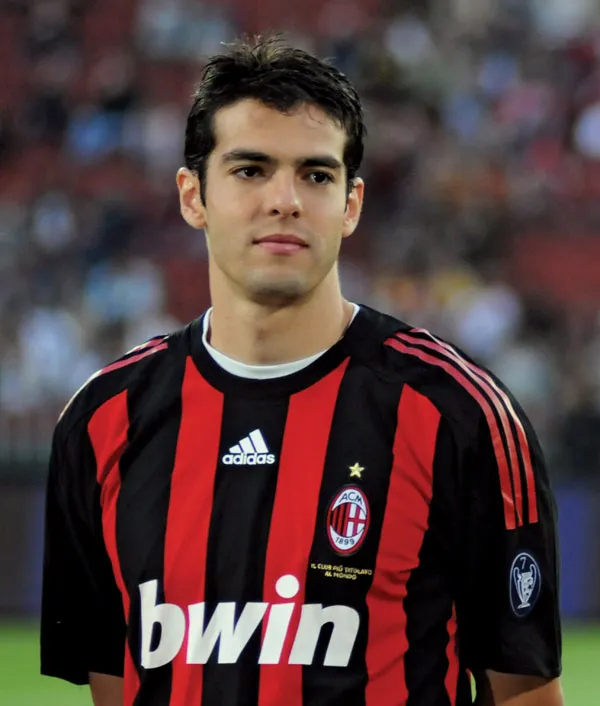
Kakà, whose full name is Ricardo Izecson dos Santos Leite, is a name that resonates deeply within the world of football. Known for his exceptional skill, grace on the field, and charismatic personality, Kakà has left an indelible mark on the sport. This comprehensive exploration delves into Kakà’s life, from his early days to his rise to global fame, and highlights key moments that defined his illustrious career. We will also examine the nuances of his impact on football, the historical context of his achievements, and the factors that contributed to his widespread acclaim.
Early Life and Beginnings
Ricardo Izecson dos Santos Leite was born on April 22, 1982, in Brasília, Brazil. Raised in a loving family with a deep appreciation for sports, Kakà’s journey into football began at a young age. His father, Bosco Izecson Leite, was an engineer, and his mother, Simone dos Santos Leite, was a schoolteacher. Kakà’s early exposure to sports was influenced by his family, who encouraged him to pursue his passions.
Kakà’s footballing journey started in the local youth teams of São Paulo FC, where his exceptional talent quickly became apparent. His style of play, characterized by his elegant dribbling, precise passing, and ability to control the tempo of the game, set him apart from his peers. By the age of 15, Kakà was already catching the eyes of scouts and football enthusiasts, setting the stage for his future success.
Rise to Prominence
Kakà’s professional debut came in 2001 when he played for São Paulo FC in Brazil. His performances were nothing short of stellar, showcasing his potential to a global audience. His breakthrough came during the 2002 World Cup, where he was part of the Brazilian squad that won the tournament. Although he was relatively inexperienced at the time, Kakà’s presence in the squad was instrumental in Brazil’s success.
In 2003, Kakà made a significant move to AC Milan, one of Italy’s most prestigious football clubs. This transfer marked the beginning of an era of brilliance for Kakà, as he quickly established himself as one of the best midfielders in the world. His time at AC Milan was marked by numerous accolades, including the UEFA Champions League title in 2007. Kakà’s performances were pivotal in Milan’s success, and he was awarded the Ballon d’Or in 2007, recognizing him as the world’s best player.
The Pinnacle of Fame
The mid-2000s were a golden era for Kakà. His exceptional skills and contributions to AC Milan earned him a place among the football elite. Kakà’s playing style was a blend of creativity, vision, and technical proficiency. His ability to control the game from the midfield, coupled with his knack for scoring crucial goals, made him a fan favorite and a respected figure among peers.
The 2007 Ballon d’Or award was a testament to Kakà’s impact on the game. This accolade is one of the most prestigious individual awards in football, and Kakà’s win highlighted his extraordinary talent and influence. During this period, Kakà was not only a key player for AC Milan but also a significant figure in the Brazilian national team.
Challenges and Triumphs
Despite his success, Kakà faced several challenges throughout his career. Injuries plagued him at various points, affecting his performance and availability for key matches. His move to Real Madrid in 2009 was seen as a major step, but it was also accompanied by struggles with form and fitness. Nevertheless, Kakà’s time at Real Madrid was marked by moments of brilliance and contributions to the team’s success.
Kakà’s resilience and determination were evident as he continued to perform at high levels despite the setbacks. His career at Real Madrid included winning La Liga and the Copa del Rey, further solidifying his reputation as one of the world’s top footballers.
Post-Retirement and Legacy
After leaving Real Madrid, Kakà continued his career with several clubs, including AC Milan and Orlando City. His time in the MLS with Orlando City was marked by a successful period where he served as both a player and a leader, contributing to the growth of football in the United States.
Kakà announced his retirement from professional football in 2017. Since then, he has remained involved in the sport through various roles, including coaching and mentoring. His impact on football extends beyond his playing career, as he continues to influence the game through his work with young players and his involvement in football-related initiatives.
Historical Context and Influence
Kakà’s career must be understood within the broader context of football history. His rise to fame coincided with a period of significant transformation in the sport, characterized by increased commercialization, globalization, and the emergence of new footballing powers. Kakà’s style of play and success were emblematic of a new era in football, where skill, creativity, and athleticism were highly valued.
The early 2000s were a time of intense competition among footballing giants, with players like Ronaldinho, Cristiano Ronaldo, and Lionel Messi making their mark. Kakà’s ability to stand out in such a competitive environment is a testament to his extraordinary talent and dedication.
Key Achievements
- 2002 FIFA World Cup: Part of the victorious Brazilian squad.
- 2007 Ballon d’Or: Awarded to the world’s best football player.
- UEFA Champions League (2007): Integral to AC Milan’s triumph.
- La Liga (2012-13): Contributed to Real Madrid’s success.
Kakà’s achievements are not just a reflection of his individual talent but also of his ability to thrive in high-pressure environments and contribute significantly to team successes. His career is a blend of personal triumphs and collective victories, underscoring his role as a pivotal figure in modern football.
Conclusion
Kakà’s journey from a young talent in Brasília to an international football icon is a story of extraordinary skill, dedication, and resilience. His career has been marked by moments of brilliance, challenges, and a lasting legacy that continues to inspire footballers and fans around the world. As we reflect on Kakà’s life and achievements, it becomes clear that his impact on football is profound and enduring.
Kakà’s story is a reminder of the beauty and excitement of football, and his legacy will undoubtedly continue to influence the sport for years to come. His contributions to the game, both on and off the field, make him a celebrated figure in football history.


