
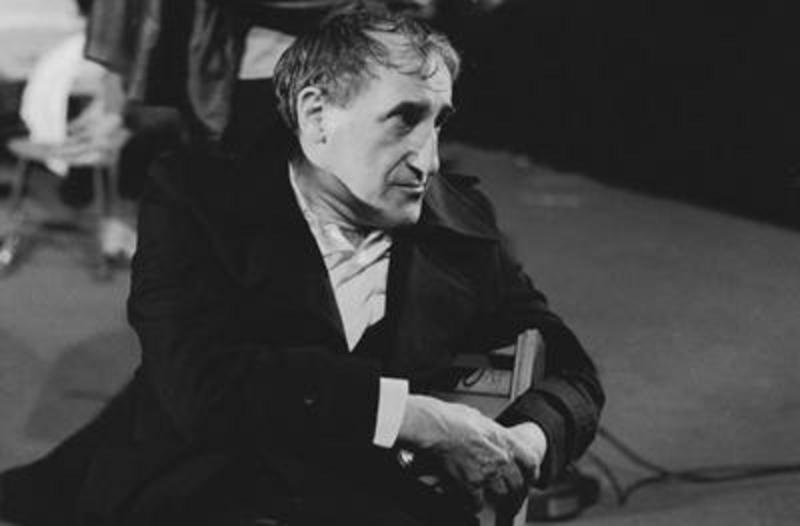
Tadeusz Kantor stands out as one of the most influential and enigmatic figures in 20th-century theater, renowned for his groundbreaking contributions to the art form. Born on April 6, 1915, in Wielopole, a small village near Kraków, Poland, Kantor’s early life was marked by a complex interplay of cultural and religious influences. His mother was Catholic, while his father was Jewish, though Kantor was primarily raised by his mother and a priestly uncle after his father abandoned the family following World War I. This departure, a harrowing event, would echo in Kantor’s later works, imbuing them with a deep sense of loss and existential questioning.
Early Life and Education
Kantor’s childhood in economically depressed Poland was shaped by the turmoil and challenges of the interwar period. Despite these hardships, he displayed an early interest in the arts, which led him to enroll in the Academy of Fine Arts in Kraków as a young adult. There, he immersed himself in the avant-garde theories of symbolism and the Bauhaus movement, which would later inform his theatrical innovations.
Kantor’s artistic journey was multifaceted from the beginning. During World War II, he not only painted and worked as a decorator but also engaged in the clandestine world of underground theater. He founded the Independent Theater, a covert group that performed plays under the constant threat of Nazi repression. This period of creative resistance was crucial in shaping Kantor’s approach to theater, where the proximity to death and the absurdity of existence became central themes.
Artistic Philosophy and Theatrical Innovations
The horrors and uncertainties of war profoundly impacted Kantor’s vision of theater. He developed a unique approach that blended life and art, rejecting the clear distinctions between reality and performance. This philosophy culminated in his formation of the Cricot 2 theater group in 1955, a name derived from the Polish phrase “ecco il circo,” meaning “here is the circus.” Cricot 2 was not merely a theater company but a collective of artists, including painters, poets, and amateur actors, all of whom contributed to an extraordinary fusion of visual art and performance.
Cricot 2’s productions were marked by their experimental nature, often eschewing conventional narratives in favor of evocative tableaux that captured the absurdity and fragility of human existence. For example, the group’s most famous work, The Dead Class (1975), does not follow a traditional plot. Instead, it presents a haunting “dramatic séance,” where characters are more like spectral figures, embodying the collective memories and traumas of a lost generation. This work, characterized by its dark humor and nihilistic undertones, brought Kantor international acclaim, establishing him as a leading figure in avant-garde theater.
International Recognition and Later Works
As Kantor’s reputation grew, so did his influence as a visual artist. He explored various artistic mediums, including the technique of emballage (wrapping objects) and performance art. His experiments in these areas further blurred the lines between life and art, reinforcing his belief in the inseparability of the two.
In his later theatrical works, such as Wielopole, Wielopole (1980) and Let the Artists Die (1985), Kantor delved deeper into themes of memory and identity. Wielopole, Wielopole, named after his birthplace, is a poignant exploration of the mechanisms of memory, where personal and historical recollections intertwine to create a narrative that is both deeply personal and universally resonant. In Let the Artists Die, Kantor confronts the role of memory in shaping identity, revealing how even cherished memories can be subject to erasure and distortion.
Kantor’s final works, including I Shall Never Return (1988) and Today Is My Birthday (1990), were intensely autobiographical. In these productions, he appeared on stage, engaging in a dialogue with his younger self and the characters he had created throughout his career. This self-referential approach was not mere narcissism; it was a profound reflection on the artist’s role in the world and the inevitable convergence of life and death. Today Is My Birthday, in particular, stands as a poignant testament to this philosophy, as Kantor passed away just before the final rehearsal, merging his life and art in a final, poetic gesture.
Legacy and Impact on Modern Theater
Tadeusz Kantor’s death on December 8, 1990, left a significant void in the world of theater. His approach, which was deeply personal and often autobiographical, did not lend itself to easy replication. Unlike other theater practitioners, Kantor did not establish a formal school or leave behind a cadre of disciples to carry on his work. Instead, his legacy lives on in the continued experimentation and innovation of contemporary dramatists who have been inspired by his fearless blending of reality and artifice.
Kantor’s influence extends beyond the confines of theater. His works are studied in the context of visual arts, performance studies, and cultural history, offering insights into the broader artistic and philosophical currents of the 20th century. His refusal to conform to established doctrines and his insistence on the primacy of the individual artist’s vision resonate with the ethos of modern and postmodern art, where the boundaries between disciplines are constantly being redefined.
Conclusion
Tadeusz Kantor remains a towering figure in the history of theater, not only for his innovative techniques but also for his profound engagement with the existential questions that define the human experience. His works, characterized by their stark portrayal of memory, identity, and mortality, continue to challenge and inspire artists and audiences alike. Kantor’s life and art were inextricably linked, each informing the other in a dynamic process of creation and reflection. As a result, his legacy is one of continual exploration, where the search for meaning in a fragmented world is both a personal and collective endeavor.
In exploring the life and work of Tadeusz Kantor, we are reminded of the power of art to transcend the limitations of time and space, offering a space where the past and present, the real and the imagined, converge in a shared human experience. Kantor’s theater was not just a place of performance; it was a space of memory, where the living and the dead, the artist and the audience, could meet and confront the most profound questions of existence.


