
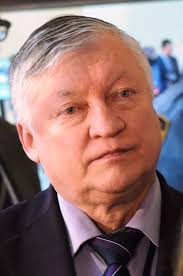
Anatolij Karpov is one of the most iconic figures in the world of chess, celebrated for his strategic brilliance and calm demeanor under pressure. Born on May 23, 1951, in Zlatoust, a small town nestled in the Ural Mountains of Russia, Karpov’s journey to becoming a chess grandmaster and world champion is a story of intellect, resilience, and an indomitable will to succeed.
Early Life and Introduction to Chess
Anatolij Karpov was born into a modest family, with his father working as a mechanical engineer. Shortly after his birth, his family moved to Moscow, driven by his father’s educational pursuits. Karpov, affectionately called “Tolja,” was a frail child, often plagued by various illnesses that kept him bedridden for extended periods. It was during these bouts of illness that his father introduced him to chess, initially as a way to pass time and bond with his son. Little did they know, this would spark a lifelong passion in young Anatolij.
Despite his delicate health, Karpov was a quick learner, and his natural aptitude for chess became evident early on. By the time he was four, he was already playing against older, more experienced players. His early exposure to the game laid the foundation for what would become one of the most illustrious careers in chess history.
Rising Through the Ranks
Karpov’s journey in chess began in earnest when he joined the chess section of a local metallurgical factory, where his father worked. By the age of 12, he had already achieved the rank of Candidate Master, a remarkable feat that put him on the radar of the Soviet chess authorities. His rapid ascent through the chess ranks was further bolstered by his admission to the prestigious Botvinnik Chess School, named after the then-world champion Mikhail Botvinnik.
Under the tutelage of Botvinnik, Karpov honed his skills, developing a style of play characterized by precision, patience, and an uncanny ability to exploit his opponent’s weaknesses. Although he was not initially the most impressive student, his dedication and thirst for knowledge soon paid off. Karpov’s chess style began to mature, influenced by his study of the games of former world champion José Raúl Capablanca, known for his simple yet highly effective strategies.
Breakthrough and Early Successes
By the mid-1960s, Karpov was making a name for himself in the Soviet chess scene. In 1966, he earned the title of Soviet Master and won his first international tournament in Czechoslovakia in 1967. His success at this tournament was somewhat unexpected, as the Soviet Chess Federation had mistakenly sent him to compete, thinking it was a junior event. Nonetheless, Karpov’s victory was a clear indication of his potential to become one of the world’s leading chess players.
In 1969, Karpov won the World Junior Chess Championship, solidifying his status as one of the brightest young talents in the game. This victory marked the beginning of a series of successes that would eventually lead him to the pinnacle of the chess world.
The Road to the World Championship
The early 1970s were a time of significant change in the world of chess. The reign of the American prodigy Bobby Fischer, who had won the World Chess Championship in 1972, left the Soviet chess establishment scrambling for a new champion. Fischer’s victory over Boris Spassky had not only been a blow to Soviet pride but also a challenge to the long-standing dominance of Soviet players in international chess.
Karpov emerged as the Soviet Union’s answer to Fischer. In 1973, he won the Leningrad Interzonal, a crucial tournament that qualified him for the Candidates Matches, the final hurdle before challenging for the World Championship. His performance in the Candidates Matches was nothing short of spectacular, defeating seasoned grandmasters such as Viktor Korchnoi and Lev Polugaevsky to earn the right to challenge Fischer for the title.
The Uncontested Champion
The 1975 World Chess Championship was set to be a historic showdown between Fischer and Karpov. However, Fischer, known for his eccentricities and difficult personality, made a series of demands that were deemed unacceptable by FIDE, the international chess federation. When these demands were not met, Fischer refused to defend his title, and Karpov was declared World Chess Champion by default on April 24, 1975.
While Karpov’s ascent to the title was unusual, his subsequent achievements left no doubt about his legitimacy as a world champion. Over the next decade, Karpov would dominate the chess world, winning more international tournaments than any other grandmaster in history. His record included victories in 32 major international tournaments, where he finished first outright in 22 and tied for first in five others, solidifying his reputation as one of the greatest chess players of all time.
The Karpov-Kasparov Rivalry
In the mid-1980s, Karpov’s reign as world champion was challenged by a young and ambitious Soviet grandmaster, Garry Kasparov. The rivalry between Karpov and Kasparov is one of the most famous in the history of chess, not only for the intensity of their matches but also for the contrasting styles and personalities of the two players.
The first match between Karpov and Kasparov, held in 1984, was a grueling affair that lasted five months and 48 games, the longest world championship match in history. The match was eventually halted without a winner, with Karpov leading by five wins to three but with no end in sight. The rematch in 1985 saw Kasparov emerge as the new world champion, but Karpov remained a formidable opponent, challenging Kasparov in a series of closely contested matches throughout the late 1980s.
Legacy and Later Life
Despite losing his title to Kasparov, Karpov continued to be a dominant force in the chess world, winning numerous tournaments and remaining a top contender in the World Chess Championship cycle. His style of play, often described as methodical and strategic, was a stark contrast to Kasparov’s aggressive and tactical approach, making their matches a fascinating clash of chess philosophies.
Karpov’s contributions to chess extend beyond his playing career. He has been involved in various chess-related activities, including writing books, teaching, and promoting the game globally. Karpov’s legacy is not just that of a world champion but also as a mentor and ambassador for the game, helping to inspire and develop the next generation of chess players.
In addition to his chess career, Karpov has been active in politics and philanthropy. He served as a member of the Central Committee of the Komsomol, the youth division of the Communist Party, and has been involved in various humanitarian efforts, including supporting chess education programs and contributing to charitable causes.
The Enduring Influence of Anatolij Karpov
Anatolij Karpov’s influence on the world of chess is profound and enduring. His ability to remain at the top of the game for over two decades is a testament to his skill, discipline, and mental toughness. Karpov’s career is a reminder of the deep intellectual and psychological challenges inherent in chess, a game that has captivated minds for centuries.
Karpov’s legacy is also a reflection of the broader historical and political context in which he rose to prominence. As a Soviet chess champion during the Cold War, Karpov was not just a sportsman but a symbol of Soviet intellectual superiority and resilience. His matches against Western opponents were often viewed through the lens of the ideological struggle between East and West, adding a layer of significance to his victories.
Today, Karpov continues to be revered as one of the greatest chess players in history. His contributions to the game, both as a player and as a promoter of chess, have left an indelible mark on the sport. Karpov’s life story is not just about chess; it is about the pursuit of excellence, the resilience in the face of challenges, and the enduring appeal of a game that requires both intellectual and emotional strength.
Conclusion
Anatolij Karpov’s journey from a frail child in the Ural Mountains to a world chess champion is a story of remarkable perseverance, intelligence, and strategic brilliance. His achievements on the chessboard have earned him a place among the greatest players in history, while his contributions off the board have helped to promote and develop the game worldwide. Karpov’s legacy is a testament to the power of the human mind and the enduring appeal of chess as a sport, an art form, and a symbol of intellectual achievement.


