
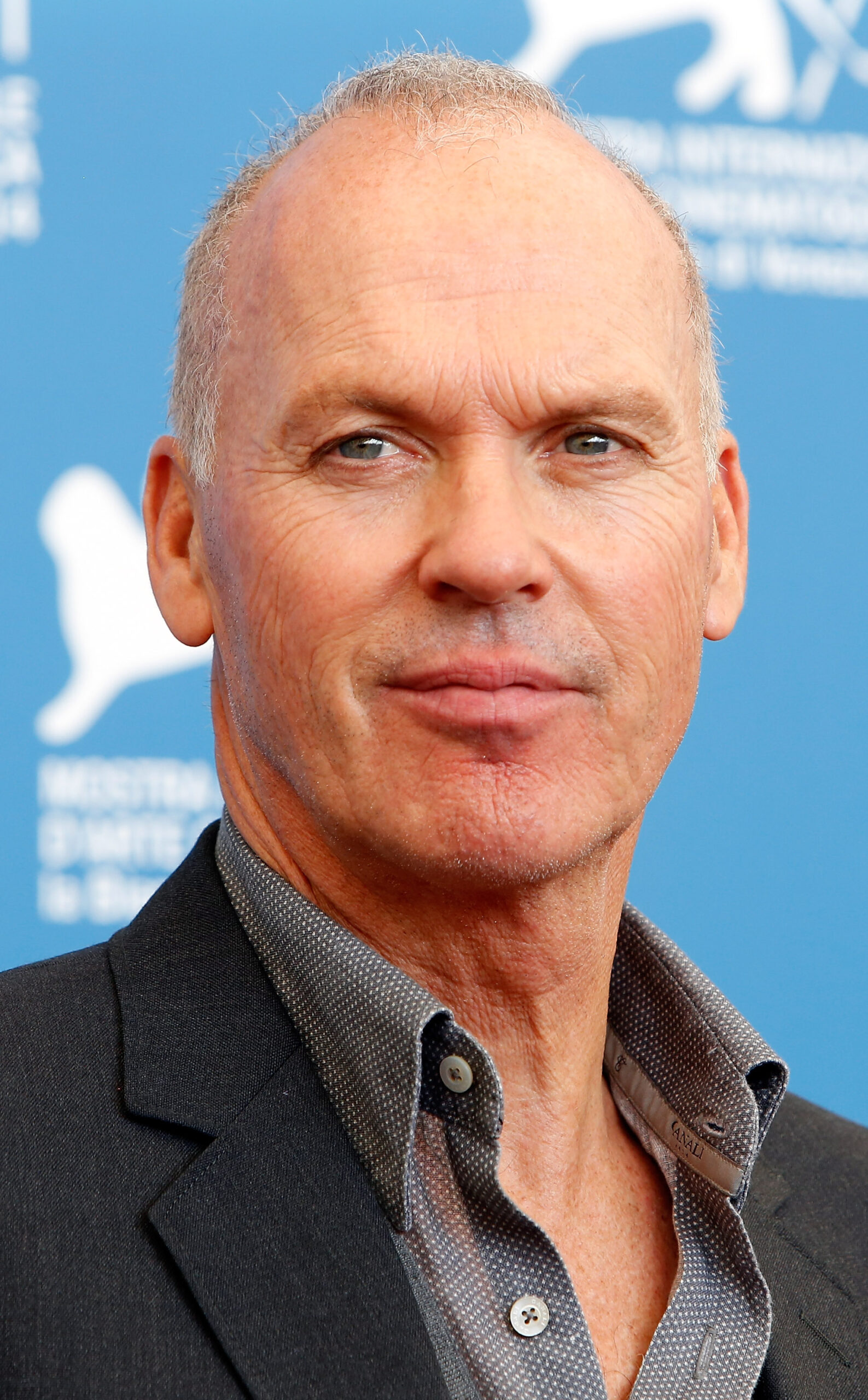
Michael Keaton, born Michael John Douglas on September 5, 1951, in Forest Grove, Pennsylvania, is an American actor whose versatility and unique blend of humor, intensity, and vulnerability have made him one of Hollywood’s most enduring stars. With a career spanning over four decades, Keaton has left an indelible mark on the entertainment industry through his performances in both comedic and dramatic roles, including his iconic portrayal of Batman. This article delves into the life, career, and legacy of Michael Keaton, exploring how he became a beloved figure in Hollywood and beyond.
Early Life and Education: A Humble Beginning
Michael Keaton was the youngest of seven children born to George A. Douglas, a civil engineer, and Leona Elizabeth Loftus, a homemaker. Raised in a Catholic household, Keaton attended Montour High School in Pennsylvania. His upbringing in a large, close-knit family instilled in him a strong work ethic and a sense of humor that would later become a hallmark of his acting style.
After high school, Keaton enrolled at Kent State University to study speech, but he dropped out after two years to pursue his passion for acting. He moved to Pittsburgh, where he initially struggled to find his footing in the entertainment industry. To make ends meet, Keaton worked as a cameraman for the public television station WQED and attempted a career in stand-up comedy, though with limited success.
Breaking into Television: The Early Years
Keaton’s early foray into acting began with minor roles on television. He made his debut in 1975 on the children’s show Mister Rogers’ Neighborhood, where he played one of the Flying Zookeeni Brothers. Despite these modest beginnings, Keaton’s talent was evident, and he soon began landing more substantial roles in television productions.
Seeking greater opportunities, Keaton moved to Los Angeles in the late 1970s. To avoid confusion with the already famous actor Michael Douglas, he adopted the stage name Michael Keaton. The choice of the surname “Keaton” was inspired by Diane Keaton, though it was also a nod to Buster Keaton, one of the silent era’s greatest comedians.
In Los Angeles, Keaton quickly found work in popular television series such as Maude and The Mary Tyler Moore Hour. His big break came with the sitcom Working Stiffs (1979), where he starred alongside James Belushi. Though the show was short-lived, it showcased Keaton’s comedic timing and helped him gain recognition in the industry.
Rise to Stardom: The 1980s and the Birth of a Comic Icon
The 1980s marked a significant turning point in Michael Keaton’s career. His breakout film role came in 1982 with Night Shift, a comedy directed by Ron Howard. In the film, Keaton played Bill “Blaze” Blazejowski, a fast-talking, energetic morgue attendant who convinces his coworker to run a prostitution business out of the morgue. Keaton’s performance was widely praised for its manic energy and comedic brilliance, establishing him as a rising star in Hollywood.
Following the success of Night Shift, Keaton starred in a string of popular comedies, including Mr. Mom (1983), where he played a stay-at-home dad struggling with domestic life after losing his job. The film resonated with audiences and solidified Keaton’s reputation as a leading man in comedy. Other notable films from this period include Johnny Dangerously (1984) and Gung Ho (1986), both of which further showcased Keaton’s versatility and appeal.
Beetlejuice and the Dark Knight: Keaton’s Iconic Roles
One of the most defining moments in Keaton’s career came in 1988 when he teamed up with visionary director Tim Burton for the horror-comedy Beetlejuice. Keaton’s portrayal of the titular character, a mischievous and grotesque ghost, was a tour de force of physical comedy and improvisation. Beetlejuice was a commercial and critical success, and Keaton’s performance became iconic, earning him a permanent place in pop culture history.
The following year, Tim Burton cast Keaton in a role that would forever change the trajectory of his career: Bruce Wayne, aka Batman. The casting decision was initially met with skepticism, as many fans doubted that a comedic actor could convincingly portray the Dark Knight. However, Keaton’s performance in Batman (1989) was a revelation. He brought a brooding intensity and a nuanced vulnerability to the character, helping to redefine the superhero genre.
Batman was a massive success, grossing over $400 million worldwide and cementing Keaton’s status as a major Hollywood star. He reprised the role in the 1992 sequel Batman Returns, which, despite being darker and more controversial than its predecessor, was also a commercial success.
Challenges and Reinvention: The 1990s
While Keaton enjoyed tremendous success with Batman, the 1990s presented new challenges for the actor. His post-Batman career was marked by a series of diverse roles that showcased his range but were met with varying degrees of success. Notable films from this period include Pacific Heights (1990), a psychological thriller in which Keaton played a menacing tenant; My Life (1993), a poignant drama where he portrayed a terminally ill man documenting his life for his unborn child; and Much Ado About Nothing (1993), Kenneth Branagh’s adaptation of the Shakespearean comedy.
Despite these performances, Keaton struggled to recapture the commercial success of his earlier work. He continued to take on challenging roles, such as in the thriller Desperate Measures (1998) and the holiday film Jack Frost (1998), but these films failed to resonate with audiences at the box office.
The 2000s: Voice Work and Television
In the 2000s, Michael Keaton expanded his repertoire by taking on voice acting roles in addition to his film work. He lent his voice to characters in animated series like The Simpsons and King of the Hill, as well as to the antagonist Chick Hicks in Disney-Pixar’s Cars (2006). His voice work allowed him to reach new audiences and demonstrated his adaptability as an actor.
Keaton also returned to television with roles in critically acclaimed projects. He starred in the HBO film Live from Baghdad (2002), based on the real-life experiences of CNN producers during the Gulf War, for which he received a Golden Globe nomination. In 2007, he appeared in the miniseries The Company, set during the Cold War, where he played the real-life CIA counterintelligence chief James Jesus Angleton. His performance earned him a nomination for the Screen Actors Guild Award for Outstanding Performance by a Male Actor in a Television Movie or Miniseries.
A Triumphant Return: Birdman and Beyond
The 2010s brought a career resurgence for Michael Keaton, culminating in one of his most celebrated performances to date. In 2014, Keaton starred in Alejandro González Iñárritu’s Birdman, a dark comedy-drama about a washed-up actor trying to stage a Broadway comeback. The film’s premise had uncanny parallels to Keaton’s own career, as his character, Riggan Thomson, is best known for playing a superhero in his youth.
Birdman was a critical and commercial success, praised for its innovative cinematography and Keaton’s deeply personal performance. Keaton won the Golden Globe for Best Actor in a Musical or Comedy and received his first Academy Award nomination for Best Actor. The film’s success reestablished Keaton as a force in Hollywood and led to a series of high-profile roles.
In 2015, Keaton starred in Spotlight, a film about the Boston Globe’s investigation into the Catholic Church’s sexual abuse scandal. The film won the Academy Award for Best Picture, and Keaton’s performance as the editor of the investigative team was widely praised. His work in Spotlight further solidified his reputation as a serious actor capable of handling complex, real-world subjects.
Keaton continued to take on diverse roles, including playing the founder of McDonald’s, Ray Kroc, in the 2016 biographical drama The Founder. His portrayal of Kroc, a complicated figure who built one of the world’s most successful fast-food empires, was met with critical acclaim.
Legacy and Continued Influence
Michael Keaton’s career is a testament to the power of reinvention and perseverance. From his early days as a television comedian to his rise as a Hollywood star, and his later resurgence as a serious dramatic actor, Keaton has consistently pushed the boundaries of his craft. His ability to navigate the ups and downs of the industry while staying true to his unique style has earned him a place among the most respected actors of his generation.
Keaton’s influence extends beyond his filmography. His portrayal of Batman remains one of the most iconic in the superhero genre, and his work in Birdman and Spotlight has inspired a new generation of actors and filmmakers. As he continues to take on challenging and varied roles, Michael Keaton’s legacy in Hollywood only grows stronger.
Conclusion: The Enduring Appeal of Michael Keaton
Michael Keaton’s journey from a small-town boy in Pennsylvania to one of Hollywood’s most versatile actors is a story of talent, resilience, and constant evolution. With a career spanning over four decades, Keaton has proven himself time and again, earning critical acclaim and the adoration of audiences worldwide.
His ability to seamlessly transition between comedy and drama, and his willingness to take risks in his choice of roles, have made him a standout in an industry that often favors typecasting. Michael Keaton’s legacy is one of enduring appeal, a reminder that true talent and determination can overcome any obstacle, and that reinvention is possible at any stage of life.
As Keaton continues to work in film and television, audiences can look forward to many more memorable performances from an actor who has become a true Hollywood icon.


