
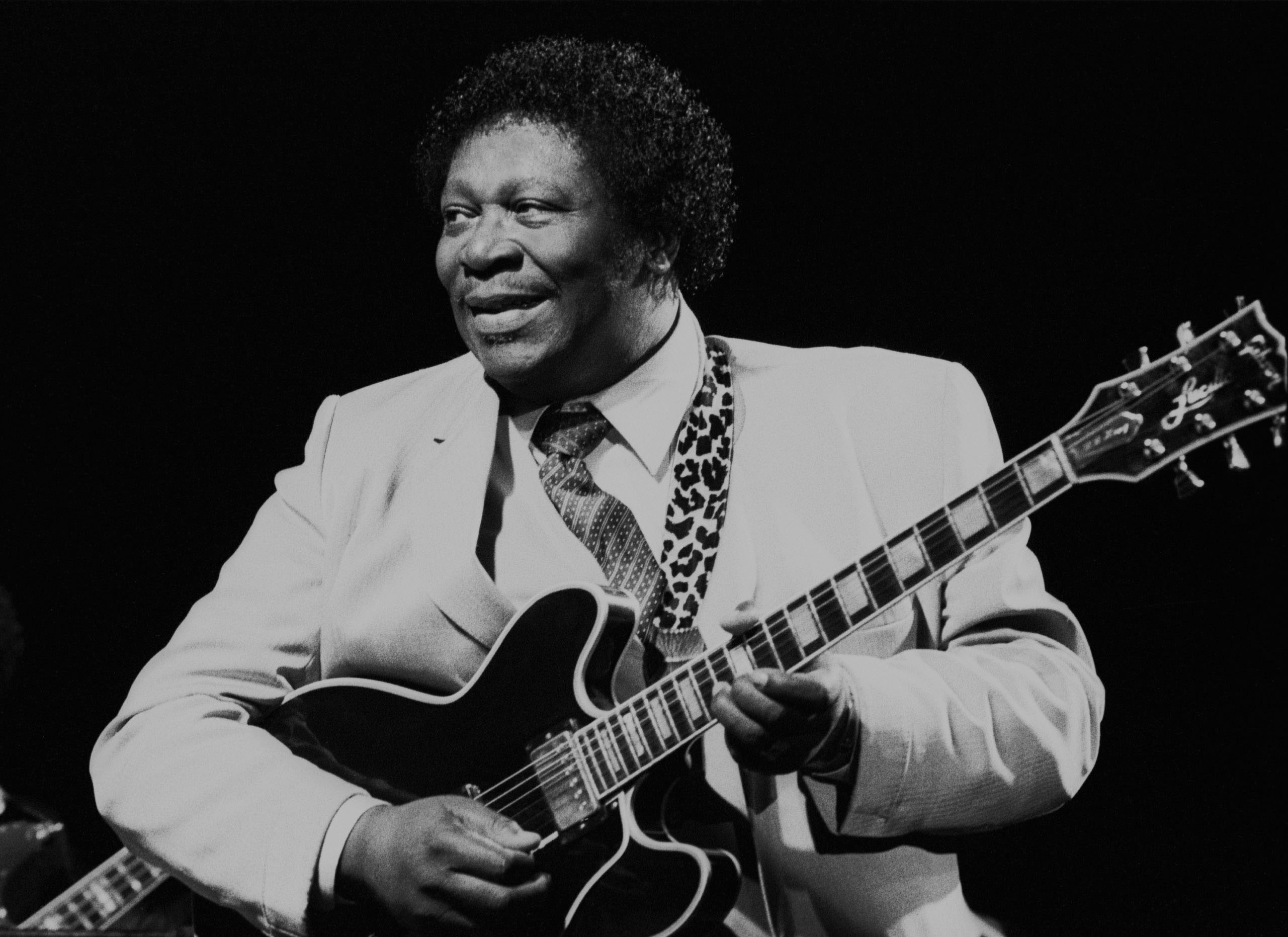
B.B. King, born Riley B. King on September 16, 1925, in Itta Bena, Mississippi, was an iconic figure in the world of blues music. With a career that spanned nearly seven decades, King became synonymous with the blues, influencing countless musicians and leaving an indelible mark on American music. This article explores the life of B.B. King, delving into his early years, rise to fame, and the highlights of his legendary career.
Early Life and Background
B.B. King was born in a small cabin on a cotton plantation in Itta Bena, Mississippi, a humble beginning that would shape much of his life and music. His parents were Albert and Nora Ella King, with his father working as a sharecropper and his mother being a devout preacher in the Methodist church. The music that filled King’s early years was deeply rooted in the spirituals and gospel hymns that were a staple in his mother’s church.
Tragedy struck early in King’s life when his mother passed away when he was just seven years old. Following her death, King was raised by his maternal grandparents. Life was tough in the rural South, and like many African American children of his time, King grew up in the harsh environment of the segregated South, where poverty and racial discrimination were daily realities.
Despite these challenges, King found solace in music. He received his first guitar at the age of 14, a gift that would change the course of his life. His early musical influences were deeply rooted in the gospel music he sang in church, but as he grew older, he was increasingly drawn to the blues—a genre that spoke to the struggles and hardships he experienced in his own life.
The Road to Fame: The Birth of B.B. King
In the 1940s, King moved to Memphis, Tennessee, a city known as the birthplace of the blues. It was here that he began to shape his musical identity. He started by performing on street corners and in local juke joints, honing his craft and developing his distinctive style. It was also in Memphis that King first encountered his cousin, Bukka White, a well-known blues musician who would become an important mentor to him.
King’s big break came when he began working as a disc jockey for a local radio station, WDIA. The station, which was one of the first in the United States to feature an all-black programming lineup, played a crucial role in King’s early career. It was during this time that he adopted the name “B.B.,” which stood for “Blues Boy”—a fitting moniker for a young man who would soon become one of the most influential blues musicians of all time.
His time at WDIA allowed King to build a reputation as both a radio personality and a musician. He began to record music, and by the late 1940s, he had released his first single, “Miss Martha King.” While the song did not become a hit, it marked the beginning of King’s recording career and set the stage for his rise to fame.
The Rise to Stardom: The 1950s and 1960s
The 1950s were a pivotal decade for B.B. King. It was during this time that he recorded “Three O’Clock Blues,” a song that would become his first major hit and catapult him to national fame. The success of “Three O’Clock Blues” led to a series of successful singles, including “You Know I Love You,” “Woke Up This Morning,” and “Please Love Me.” These songs established King as a leading figure in the blues genre and helped to define the sound of modern electric blues.
King’s music was characterized by his expressive guitar playing and soulful voice. He played a Gibson guitar he affectionately named “Lucille,” a name that has since become legendary in its own right. The story behind the name is one of blues folklore: during a performance in a juke joint in Arkansas, a fight broke out between two men over a woman named Lucille. The fight caused a fire, and King, in his haste to escape, left his guitar inside. He ran back into the burning building to save his instrument, and from that day on, he named his guitar “Lucille” to remind himself never to do something so foolish again.
Throughout the 1950s and 1960s, King toured extensively, performing hundreds of shows each year. His relentless touring schedule earned him the title of “King of the Blues,” and he became one of the most beloved figures in American music. During this time, he also began to gain international recognition, particularly in Europe, where the blues was enjoying a resurgence in popularity.
The 1970s and 1980s: Mainstream Success
While B.B. King had already established himself as a major figure in the blues by the 1960s, it was the 1970s that saw him achieve mainstream success. In 1970, he released the album “Indianola Mississippi Seeds,” which featured the hit single “The Thrill Is Gone.” The song, which became one of King’s signature tunes, won him a Grammy Award and introduced his music to a broader audience.
“The Thrill Is Gone” was a departure from King’s earlier work, incorporating elements of soul and jazz into his blues sound. The song’s success marked a turning point in King’s career, helping him to cross over to the mainstream and gain recognition beyond the traditional blues audience.
Throughout the 1970s and 1980s, King continued to tour and record prolifically. He collaborated with a wide range of artists, including rock musicians like Eric Clapton, who cited King as a major influence on his own music. King’s collaborations with artists from different genres helped to further expand his audience and cement his status as a living legend.
The Legacy of B.B. King: Influence and Impact
B.B. King’s influence on music is immeasurable. He was not only a master of the blues but also a pioneer who helped to shape the sound of modern music. His guitar playing, characterized by fluid, lyrical solos and a unique vibrato, has influenced generations of musicians across genres, from blues and rock to jazz and beyond.
King’s impact can be seen in the work of countless artists, including Eric Clapton, Jimi Hendrix, and Stevie Ray Vaughan, all of whom have cited King as a major influence. His contributions to music were recognized with numerous awards, including 15 Grammy Awards, a Grammy Lifetime Achievement Award, and induction into the Rock and Roll Hall of Fame.
Beyond his musical achievements, King was also known for his humility, kindness, and dedication to his craft. He continued to perform well into his 80s, never losing his passion for the blues. His tireless work ethic and commitment to his music made him a beloved figure not only among his peers but also among fans around the world.
Personal Life and Final Years
Despite his success, B.B. King’s life was not without its challenges. He was married twice, but both marriages ended in divorce. King had 15 children from various relationships, and while his busy touring schedule made it difficult for him to maintain close relationships with his children, he remained a loving father.
King’s later years were marked by health problems, including diabetes, which he battled for much of his life. Despite these challenges, he continued to perform, often playing over 200 shows a year well into his 70s and 80s.
In his final years, King’s health began to decline, and he made fewer public appearances. However, his influence and legacy continued to grow. In 2006, he was awarded the Presidential Medal of Freedom, the highest civilian honor in the United States, in recognition of his contributions to American culture.
B.B. King passed away on May 14, 2015, in Las Vegas, Nevada, at the age of 89. His death marked the end of an era in American music, but his legacy lives on through his recordings, his influence on other musicians, and the countless lives he touched through his music.
Conclusion
B.B. King was more than just a musician; he was a cultural icon who transcended the boundaries of genre and race to become one of the most beloved figures in American music. His contributions to the blues, and to music as a whole, are immeasurable, and his legacy continues to inspire musicians and fans alike.
King’s life was a testament to the power of music to uplift, heal, and bring people together. From his humble beginnings in the Mississippi Delta to his status as the “King of the Blues,” B.B. King’s journey was one of perseverance, passion, and an unwavering dedication to his craft. As we remember B.B. King, we celebrate not just the man, but the music that defined his life and continues to resonate with audiences around the world.


