
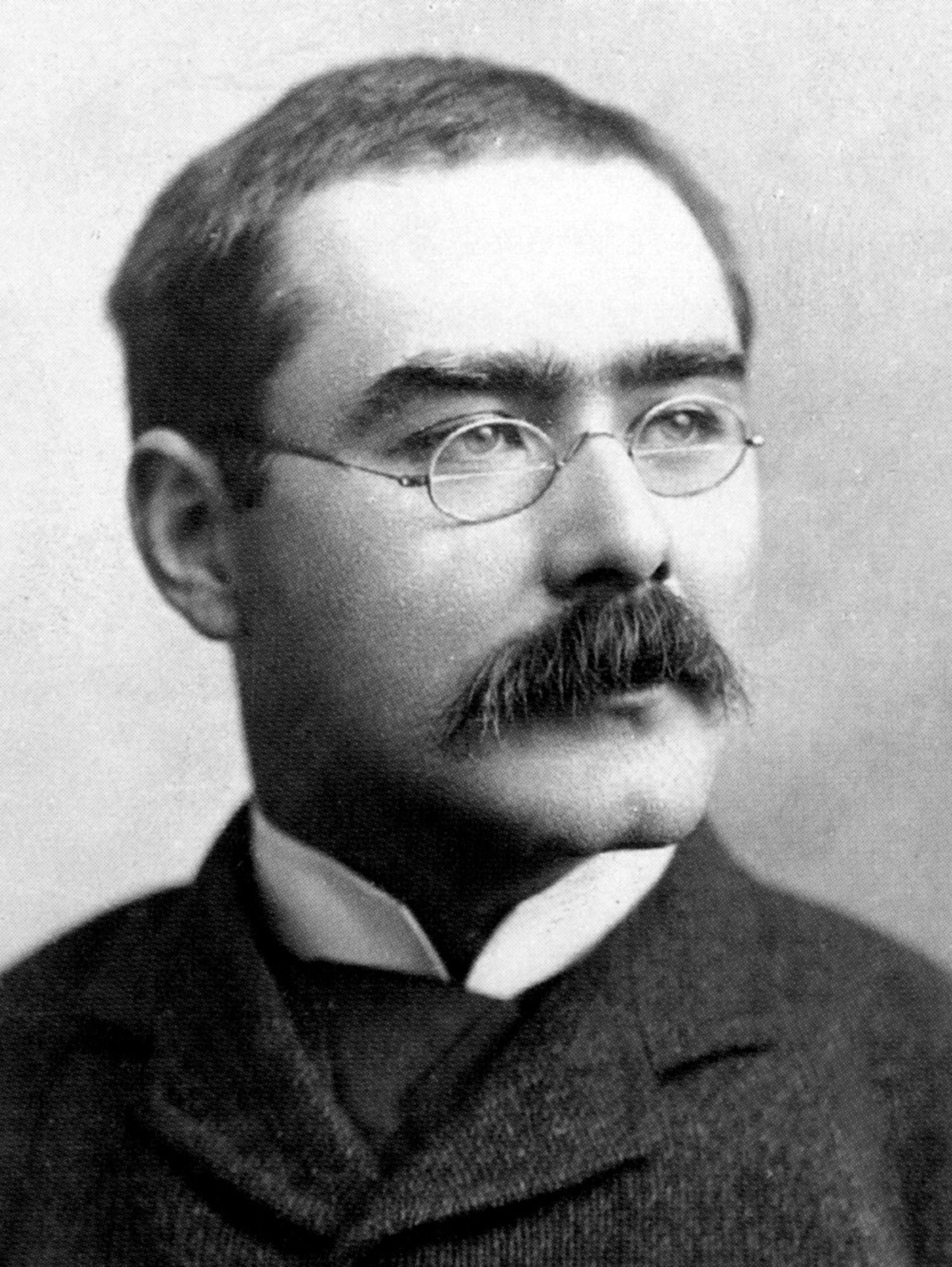
Introduction to Rudyard Kipling
Rudyard Kipling is a towering figure in English literature, best known for his vibrant storytelling that blends adventure, fantasy, and deep insight into the human condition. Born on December 30, 1865, in Bombay, India, Kipling’s works, including “The Jungle Book,” “Kim,” and the poem “If—,” have left an indelible mark on global literature. His narrative prowess, combined with a unique cultural perspective shaped by his early years in India and later life in England, made him one of the most celebrated and controversial literary figures of his time. Kipling’s journey through life, marked by triumphs, tragedies, and the complexities of empire, offers a rich tapestry of historical and literary significance.
Early Life and Formative Years
Joseph Rudyard Kipling was born to John Lockwood Kipling and Alice Macdonald in the vibrant city of Bombay (now Mumbai). His father was a curator and teacher of architectural sculpture, while his mother came from a prominent bourgeois family. This blend of artistic and intellectual influence played a crucial role in shaping young Rudyard’s imaginative world.
Kipling’s early childhood in India was filled with the sights, sounds, and stories of the subcontinent, which would later permeate much of his work. However, at the tender age of six, he was sent to England with his sister Trix to receive a proper English education. The siblings were placed with a foster family in Southsea, a coastal town in southern England. This period was marked by emotional and physical hardships for Kipling, as the household was strict and unkind. The loneliness and sense of abandonment he felt during these years left a lasting scar on his psyche, influencing his later writings.
Kipling’s experience in England’s rigid educational system, characterized by harsh discipline and a strong emphasis on conformity, is vividly recounted in his semi-autobiographical stories, particularly in “Baa Baa, Black Sheep” (1888) and the novel “The Light That Failed” (1890). Despite the challenges, Kipling’s literary talents began to emerge during his school years, and his love for reading and storytelling grew stronger.
Return to India and Early Literary Success
In 1882, Kipling returned to India, where he began working as a journalist for the “Civil and Military Gazette” in Lahore, then part of British India. This period was crucial in honing his writing skills, as he was exposed to a wide range of experiences, from the daily lives of British soldiers to the intricate dynamics of Indian society under colonial rule. His early work, which includes collections of short stories like “Plain Tales from the Hills” (1888), offers keen observations of British-Indian life and introduces readers to the complex interplay of cultures in the Raj.
Kipling’s ability to capture the essence of both the British and Indian worlds, often with a touch of irony and humor, quickly earned him recognition. His stories, while rooted in the realities of colonial life, often contained elements of the fantastical, reflecting his fascination with the unknown and the mystical aspects of Indian culture.
Rise to Fame in England and Beyond
Kipling’s literary career truly took off when he returned to England in 1889. By this time, his reputation as a brilliant young writer had preceded him, and he was warmly received by the English literary establishment. His prolific output during the 1890s included some of his most famous works, such as “The Jungle Book” (1894) and “The Second Jungle Book” (1895). These collections of stories, featuring the adventures of Mowgli, Baloo, and Shere Khan, not only captivated young readers but also resonated with adults, who appreciated the deeper themes of identity, survival, and the laws of nature.
Kipling’s time in the United States, where he lived from 1892 to 1896, was also a period of significant literary production. Settling in Vermont with his American wife, Caroline Starr Balestier, Kipling wrote “Captains Courageous” (1897), a novel that explores themes of growth, responsibility, and the harsh realities of life at sea. His stay in the U.S. was marked by both personal happiness and professional success, although he eventually returned to England after the untimely death of his daughter, Josephine, in 1899—a loss that deeply affected him.
The Imperial Voice: Kipling and British Empire
Rudyard Kipling is often remembered as the poet of British imperialism, a label that has sparked both admiration and criticism. His works, particularly poems like “The White Man’s Burden” (1899), reflect the attitudes and ideologies of the British Empire at its height. Kipling believed in the civilizing mission of the British Empire, a belief that was common among his contemporaries but has since been the subject of much debate and reinterpretation.
“The White Man’s Burden,” written in the context of the American colonization of the Philippines, urged the United States to take up the mantle of imperial responsibility. The poem, which describes the supposed duty of Western powers to bring civilization to “savage” lands, encapsulates the paternalistic and often condescending attitudes of the time. However, it also reveals Kipling’s complex view of empire, which was not solely celebratory but also acknowledged the heavy costs and moral dilemmas of colonial rule.
Kipling’s novel “Kim” (1901) is another significant work that delves into the complexities of British-Indian relations. Set against the backdrop of the Great Game, the geopolitical struggle between Britain and Russia for control in Central Asia, “Kim” tells the story of a boy who navigates both the British and Indian worlds with remarkable ease. The novel is rich in cultural detail and offers a nuanced portrayal of colonial India, reflecting Kipling’s deep understanding of the land and its people.
Recognition and Later Life
Kipling’s contribution to literature was recognized with numerous accolades, including the Nobel Prize in Literature in 1907. He was the first English-language writer to receive the prize, and at the time, the youngest recipient. The Nobel Committee praised him for his “power of observation, originality of imagination, virility of ideas, and remarkable talent for narration.”
Despite his success, Kipling’s later years were marked by personal and political challenges. The death of his son, John, in World War I was a devastating blow. John had been killed during the Battle of Loos in 1915, and Kipling’s grief over his loss was compounded by guilt, as he had helped secure a commission for John despite his son’s poor eyesight. This tragedy influenced Kipling’s later works, which often reflect a deep sense of loss and disillusionment with the ideals of honor and duty that had once defined his worldview.
In his later years, Kipling continued to write, although his output slowed. His works during this period, such as “Debits and Credits” (1926) and “Limits and Renewals” (1932), reflect a more introspective and somber tone, dealing with themes of mortality, legacy, and the passage of time.
Kipling’s Legacy and Controversy
Rudyard Kipling’s legacy is a complex one, marked by both admiration for his literary genius and criticism of his imperialist views. On one hand, he is celebrated for his masterful storytelling, his ability to evoke the sights and sounds of distant lands, and his exploration of universal themes such as childhood, adventure, and moral integrity. His works have been translated into numerous languages and continue to be read and studied worldwide.
On the other hand, Kipling’s association with British imperialism has made him a controversial figure, particularly in postcolonial studies. Critics argue that his works perpetuate the stereotypes and justifications of colonial rule, portraying non-Western peoples and cultures as inferior and in need of Western guidance. This aspect of his work has led to a re-evaluation of Kipling’s place in the literary canon, with some viewing him as a symbol of imperial arrogance.
However, it is important to recognize that Kipling’s views were shaped by the context of his time. While his imperialist sentiments cannot be ignored, they do not diminish his achievements as a writer. Kipling’s ability to capture the complexities of human experience, his vivid depictions of far-flung places, and his contributions to the English language ensure that his work remains relevant.
Conclusion
Rudyard Kipling’s life and work offer a window into the complexities of the British Empire and the cultural exchanges that shaped the modern world. From his early years in India to his rise as one of the most celebrated writers of his time, Kipling’s journey was one of both literary brilliance and ideological controversy. His stories, whether set in the jungles of India, the streets of London, or the battlefields of Europe, continue to resonate with readers today, offering both a glimpse into the past and insights into the human condition.
Kipling’s legacy, like that of the empire he often wrote about, is a multifaceted one, rich in contradictions and complexities. He remains a figure of enduring interest, not only for his contributions to literature but also for the ways in which his work reflects and critiques the world of his time. Whether admired for his storytelling or scrutinized for his imperialist views, Rudyard Kipling’s place in the annals of literary history is secure, and his works continue to provoke thought and inspire readers around the globe.


