
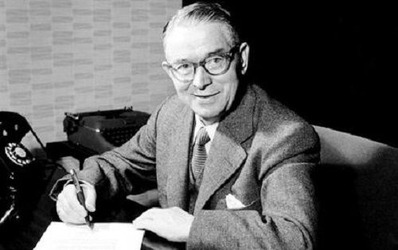
Ole Kirk Kristiansen, a name that resonates with innovation and creativity, is best known as the founder of the LEGO Group. Born on April 7, 1891, in the small Danish village of Sønder Omme, Ole Kirk’s journey from humble beginnings to creating one of the world’s most beloved toys is a remarkable story of perseverance, ingenuity, and the relentless pursuit of quality.
Early Life and Family Background
Ole Kirk Kristiansen was the thirteenth child in a large, impoverished family of farmers in the Jutland region of western Denmark. Growing up in such a challenging environment, Ole learned the values of hard work and resourcefulness from an early age. These values would later become the foundation of his success as an entrepreneur and innovator.
As a young man, Ole trained as a carpenter, a profession that allowed him to harness his skills in woodworking. In 1916, he decided to open his own business in the town of Billund, Denmark. Initially, Ole’s workshop focused on producing furniture and household items, catering primarily to local farmers. Despite the modest scope of his business, Ole was known for his meticulous craftsmanship and attention to detail.
Challenges and the Birth of a New Vision
The road to success was not without its obstacles. In 1924, a fire, accidentally started by one of his sons, destroyed Ole’s workshop. This disaster could have ended his business, but instead, Ole saw it as an opportunity to rebuild. With characteristic determination, he constructed a new, larger workshop, laying the groundwork for future growth.
However, the economic challenges of the 1920s and 1930s, including the impact of the Great Depression, forced Ole to rethink his business strategy. The downturn in the economy meant that fewer people could afford to buy his furniture. In response, Ole began to diversify his products, focusing on smaller, more affordable items.
This shift in focus led to the creation of wooden toys, a product line that would eventually change the course of Ole’s business. His first toys were simple, yet well-crafted items such as pull-along animals, cars, and trucks. While these toys were popular locally, they did not immediately lead to financial success, as many families in the area were still struggling economically.
The Creation of LEGO: A Revolutionary Concept
Despite the initial challenges, Ole Kirk Kristiansen’s commitment to quality and innovation never wavered. In 1934, he decided to name his company LEGO, a name derived from the Danish words “leg godt,” meaning “play well.” This simple yet profound philosophy would become the guiding principle of the company.
The real turning point for LEGO came in the late 1940s when Ole began experimenting with plastic, a relatively new material at the time. The decision to use plastic was a bold move, given that most toys were still made from wood or metal. In 1947, LEGO became the first company in Denmark to purchase an injection-molding machine, which allowed them to mass-produce plastic toys.
One of the first products to emerge from this new technology was a plastic version of the traditional wooden blocks. These early building blocks were the precursors to the modern LEGO brick, featuring simple interlocking mechanisms that allowed for greater creativity and flexibility in play.
Innovation and the Evolution of the LEGO Brick
The introduction of plastic bricks in 1949 marked the beginning of a new era for LEGO. Initially, these bricks, known as “Automatic Binding Bricks,” were not an immediate success. Consumers and retailers were skeptical of plastic toys, which were seen as inferior to traditional materials. However, Ole Kirk Kristiansen remained convinced of the potential of his new product.
In 1953, the company officially named the bricks “LEGO Mursten” (LEGO Bricks), and over the next few years, they continued to refine the design. The breakthrough came in 1958, just a few months before Ole’s death, when the modern LEGO brick design was patented. This design featured an innovative “stud-and-tube” coupling system, which significantly improved the stability and versatility of the bricks.
This new design allowed LEGO bricks to be connected in countless ways, enabling children to build more complex and durable structures. It was a revolutionary concept that transformed LEGO from a simple toy into a tool for creative expression.
Ole Kirk Kristiansen’s Legacy
Ole Kirk Kristiansen passed away on March 11, 1958, at the age of 66, just as LEGO was on the cusp of becoming a global phenomenon. Although he did not live to see the full impact of his invention, his legacy is evident in every LEGO brick sold today. His commitment to quality, innovation, and the belief that “only the best is good enough” continues to define the LEGO brand.
After Ole’s death, his son, Godtfred Kirk Kristiansen, took over the company. Godtfred, who had been deeply involved in the business from a young age, played a crucial role in expanding LEGO’s global reach and solidifying its reputation as a leading toy manufacturer. Under Godtfred’s leadership, LEGO introduced new products and concepts, including the first LEGO sets with instructions, which guided children in building specific models.
The Global Success of LEGO
The 1960s and 1970s were decades of significant growth for LEGO. The company expanded its product line, introduced new colors and brick shapes, and developed themed sets that allowed children to build specific worlds, such as cities, space stations, and castles. The introduction of the LEGO Minifigure in 1978 further enhanced the play experience, adding a new dimension to the creative possibilities.
LEGO’s success was not limited to Europe. The company expanded into North America and other international markets, rapidly becoming one of the most recognized and beloved brands in the world. By the 1980s, LEGO had become a household name, synonymous with creativity, learning, and endless possibilities.
The Kristiansen Family and the Continuing Evolution of LEGO
The Kristiansen family has remained deeply involved in the company throughout its history. After Godtfred Kirk Kristiansen, the leadership passed to his son, Kjeld Kirk Kristiansen, who took the reins in 1979. Kjeld continued to drive innovation within the company, overseeing the introduction of new product lines, such as LEGO Technic, LEGO Mindstorms, and LEGO Friends.
Under Kjeld’s leadership, LEGO also expanded into digital play, developing video games, apps, and online platforms that allowed children to engage with LEGO in new and exciting ways. This blend of traditional brick-building and modern technology helped LEGO stay relevant in an increasingly digital world.
Today, LEGO remains a family-owned business, with the Kristiansen family playing an active role in its management. The company continues to thrive, with billions of LEGO bricks produced each year and sold in over 140 countries. Despite its global reach, LEGO has stayed true to Ole Kirk Kristiansen’s original vision: to inspire and develop the builders of tomorrow through play.
The Enduring Appeal of LEGO
The enduring appeal of LEGO lies in its simplicity and versatility. With just a few basic bricks, children (and adults) can create anything they can imagine. This open-ended play encourages creativity, problem-solving, and spatial awareness, making LEGO not just a toy, but a valuable educational tool.
LEGO’s success is also a testament to the company’s commitment to quality. From the very beginning, Ole Kirk Kristiansen insisted that “only the best is good enough,” a philosophy that has been passed down through generations. This commitment to quality is evident in every LEGO brick, which is designed to last for decades and to work seamlessly with bricks from any other LEGO set, regardless of when it was produced.
Conclusion
Ole Kirk Kristiansen’s story is one of innovation, resilience, and an unwavering commitment to quality. From his humble beginnings as a carpenter in a small Danish village to the creation of one of the most iconic toys in history, Ole’s life and legacy continue to inspire millions of people around the world.
The LEGO brick, a simple yet powerful invention, has transcended generations and geographic boundaries, becoming a universal symbol of creativity and play. Today, more than 60 years after Ole’s death, the company he founded continues to thrive, staying true to the values he instilled and continuing to inspire and develop the builders of tomorrow.


