
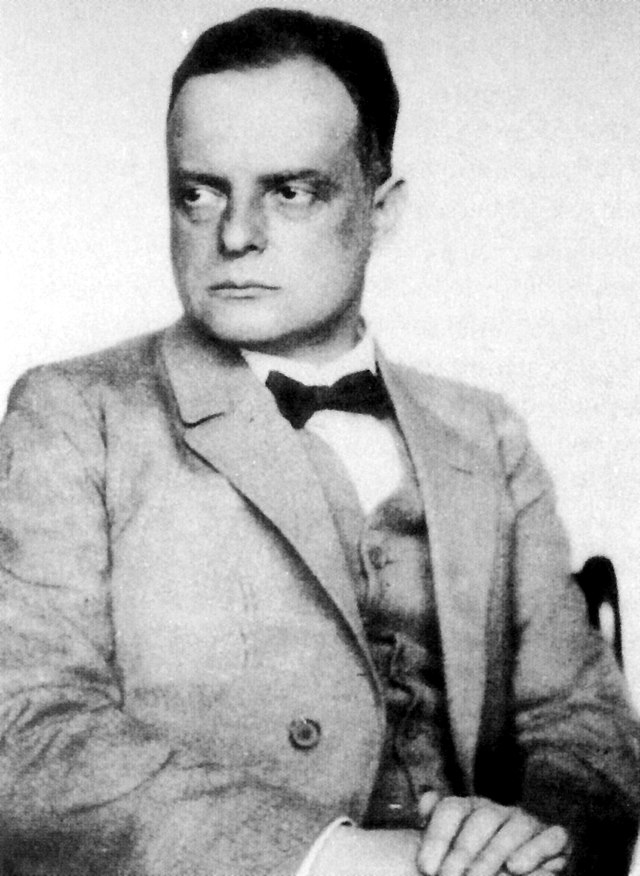
Paul Klee, born on December 18, 1879, in Münchenbuchsee, near Bern, Switzerland, is one of the most influential artists of the 20th century. His unique style, which blends elements of expressionism, cubism, and surrealism, has made a lasting impact on modern art. Klee’s work is celebrated for its inventive use of color, form, and line, often imbued with a sense of playful abstraction and deep philosophical meaning. This article delves into the life, artistic journey, and enduring legacy of Paul Klee, highlighting the key moments that defined his career and cemented his fame in the art world.
Early Life and Education
Paul Klee was born into a family deeply rooted in music. His father, Hans Klee, was a German music teacher, and his mother, Ida Frick Klee, was a Swiss singer. This musical heritage had a profound influence on Klee, who began studying the violin at the age of seven and soon became a member of the Bern Music Association. Music remained a constant source of inspiration throughout his life, often reflected in the rhythmic and harmonic qualities of his art.
Klee’s early education took place in Bern, where he attended the Progymnasium and later the Literaturschule. Despite his musical talents, Klee developed a strong interest in drawing, filling numerous sketchbooks with his work from a young age. By the time he was thirteen, he had already begun to explore the natural world through art, creating detailed drawings of the landscapes around Bern, including the Alps and Lake Thun.
In 1898, seeking to deepen his artistic skills, Klee moved to Munich, Germany, where he enrolled in the private drawing school of Heinrich Knirr. Here, Klee was introduced to the fundamentals of art, but he soon felt the need for greater freedom in his creative expression. His desire to explore new artistic horizons led him to the Munich Academy of Fine Arts, where he studied under the renowned painter Franz von Stuck.
Klee’s time in Munich was formative, as he not only honed his technical skills but also began to immerse himself in the vibrant cultural life of the city. It was during this period that Klee met and formed a relationship with pianist Lily Stumpf, whom he would later marry. This union of visual art and music became a central theme in Klee’s life and work.
Artistic Development and the Italian Influence
In the early 1900s, like many artists of his generation, Paul Klee undertook a journey to Italy, a country whose rich artistic heritage had long inspired European artists. Klee’s Italian sojourn took him to cities such as Milan, Genoa, Pisa, Rome, Naples, and Florence, where he studied the works of the great Renaissance masters. This experience had a profound impact on Klee, who was particularly struck by the use of light and color in Italian art.
Upon returning to Bern in 1903, Klee began to experiment more boldly with his artistic style. He created a series of etchings known as “Inventions,” which demonstrated his growing interest in combining figuration with abstraction. These works, which blend surreal imagery with precise line work, are considered among Klee’s first major achievements and marked the beginning of his mature artistic style.
Despite his growing confidence as an artist, Klee faced several setbacks early in his career. In 1906, he married Lily Stumpf, and the couple moved to Munich, where Klee hoped to establish himself as a professional artist. However, his early works were met with indifference by the art establishment, and he struggled to gain recognition. His submissions to the Munich Secession, a prominent artists’ association, were rejected, leaving Klee disillusioned.
Undeterred, Klee continued to refine his style and sought new avenues to showcase his work. In 1910, he organized his first solo exhibition, which was held in several Swiss cities, including Bern, Zurich, and Basel. This exhibition was a critical success, and Klee began to attract the attention of other artists and critics.
The Blue Rider and the Path to Fame
A turning point in Klee’s career came in 1911 when he became associated with the Blaue Reiter (Blue Rider) group, an influential circle of artists that included Wassily Kandinsky, Franz Marc, and August Macke. The Blaue Reiter artists were united by their interest in exploring the spiritual and expressive possibilities of art, often through abstraction and the use of bold, vibrant colors.
Klee’s involvement with the Blaue Reiter group was transformative. He developed close friendships with Kandinsky and Marc, and their ideas profoundly influenced his work. Klee’s art began to reflect a deeper engagement with color theory, abstraction, and the symbolic potential of visual forms. His paintings and drawings from this period are characterized by a lyrical, almost musical quality, where colors and shapes interact in harmonious, yet often unexpected, ways.
In 1914, Klee embarked on a pivotal journey to Tunisia with August Macke and Louis Moilliet. The experience of the North African landscape had a profound impact on Klee, particularly in terms of his understanding and use of color. As he later wrote in his diary, “Color possesses me. I don’t have to pursue it. It will possess me always, I know it. That is the meaning of this happy hour: color and I are one. I am a painter.”
This revelation marked a significant evolution in Klee’s art. His works from this period began to display a more vibrant palette and a greater emphasis on the interplay between color and form. The Tunisia trip is often cited as the moment when Klee fully embraced his identity as a painter, moving away from his earlier focus on drawing and graphic work.
The Bauhaus Years and Artistic Maturity
After World War I, during which Klee was conscripted into the German army, he returned to a Europe that was both physically and culturally devastated by the conflict. Despite the turmoil, Klee’s career continued to ascend. In 1920, he was invited by the architect Walter Gropius to join the faculty of the Bauhaus, an innovative art and design school in Weimar, Germany.
At the Bauhaus, Klee taught courses on color theory, form, and composition. His teaching, which emphasized the relationship between visual art and other disciplines, such as music and architecture, had a profound influence on the next generation of artists and designers. Klee’s own work during this period reflected the interdisciplinary ethos of the Bauhaus, blending elements of painting, drawing, and design into complex, abstract compositions.
Klee’s time at the Bauhaus was marked by a period of intense creativity. He produced some of his most famous works, including “Twittering Machine” (1922) and “Senecio” (1922), which exemplify his mature style. These paintings are characterized by a whimsical, almost childlike simplicity combined with deep philosophical undertones. Klee’s use of symbolic forms and his exploration of the subconscious mind anticipated many of the ideas that would later be central to surrealism.
In 1926, Klee moved with the Bauhaus to its new location in Dessau, where he continued to teach until 1931. During this time, his reputation as one of the leading modernist artists was solidified, with major exhibitions of his work held in Europe and the United States. Klee’s art, with its unique blend of abstraction, symbolism, and humor, resonated with audiences across the world.
Later Life and the Rise of Nazism
The rise of Nazism in Germany in the early 1930s had a devastating impact on Klee’s life and career. In 1933, shortly after Adolf Hitler came to power, Klee was dismissed from his teaching position at the Düsseldorf Academy due to his perceived association with “degenerate” art, a term the Nazis used to describe modernist works that did not conform to their ideological standards.
Klee’s art was particularly targeted by the Nazis, who viewed his abstract and experimental style as a threat to their vision of cultural purity. Many of his works were removed from German museums, and he was included in the infamous 1937 Degenerate Art exhibition in Munich, where 17 of his pieces were displayed as examples of the “corrupting” influence of modern art.
Fearing for their safety, Klee and his family fled Germany in 1933 and returned to Bern, where they settled permanently. However, Klee’s health began to deteriorate soon after their arrival. He was diagnosed with scleroderma, a chronic illness that progressively impaired his ability to work. Despite his declining health, Klee remained creatively active, producing over a thousand works during the last years of his life.
These late works are often characterized by a stark, somber tone, reflecting both his physical suffering and the turbulent political climate of the time. Yet even in these difficult circumstances, Klee continued to innovate, experimenting with new techniques and materials. His final works, such as “Death and Fire” (1940), are deeply expressive, combining simple, almost primitive forms with a powerful emotional intensity.
Legacy and Influence
Paul Klee passed away on June 29, 1940, in Muralto, Switzerland, leaving behind a vast and diverse body of work that continues to inspire artists and scholars. His contributions to modern art are immense, and his influence can be seen in a wide range of artistic movements, from surrealism to abstract expressionism.
Klee’s art is celebrated for its ability to convey complex ideas and emotions through simple, yet profound, visual language. His exploration of the subconscious, his innovative use of color and form, and his integration of music, poetry, and visual art have made him a key figure in the history of modernism.
In the decades following his death, Klee’s work has been the subject of numerous exhibitions and retrospectives around the world. His influence extends beyond the art world, with his ideas about creativity, abstraction, and the role of the artist in society continuing to resonate in contemporary discussions about art and culture.
Conclusion
Paul Klee’s life and work embody the spirit of modernism: a relentless pursuit of innovation, a deep engagement with the world of ideas, and a commitment to exploring the inner dimensions of human experience. His unique artistic vision, which combines playfulness with profound insight, has left an indelible mark on the history of art.
As we continue to explore the complexities of Klee’s work, we are reminded of the enduring power of creativity and the ability of art to transcend time, culture, and political boundaries. Klee’s legacy is not just in the hundreds of works he left behind, but in the inspiration he continues to provide to artists and thinkers around the world.


