
Jeff Koons is an American artist whose name resonates loudly in the contemporary art world. Known for his provocative, large-scale sculptures and installations, Koons has become a cultural icon whose work both fascinates and polarizes critics and the public alike. Born on January 21, 1955, in York, Pennsylvania, Jeff Koons’ journey to becoming one of the most influential artists of his generation is a compelling tale of passion, innovation, and controversy. This article delves into the life and career of Jeff Koons, exploring his age, rise to fame, and significant life highlights, providing a nuanced understanding of the artist’s impact on the world of art.
Early Life and Education: The Formative Years
Jeff Koons was born into a middle-class family in York, Pennsylvania. His father owned a furniture store, and his mother was a housewife. From an early age, Koons showed a keen interest in art, particularly painting. Recognizing his passion, his parents encouraged him by arranging private art lessons. These lessons laid the foundation for Koons’ future artistic endeavors, instilling in him a deep appreciation for creativity and aesthetics.
In the mid-1970s, Koons pursued formal education in art, enrolling at the Maryland Institute College of Art in Baltimore. He later transferred to the School of the Art Institute of Chicago, where he studied under Ed Paschke, a well-known painter known for his vibrant, surrealist works. Paschke’s influence on Koons was profound, helping to shape the young artist’s vision and approach to art. During this period, Koons also worked as an assistant to Paschke, an experience that further honed his skills and understanding of the art world.
The Shift to Conceptual Art: New York and the Emergence of a Unique Style
After completing his education, Koons moved to New York City in 1977, a decision that would prove pivotal in his career. New York in the late 1970s was a hub of artistic experimentation and innovation, and Koons was eager to immerse himself in this vibrant environment. He initially worked various jobs, including as a stockbroker, while pursuing his art on the side. This experience in the financial world would later inform much of his work, particularly his exploration of themes related to capitalism, consumerism, and value.
It was in New York that Koons began to develop the distinct style for which he is now famous. Moving away from traditional painting, Koons embraced conceptual art, a genre that prioritizes ideas over aesthetic form. He started to create works that blended elements of pop culture with fine art, drawing inspiration from artists like Andy Warhol and Marcel Duchamp. His work during this period was marked by a fascination with mass-produced objects, which he often incorporated into his installations and sculptures.
Breakthrough and Rise to Fame: The 1980s and Beyond
Koons’ breakthrough came in 1980 with his first major installation, “The New,” exhibited at the New Museum in New York. This installation featured a series of vacuum cleaners encased in Plexiglas, illuminated by fluorescent lights. The work was a commentary on consumer culture and the fetishization of everyday objects, themes that would become central to Koons’ oeuvre. “The New” was met with critical acclaim and established Koons as a rising star in the art world.
Throughout the 1980s, Koons continued to push the boundaries of contemporary art with a series of provocative works that challenged conventional notions of taste, beauty, and value. His “Equilibrium” series, for example, featured basketballs suspended in tanks of distilled water, symbolizing the elusive nature of perfection and balance. Another notable work from this period is “Banality,” a series of porcelain and wooden sculptures that included depictions of Michael Jackson and his pet chimpanzee, Bubbles. These works were characterized by their kitschy aesthetic and playful yet critical engagement with popular culture.
Koons’ work during the 1980s earned him widespread recognition, but it also attracted its share of controversy. Critics were divided on whether his art was a brilliant critique of consumerism or a shallow celebration of it. Nevertheless, Koons’ ability to provoke discussion and challenge viewers’ perceptions cemented his status as one of the most important artists of his generation.
Personal Life: Love, Loss, and Legal Battles
Jeff Koons’ personal life has been as eventful as his career. In 1991, he married Ilona Staller, an Italian porn star and politician also known as “Cicciolina.” The marriage garnered significant media attention, not least because of the explicit nature of some of Koons’ artworks from this period, which featured both him and Staller in various sexual poses. These works, part of his “Made in Heaven” series, blurred the line between art and pornography, further fueling the controversy surrounding Koons’ career.
The marriage between Koons and Staller was short-lived, ending in a bitter divorce in 1994. The couple’s split was marked by a highly publicized custody battle over their son, Ludwig. Koons eventually lost custody, a decision that devastated him and influenced his later work. The legal battles with Staller continued for years, adding another layer of complexity to Koons’ already tumultuous personal life.
Despite these challenges, Koons continued to produce art that captivated audiences and pushed the boundaries of contemporary art. His work during the 1990s and 2000s included large-scale sculptures such as “Puppy,” a 40-foot-tall topiary sculpture of a West Highland White Terrier made of flowers. “Puppy” was exhibited at various locations around the world, including the Guggenheim Museum in Bilbao, Spain, where it became one of the museum’s most iconic pieces.
Legacy and Influence: The Impact of Jeff Koons on Contemporary Art
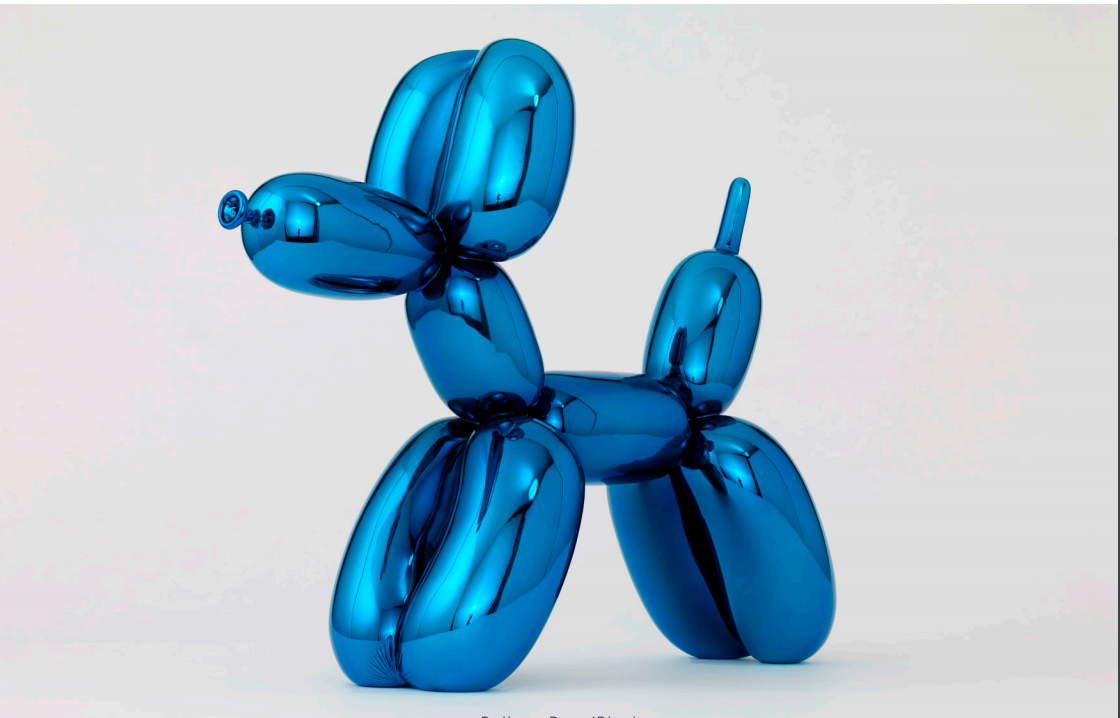
Jeff Koons’ influence on contemporary art is undeniable. His work has inspired countless artists and has been the subject of numerous exhibitions and retrospectives. In 2008, Koons became the most expensive living artist when his sculpture “Balloon Dog (Orange)” sold for $58.4 million at auction. This achievement underscored Koons’ status as a leading figure in the art world, but it also sparked debates about the commodification of art and the role of money in the art market.
Critics and scholars have often debated the significance of Koons’ work. Some view him as a visionary who has successfully bridged the gap between high art and popular culture, while others see him as a mere provocateur whose work lacks depth. Regardless of where one stands on this debate, there is no denying that Koons has left an indelible mark on the art world. His ability to create works that resonate with both the public and the art establishment is a testament to his talent and understanding of the cultural zeitgeist.
Koons’ work also raises important questions about the nature of art in the 21st century. In an era where the lines between art, entertainment, and commerce are increasingly blurred, Koons’ work challenges us to reconsider our assumptions about value, authenticity, and creativity. His use of industrial processes and mass-produced materials further complicates traditional notions of artistic authorship and originality, making him a truly modern artist in every sense of the word.
Conclusion: The Ongoing Journey of Jeff Koons
As Jeff Koons continues to create and exhibit new works, his legacy as one of the most influential artists of his time remains secure. His ability to provoke thought, stir controversy, and captivate audiences has made him a central figure in the world of contemporary art. Whether one views him as a genius or a charlatan, there is no denying the impact that Koons has had on the art world and on our understanding of art itself.
In examining the life and career of Jeff Koons, we see a story of ambition, creativity, and resilience. From his early days in Pennsylvania to his rise to international fame, Koons has continually pushed the boundaries of what art can be. His work challenges us to look beyond the surface, to question our assumptions, and to engage with the world in new and unexpected ways. As we reflect on his achievements, it is clear that Jeff Koons is not just an artist; he is a cultural phenomenon whose influence will be felt for generations to come.


