
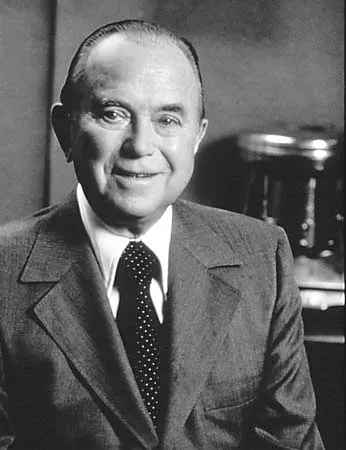
Ray Kroc is a name that has become almost synonymous with fast food, particularly with the global behemoth, McDonald’s. Born Raymond Albert Kroc on October 5, 1902, in Oak Park, Illinois, Kroc’s journey from a humble background to one of the most influential entrepreneurs in American history is both fascinating and instructive. His story is not just about the creation of a fast-food empire but also about the power of perseverance, innovation, and vision.
Early Life and Beginnings
Ray Kroc was born to parents of Czech origin in a suburb near Chicago. Growing up in Illinois, Kroc displayed an entrepreneurial spirit from a young age. During World War I, despite being only 15 years old, Kroc lied about his age to become an ambulance driver for the Red Cross. This early experience exposed him to different people and ideas, including a fellow ambulance driver who would also go on to change the world—Walt Disney. The parallel paths of these two iconic figures are a testament to the spirit of American entrepreneurship in the early 20th century.
Initial Ventures and Struggles
Ray Kroc’s early career was marked by a series of ventures that didn’t quite hit the mark. He dabbled in various fields, opening a music store, selling real estate, and even working as a paper cup salesman. However, these ventures did not bring him the success he sought. Despite these setbacks, Kroc’s resilience never wavered. He was a man constantly on the lookout for the next big opportunity.
It wasn’t until 1938, when Kroc was in his mid-30s, that he found a product that truly captured his interest—a machine called the Multimixer, which could make multiple milkshakes at once. Kroc saw the potential in this product and began selling it to restaurants across the United States. This role as a salesman for the Prince Multimixer introduced him to the restaurant industry, setting the stage for his future success.
The Turning Point: Meeting the McDonald Brothers
The pivotal moment in Ray Kroc’s life came in the early 1950s when he noticed that one small restaurant in San Bernardino, California, was ordering an unusually high number of Multimixers. Intrigued, Kroc decided to visit this restaurant in person. There, he met Richard and Maurice McDonald, two brothers who had revolutionized the fast-food industry by applying a production line approach to their kitchen operations. Their restaurant was a well-oiled machine, serving high-quality food quickly and efficiently. The McDonald brothers had already developed a successful model, but they lacked the vision to scale it beyond a few locations.
Kroc immediately recognized the potential in what the McDonald brothers had created. He saw an opportunity to take their model and replicate it across the country through franchising. Convinced that this was his big break, Kroc proposed a partnership to the McDonald brothers, offering to expand their brand nationwide. In 1954, at the age of 52—an age when many people are thinking about retirement—Kroc entered into a business agreement with the McDonald brothers that would change the course of history.
The Birth of the McDonald’s Empire
Ray Kroc’s vision for McDonald’s was grand. He didn’t just want to open a few more restaurants; he wanted to create a nationwide chain that offered the same high-quality food and fast service at every location. To do this, Kroc introduced the concept of franchising on a scale that had never been seen before.
Unlike other franchising models of the time, which often granted large territories to a single franchisee, Kroc’s model focused on granting franchises for single locations. This approach allowed Kroc to maintain a high level of control over each restaurant, ensuring that all McDonald’s locations adhered to the same strict standards of quality and service. This uniformity was key to McDonald’s success, as it allowed customers to know exactly what to expect, no matter which McDonald’s they visited.
Kroc’s attention to detail and insistence on uniformity extended beyond just the food. He was involved in every aspect of the business, from the design of the restaurants to the training of the staff. Kroc understood that the success of McDonald’s depended on creating a consistent and reliable customer experience.
Innovations and Expansion
One of Ray Kroc’s most significant contributions to the McDonald’s brand was his insistence on the highest standards of cleanliness, quality, and service. He believed that McDonald’s should not just be a place to eat, but a place that families could trust for a clean and welcoming environment. This focus on quality was revolutionary at the time and set McDonald’s apart from other fast-food chains.
Under Kroc’s leadership, McDonald’s expanded rapidly. By 1958, just four years after Kroc had joined the company, McDonald’s had sold its 100 millionth hamburger. This explosive growth was driven by Kroc’s relentless focus on efficiency and customer satisfaction. He introduced new practices and technologies that allowed McDonald’s to serve more customers faster than ever before.
One of Kroc’s most innovative ideas was the development of the McDonald’s training program, which he called “Hamburger University.” This program was designed to teach franchisees and managers the McDonald’s way of doing business, ensuring that every restaurant operated with the same level of efficiency and quality. Hamburger University became a cornerstone of McDonald’s success, producing graduates who were experts in every aspect of running a McDonald’s restaurant.
The Buyout and Complete Control
While Ray Kroc and the McDonald brothers initially had a partnership, it became clear over time that they had different visions for the future of the company. The McDonald brothers were content with running a few successful restaurants, while Kroc wanted to build a global empire. This difference in vision led to tensions between Kroc and the brothers.
In 1961, Kroc decided to buy out the McDonald brothers entirely, gaining full control of the company. The deal was worth $2.7 million—a staggering sum at the time—but Kroc believed it was worth every penny. With the McDonald brothers out of the picture, Kroc was free to implement his vision without interference.
After the buyout, Kroc wasted no time in expanding the McDonald’s brand even further. He introduced the iconic Golden Arches logo, which became one of the most recognizable symbols in the world. He also launched an aggressive marketing campaign, using television advertisements to promote McDonald’s to a national audience.
Going Public and Global Expansion
In 1965, Ray Kroc took McDonald’s public, a move that proved to be incredibly lucrative. The initial public offering (IPO) was a huge success, making Kroc and many of his early franchisees millionaires overnight. But more importantly, going public provided McDonald’s with the capital it needed to continue its rapid expansion.
By the late 1960s, McDonald’s had become a household name in the United States, and Kroc set his sights on global expansion. The first international McDonald’s opened in Canada in 1967, followed by locations in Europe, Asia, and beyond. Kroc’s vision of a global fast-food empire was becoming a reality.
Diversifying into Baseball
In 1974, Ray Kroc, who had by then stepped down as CEO of McDonald’s, made an unexpected move by purchasing the San Diego Padres, a Major League Baseball team. Kroc had always been a baseball fan, and he saw the purchase as a new challenge. While Kroc’s tenure as the owner of the Padres did not bring the team much success on the field, it did solidify his status as one of America’s most prominent entrepreneurs.
Legacy and Cultural Impact
Ray Kroc passed away on January 14, 1984, at the age of 81, leaving behind a legacy that is still felt today. His life story was immortalized in the 2016 film The Founder, where he was portrayed by actor Michael Keaton. The film highlights Kroc’s determination, his sometimes ruthless business practices, and his relentless pursuit of success.
Kroc’s impact on the fast-food industry cannot be overstated. He transformed McDonald’s from a small, regional chain into one of the largest and most successful corporations in the world. Today, McDonald’s serves over 69 million customers daily in more than 100 countries. The principles that Kroc established—quality, service, cleanliness, and value—continue to guide the company’s operations.
Beyond the business world, Kroc’s story is often cited as an example of the American Dream. He demonstrated that success is not just about having a great idea, but also about the ability to execute that idea better than anyone else. Kroc’s life is a testament to the power of persistence, innovation, and the belief that it’s never too late to achieve greatness.
Conclusion
Ray Kroc’s story is one of extraordinary achievement, driven by a relentless pursuit of excellence. From his humble beginnings as a paper cup salesman to the founder of a global fast-food empire, Kroc’s journey is a blueprint for success in the world of business. His innovations in franchising, commitment to quality, and visionary leadership transformed McDonald’s into an iconic brand that continues to dominate the fast-food industry.
As a symbol of American entrepreneurship, Kroc’s legacy endures not just in the golden arches that dot the globe, but in the very concept of fast food as we know it today. His impact is a reminder that with determination, a clear vision, and the willingness to take risks, anyone can turn a small idea into a global phenomenon.


