
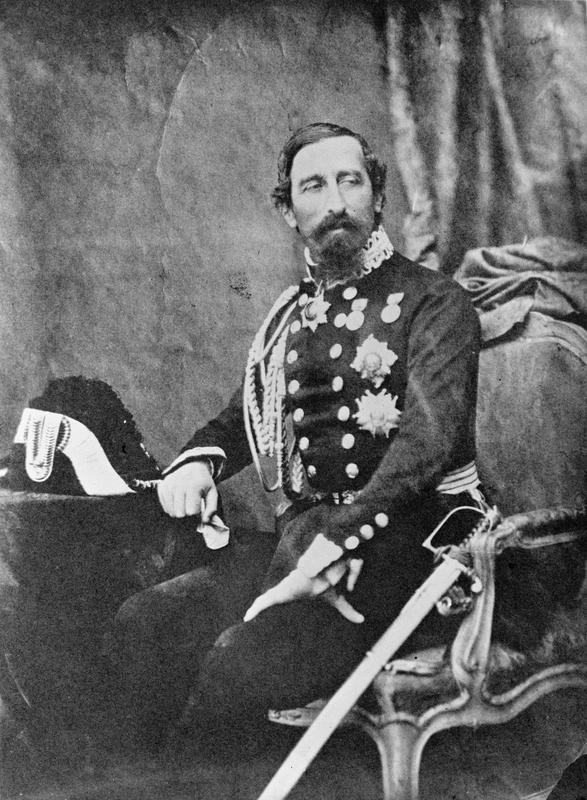
Alfonso La Marmora is a towering figure in the history of Italy, remembered for his significant contributions to the military and political landscape during a period of great transformation in the country. Born into an aristocratic family in Turin on November 18, 1804, La Marmora’s life was marked by a steadfast commitment to the modernization of the Italian military and the unification of Italy. His legacy, intertwined with the broader narrative of the Italian Risorgimento, highlights the crucial role he played in shaping the nation. This article delves into the life, achievements, and enduring influence of Alfonso La Marmora, providing insights into his military career, political endeavors, and the historical context that shaped his path.
Early Life and Military Beginnings
Alfonso Ferrero La Marmora was born into a distinguished family with a long tradition of military service. He was the penultimate child of Celestino Ferrero, the Marquis of La Marmora, and Raffaella Argentero di Rasezio. His family’s noble status and military background meant that a career in the armed forces was almost predestined. At the age of twelve, young Alfonso entered the Military Academy of Turin, following in the footsteps of his forebears.
La Marmora graduated from the academy in 1822, embarking on what would become a distinguished military career. His early years in the military were marked by a rigorous education in both the theoretical and practical aspects of warfare. Recognizing the importance of modern military tactics and technology, La Marmora was sent to Prussia to study their artillery organization—a move that would significantly influence his later work in reorganizing the Piedmontese military forces.
Upon his return to Italy, La Marmora began implementing the lessons he had learned abroad. One of his most notable early contributions was the creation of specialized horse artillery units, which enhanced the mobility and effectiveness of the Piedmontese army. His reforms were highly regarded, earning him the favor of the House of Savoy and a role as a tutor to the future King Vittorio Emanuele II and his brother, Ferdinando of Savoy.
The First War of Independence: A Baptism by Fire
La Marmora’s military career reached a critical juncture with the outbreak of the First Italian War of Independence in 1848. At this time, La Marmora held the rank of Major and quickly distinguished himself through his leadership during key engagements, including the Siege of Peschiera and the Battle of Custoza. His performance in these battles demonstrated his strategic acumen and earned him a promotion to the rank of Colonel.
The war, however, ended in defeat for the Kingdom of Sardinia, and the aftermath saw La Marmora take on a new and challenging role. Following the disastrous Battle of Novara in 1849, which resulted in the abdication of King Carlo Alberto, La Marmora was dispatched to Genoa, where a republican uprising had broken out. Tasked with quelling the rebellion, La Marmora’s actions were swift and decisive, albeit controversial. His use of force to suppress the uprising earned him the moniker “the cannoneer of the people,” a reflection of both his effectiveness and the ruthlessness with which he restored order.
Despite the controversy, La Marmora’s actions in Genoa cemented his reputation as a capable and reliable military leader. Later that year, he was appointed Minister of War, a position he would hold for nearly a decade. During his tenure, La Marmora undertook a comprehensive modernization of the Piedmontese army, introducing reforms that would later prove crucial in the wars of Italian unification.
The Crimean War and International Recognition
One of the most significant chapters in La Marmora’s career was his involvement in the Crimean War (1853-1856). This conflict, although distant from Italian soil, had profound implications for Italy’s international standing and La Marmora’s personal reputation. In 1855, as the Kingdom of Sardinia sought to assert itself on the European stage, La Marmora was tasked with leading a contingent of 15,000 troops to join the allied forces of France, Britain, and the Ottoman Empire against Russia.
La Marmora’s leadership during the Crimean campaign was exemplary, and his troops performed admirably under challenging conditions. The expedition served a dual purpose: it bolstered Sardinia’s international prestige and provided La Marmora with valuable experience in coalition warfare. The successful participation of Sardinian forces in the war was a diplomatic coup for Prime Minister Camillo Benso di Cavour, who used it to gain Sardinia a seat at the negotiating table during the post-war Congress of Paris.
However, the campaign was not without personal tragedy for La Marmora. His brother, Alessandro La Marmora, who commanded the elite Bersaglieri troops, succumbed to cholera during the campaign. This loss deeply affected Alfonso, who nonetheless returned to Italy as a hero, having secured both military honors and political capital for his country.
The Second War of Independence and Political Ascendancy
The 1850s were a period of intense political activity in Italy, with the Kingdom of Sardinia playing a leading role in the movement toward unification. Alfonso La Marmora remained at the center of these developments, both as a military leader and a statesman. In 1859, with tensions between Sardinia and Austria reaching a boiling point, La Marmora was appointed Chief of Staff of the Sardinian army and played a crucial role in the Second Italian War of Independence.
The war, which saw Sardinia allied with France against Austria, was a pivotal moment in the unification process. La Marmora’s leadership was instrumental in several key battles, including the Battle of Solferino, which, despite its heavy casualties, resulted in a decisive victory for the allied forces. The war ended with the Treaty of Villafranca, which, while falling short of full unification, significantly advanced the cause by leading to the annexation of Lombardy into the Kingdom of Sardinia.
Following the armistice, Prime Minister Cavour, disillusioned with the terms of the treaty, resigned in protest. In his absence, King Vittorio Emanuele II appointed La Marmora to form a new government. As Prime Minister, La Marmora focused on stabilizing the kingdom’s finances, a task he undertook with his Finance Minister, Quintino Sella. Their efforts were crucial in laying the economic foundations for the newly unified Italy.
Governorship of Milan and the Struggle Against Brigandage
After his tenure as Prime Minister, La Marmora continued to serve the Kingdom of Italy in various capacities. In 1860, he was appointed Governor of Milan, a key role during a tumultuous time. The following year, after the proclamation of the Kingdom of Italy, La Marmora was sent to Naples as Prefect and Commander-General of the military forces stationed there.
The Kingdom of Italy was still in its infancy, and the southern regions, particularly Naples and its surrounding areas, were plagued by brigandage and popular unrest. La Marmora’s task was to suppress these uprisings and bring order to the region—a formidable challenge that required both military and administrative skill.
La Marmora’s time in Naples was marked by a rigorous campaign against brigandage, which involved both military operations and efforts to address the underlying social and economic issues fueling the unrest. His approach was often harsh, reflecting the government’s determination to assert control over the newly acquired territories. While his actions were effective in restoring order, they also earned him a reputation for being uncompromising and severe.
The Third War of Independence and Later Years
La Marmora’s military career did not end with the unification of Italy. In 1864, he was once again called upon to serve as Prime Minister, during which he negotiated an alliance with Prussia. This alliance set the stage for Italy’s participation in the Third Italian War of Independence (1866), part of the larger Austro-Prussian War.
La Marmora led the Italian forces during this conflict, but the campaign was marred by poor coordination and strategic errors, culminating in the defeat at the Battle of Custoza. The outcome of the war, although disappointing for Italy, still resulted in the acquisition of Venetia, largely due to Prussia’s victory over Austria rather than Italian military success.
The defeat at Custoza was a bitter blow for La Marmora, and it led to his resignation as Chief of Staff and his withdrawal from active political life. However, his service to Italy was not entirely over. In 1870, during the final stages of the unification process, La Marmora was appointed Lieutenant of Rome, a position he held until the city’s formal annexation into the Kingdom of Italy in 1871.
In the final years of his life, La Marmora reflected on his experiences and published a book titled “State Secrets in Constitutional Government” in 1877, in which he shared insights into the challenges of governance during the turbulent years of the Risorgimento.
Legacy and Influence
Alfonso La Marmora passed away on January 5, 1878, in Florence at the age of 74. His death marked the end of an era for Italy, as he was one of the last surviving figures who had played a direct role in the country’s unification.
La Marmora’s legacy is multifaceted. As a military leader, he was instrumental in modernizing the Italian army and played a key role in several crucial campaigns that paved the way for unification. His efforts to reorganize the military, particularly his introduction of mobile artillery and specialized troops, laid the groundwork for Italy’s military successes in the latter half of the 19th century.
Politically, La Marmora’s tenure as Prime Minister and his various administrative roles demonstrated his commitment to the stability and prosperity of the newly unified Italy. His work in Naples and Milan, while controversial, was crucial in consolidating the gains of the unification process and ensuring that the new kingdom could function as a cohesive entity.
La Marmora’s life and career were emblematic of the broader struggles and triumphs of the Italian Risorgimento. His contributions to the military and political development of Italy have earned him a lasting place in the annals of Italian history, where he is remembered not only as a skilled general but also as a dedicated statesman who played a pivotal role in the birth of modern Italy.


