
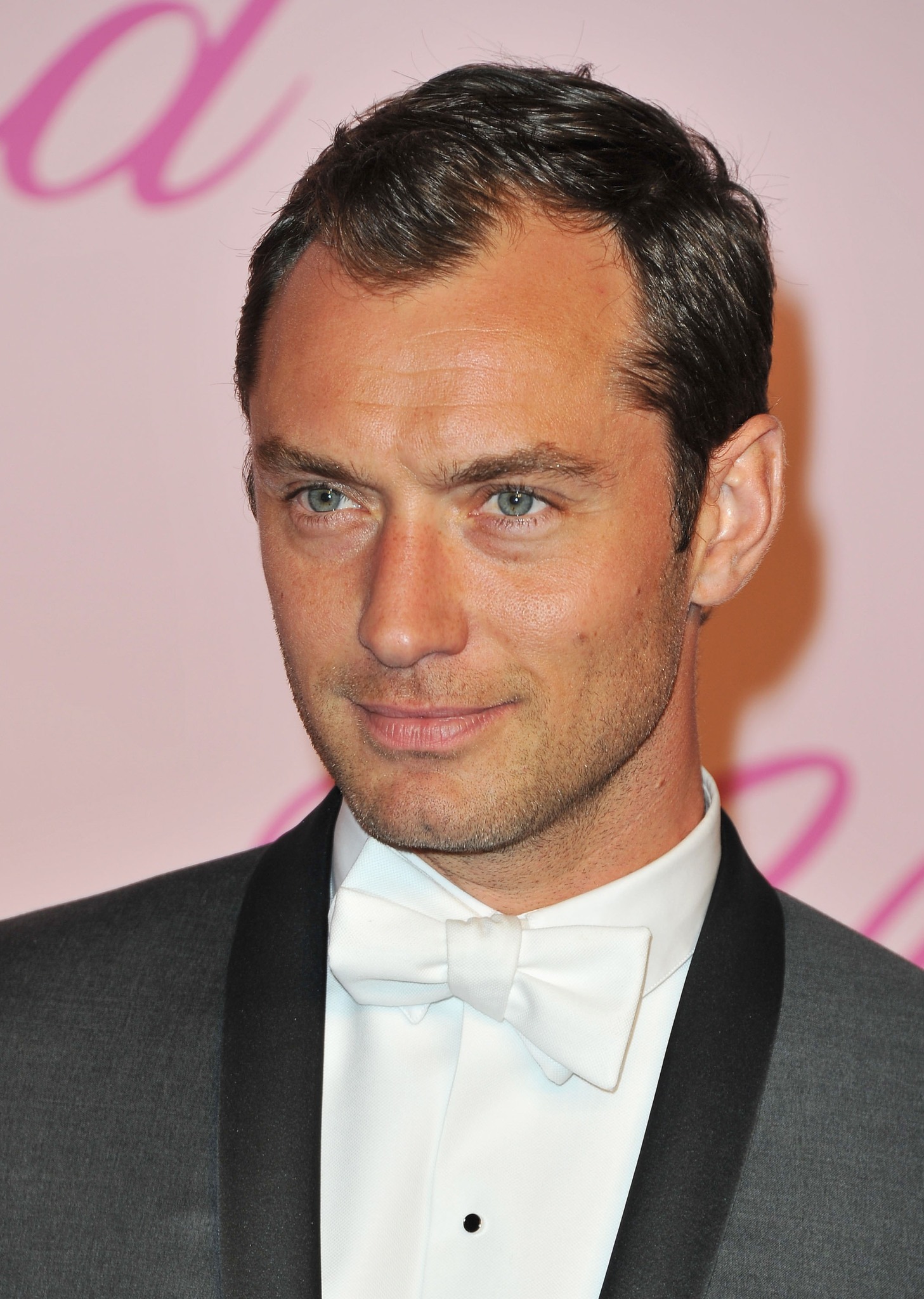
Jude Law, born David Jude Heyworth Law on December 29, 1972, in London, England, is a celebrated British actor whose career has spanned several decades and numerous genres. With a combination of classical training, natural charisma, and a flair for selecting diverse roles, Law has become one of the most respected and versatile actors of his generation. This article explores his age, rise to fame, and the key moments that have defined his life and career.
Early Life and Beginnings in Acting
Jude Law was born into a family with a deep appreciation for the arts. His parents, Peter Robert Law and Margaret Anne Heyworth, were both teachers, and they encouraged their children to explore creative pursuits. Jude grew up in Blackheath, a district in South East London, alongside his sister Natasha, who would later become a well-known illustrator.
From a young age, Law exhibited a keen interest in acting. He attended John Ball Primary School in Blackheath and later enrolled at the Alleyn’s School, a prestigious independent school known for its strong emphasis on the arts. It was here that Law’s passion for drama truly took root. At just 12 years old, he began studying at the Guildhall School of Music and Drama, one of the leading institutions for performing arts in the UK. During his time at Guildhall, he shared a room with another future star, Ewan McGregor.
Breaking into the Industry: Early Career in Theatre and Television
Jude Law’s early career was marked by his dedication to the stage. He started performing with the National Youth Music Theatre, where his talent was quickly recognized. At 17, Law made his television debut in the British drama “The Tailor of Gloucester” (1989), directed by John Michael Phillips. This role led him to drop out of school to focus entirely on his burgeoning acting career.
In the early 1990s, Law’s career began to gain momentum with a series of notable roles in both theatre and television. He starred in the British soap opera “Families” in 1990, which helped him gain recognition among UK audiences. His stage career took off in 1992 with his role as Freddie in “Pygmalion,” a play by George Bernard Shaw. Law’s portrayal of Foxtrot Darling in “The Fastest Clock in the Universe” further established him as a rising star in the London theatre scene.
Rise to Prominence: Hollywood Breakthrough
Jude Law’s transition from theatre to film was marked by a series of performances that showcased his range and versatility as an actor. His first significant film role came in 1994 with the movie “Shopping,” where he met his future wife, actress Sadie Frost. However, it was his portrayal of Lord Alfred “Bosie” Douglas, the lover of Oscar Wilde, in the 1997 film “Wilde” that truly marked his entry into the Hollywood spotlight. This role earned Law the Evening Standard British Film Award for Most Promising Newcomer.
The late 1990s saw Law taking on a variety of roles that displayed his ability to adapt to different genres. In 1997, he starred in “Gattaca,” a science fiction film where he played Jerome Eugene Morrow, a former Olympic swimmer who becomes paralyzed. His performance in this film, alongside Ethan Hawke and Uma Thurman, was critically acclaimed and solidified his place as a Hollywood leading man.
Another significant role during this period was in Clint Eastwood’s “Midnight in the Garden of Good and Evil” (1997), where he portrayed the ill-fated lover of Kevin Spacey’s character. These roles set the stage for Law’s breakout performance in “The Talented Mr. Ripley” (1999), where he played the charming yet doomed Dickie Greenleaf. His work in this film earned him his first Academy Award nomination for Best Supporting Actor and a Golden Globe nomination, propelling him to international stardom.
The 2000s: A Decade of Success and Scandals
The 2000s were a pivotal decade for Jude Law, both professionally and personally. His career soared with roles in high-profile films and collaborations with some of the industry’s most respected directors. One of his early successes during this period was “Enemy at the Gates” (2001), where he played a Russian sniper during World War II. This film, directed by Jean-Jacques Annaud, further demonstrated Law’s ability to carry a leading role in a major Hollywood production.
In 2001, Law starred in “A.I. Artificial Intelligence,” directed by Steven Spielberg. His portrayal of Gigolo Joe, a robot designed to be a companion, earned him another Golden Globe nomination. The film was a critical and commercial success, further solidifying Law’s status as one of Hollywood’s most sought-after actors.
Law continued to take on challenging roles, including in “Road to Perdition” (2002), where he starred alongside Tom Hanks, and “Cold Mountain” (2003), for which he received his second Academy Award nomination, this time for Best Actor. “Cold Mountain,” directed by Anthony Minghella, was one of the most critically acclaimed films of the decade, and Law’s performance as a Confederate soldier was widely praised.
However, Law’s personal life during this period was marked by turbulence. His marriage to Sadie Frost, with whom he had three children, ended in divorce in 2003. The split was highly publicized, partly due to Law’s rumored affair with actress Nicole Kidman, his co-star in “Cold Mountain.” Following his divorce, Law became romantically involved with actress Sienna Miller, which led to a highly publicized scandal in 2005 when it was revealed that Law had an affair with his children’s nanny, Daisy Wright. The scandal dominated tabloid headlines, and Law issued a public apology to Miller. The couple eventually reconciled, but their relationship ended for good in 2006.
Continued Success: Sherlock Holmes and Beyond
Despite the personal challenges, Jude Law’s career continued to flourish. In 2009, he starred as Dr. John Watson in “Sherlock Holmes,” directed by Guy Ritchie and starring Robert Downey Jr. as the titular detective. The film was a box office hit, and Law’s portrayal of Watson received widespread acclaim. He reprised the role in the 2011 sequel, “Sherlock Holmes: A Game of Shadows,” which was equally successful.
During this period, Law also returned to his roots in theatre. In 2009, he starred in a production of “Hamlet” on London’s West End, which later transferred to Broadway. His performance received mixed reviews, but he was nonetheless nominated for a Tony Award for Best Actor. This marked a significant achievement in Law’s career, highlighting his versatility as an actor capable of excelling in both film and theatre.
In 2012, Law took on the role of Alexei Karenin in “Anna Karenina,” a film adaptation of Leo Tolstoy’s classic novel directed by Joe Wright. His performance as the stoic and tormented husband of the titular character, played by Keira Knightley, was well-received by critics and audiences alike.
The 2010s: Diversification and New Ventures
As the 2010s progressed, Jude Law continued to diversify his career, taking on a variety of roles in different genres. In 2013, he starred in “Dom Hemingway,” a black comedy where he played the titular character, a brash and larger-than-life safecracker. Law’s performance was praised for its energy and humor, showcasing another facet of his acting abilities.
Law also made a significant impact on television during this decade. In 2016, he starred in the critically acclaimed series “The Young Pope,” directed by Paolo Sorrentino. Law’s portrayal of Lenny Belardo, the first American pope, was both enigmatic and compelling, earning him widespread praise and a Golden Globe nomination. The success of the series led to a follow-up, “The New Pope,” in 2020, where Law reprised his role.
In addition to his work in television, Law continued to take on challenging film roles. In 2017, he was cast as Albus Dumbledore in the “Fantastic Beasts” film series, a prequel to the “Harry Potter” films. His portrayal of the younger version of the beloved wizard was well-received, and he continued in the role for the subsequent films in the series, including “Fantastic Beasts: The Secrets of Dumbledore” (2022).
Personal Life and Legacy
Throughout his career, Jude Law has been known not only for his acting talent but also for his high-profile relationships and family life. In addition to his three children with Sadie Frost, Law has two other children from relationships with model Samantha Burke and singer Catherine Harding. Despite the challenges he has faced in his personal life, Law remains dedicated to his family and continues to be involved in their lives.
Law’s legacy in the entertainment industry is marked by his ability to navigate both the highs and lows of fame. He has consistently chosen roles that challenge him as an actor, and his performances have earned him a place among the most respected actors of his generation. Whether on the stage, in film, or on television, Jude Law’s work continues to captivate audiences and critics alike.
Conclusion
Jude Law’s career is a testament to his talent, versatility, and resilience. From his early days on the London stage to his rise as a Hollywood star, Law has consistently delivered performances that have captivated audiences and earned critical acclaim. Despite the personal challenges he has faced, including public scandals and the pressures of fame, Law has remained a dedicated and respected figure in the entertainment industry.
As he continues to take on new and diverse roles, Jude Law’s influence on both film and theatre is undeniable. His ability to adapt to different genres and mediums has ensured that his career remains as dynamic and compelling as ever. For fans and aspiring actors alike, Jude Law’s journey serves as an inspiration and a reminder of the enduring power of talent and perseverance.


