
Introduction
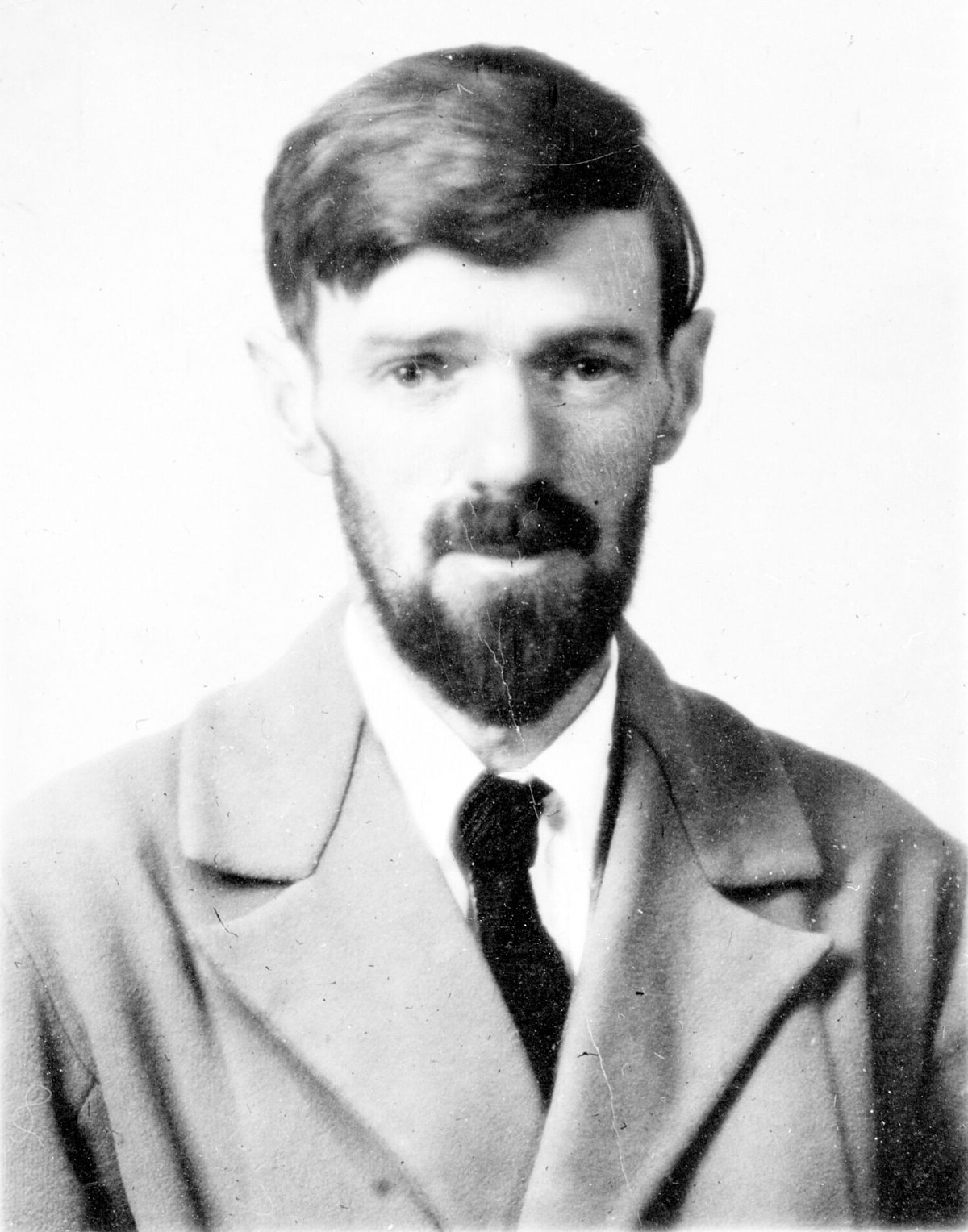
David Herbert Richards Lawrence, better known as D.H. Lawrence, was an English writer, poet, and literary critic whose work has had a profound impact on 20th-century literature. Born on September 11, 1885, in Eastwood, Nottinghamshire, England, Lawrence’s writings reflect a deep exploration of the human condition, often touching on themes of industrialization, sexuality, and the subconscious mind. His life was as turbulent and intriguing as his works, which remain influential to this day. This article delves into the age, fame, and life highlights of D.H. Lawrence, offering a comprehensive overview for those interested in understanding this literary giant.
Early Life and Education
David Herbert Lawrence was born into a working-class family, the fourth child of Arthur John Lawrence, a coal miner, and Lydia Beardsall, a former schoolteacher. This dichotomy between his father’s rough, working-class background and his mother’s aspirations for a better life greatly influenced Lawrence’s upbringing and later works.
Lawrence attended the local elementary school in Eastwood and later went on to Nottingham High School, where he excelled academically. During these formative years, he developed a close friendship with Jessie Chambers, who would later inspire the character Miriam in his novel Sons and Lovers. This relationship was one of the many that Lawrence would later draw upon in his writing, blending real-life experiences with his creative imagination.
At the age of 16, Lawrence began working as a clerk in a surgical appliance factory in Nottingham. However, a bout of pneumonia forced him to quit this job, a turning point that led him to pursue a career in teaching. In 1902, he started an apprenticeship as a teacher at the British School in Eastwood. His passion for education and literature was evident, and by 1905, he had passed the matriculation exam for the University of London, enabling him to continue his studies at the University College Nottingham.
The Beginning of a Literary Career
Lawrence’s literary career began in earnest while he was still a teacher. In 1907, under the pseudonym Jessie Chambers, he published his first short story, “Preludio a un felice Natale” (“Prelude to a Happy Christmas”), in the Nottinghamshire Guardian. This marked the beginning of a prolific writing career that would span multiple genres, including novels, poetry, short stories, plays, essays, and travel literature.
In 1908, after receiving his teaching certification, Lawrence moved to Croydon, a suburb of London, where he began teaching at Davidson Road School. It was during this period that he started to write more seriously. His early work caught the attention of Ford Madox Ford, the editor of the influential literary magazine The English Review, which published some of Lawrence’s early poems in 1909. This exposure helped Lawrence to make important connections in the literary world.
The year 1910 was a pivotal one for Lawrence. His mother, Lydia, passed away after a long illness. Her death deeply affected him and became the emotional foundation for his novel Sons and Lovers (1913), which many critics consider one of his greatest works. The novel is a semi-autobiographical exploration of Lawrence’s early life, particularly his complex relationship with his mother.
The Early 1910s: Personal Turmoil and Literary Success
In 1911, Lawrence published his first novel, The White Peacock, which was well-received and marked him as a promising new voice in English literature. However, his personal life was in turmoil. In March 1912, he met Frieda von Richthofen, the wife of a professor at Nottingham University College. Frieda was the daughter of a German aristocrat and was already married with children. Despite these complications, the two began a passionate affair, and by May of that year, they had fled to Germany together.
Their relationship was scandalous, not only because of Frieda’s marriage but also because of the outbreak of World War I, which made their union as a German-English couple even more controversial. Nevertheless, Lawrence and Frieda married in July 1914 after Frieda obtained a divorce. Their relationship would be one of the most significant and enduring influences on Lawrence’s life and work.
During this period, Lawrence published several important works, including his second novel, The Trespasser (1912), and his first poetry collection, Love Poems and Others (1913). His third novel, Sons and Lovers, was published in 1913 and is widely regarded as one of the most important English novels of the 20th century. The novel explores the deep psychological conflicts within a working-class family and is often praised for its rich characterization and exploration of human emotions.
World War I and Its Impact
The outbreak of World War I in 1914 had a profound impact on Lawrence’s life and work. Although he was not conscripted due to his poor health, Lawrence was deeply affected by the war and the growing nationalism and xenophobia in England. His marriage to Frieda, who was of German descent, led to suspicion and hostility from both the public and the authorities.
In 1915, Lawrence published The Rainbow, a novel that was immediately banned for its explicit sexual content and criticism of industrial society. The novel’s banning was a significant blow to Lawrence, who was already struggling with financial difficulties and the social ostracism resulting from his marriage to Frieda. Despite this, he continued to write prolifically.
In 1916, Lawrence published Twilight in Italy, a travelogue based on his experiences in Italy, which provided a temporary escape from the war-torn environment of England. However, the couple’s situation worsened in 1917 when they were expelled from Cornwall due to Lawrence’s pacifism and Frieda’s German nationality. This forced them to live a nomadic life, moving from one place to another, often in difficult circumstances.
Despite these challenges, Lawrence continued to produce some of his most significant works during this period. In 1915, he published Amores, his second poetry collection, and in 1917, he released Look! We Have Come Through!, a collection of poems that chronicled his relationship with Frieda. His experiences during the war also inspired his fourth novel, Women in Love (1920), a sequel to The Rainbow. Although not immediately successful, Women in Love is now considered one of Lawrence’s masterpieces.
The 1920s: A Decade of Exploration and Experimentation
The 1920s were a period of intense creativity and experimentation for Lawrence. After the war, he and Frieda traveled extensively, seeking a place where they could live peacefully and away from the constraints of English society. Their travels took them to Italy, Germany, Austria, Australia, Ceylon (now Sri Lanka), and the United States.
During this decade, Lawrence wrote some of his most famous works, including Aaron’s Rod (1922), Kangaroo (1923), and The Plumed Serpent (1926). These novels reflect Lawrence’s growing interest in politics, spirituality, and the concept of personal freedom. His travels also inspired his non-fiction works, such as Sea and Sardinia (1921), which describes his experiences in Sardinia, and Mornings in Mexico (1927), based on his time in Mexico.
In 1922, Lawrence began translating the works of the Italian writer Giovanni Verga, further showcasing his linguistic talents and deepening his appreciation for Italian culture. However, it was during this period that Lawrence’s health began to deteriorate due to tuberculosis, a condition that would eventually claim his life.
Despite his declining health, Lawrence remained incredibly productive. In 1928, he published Lady Chatterley’s Lover, a novel that would become his most famous and controversial work. The novel’s explicit depictions of sexual relationships and its criticism of the British class system led to it being banned in several countries, including the United Kingdom and the United States. The book was not fully published in the UK until 1960, when it became the subject of a landmark obscenity trial.
Lady Chatterley’s Lover remains one of Lawrence’s most enduring works, not only for its bold exploration of sexuality but also for its portrayal of the complexities of human relationships and its critique of industrial society. The novel has been adapted into numerous films, plays, and television series, cementing Lawrence’s legacy as one of the most important and influential writers of the 20th century.
Final Years and Legacy
By the late 1920s, Lawrence’s health had worsened significantly, and he spent much of his time in Italy and the south of France, seeking a climate that would alleviate his symptoms. Despite his illness, he continued to write, producing works such as The Virgin and the Gypsy (1930) and Apocalypse (1931), a reflection on the state of modern civilization.
Lawrence passed away on March 2, 1930, at the age of 44, in Vence, France. His death marked the end of a tumultuous but extraordinarily productive life. In the years following his death, Lawrence’s work continued to be the subject of critical debate, with some praising his exploration of human psychology and relationships, while others criticized his views on sexuality and women.
However, Lawrence’s influence on literature and culture is undeniable. His works have been translated into numerous languages, and his ideas on sexuality, individuality, and the human condition have had a lasting impact on writers, artists, and thinkers around the world. Today, Lawrence is remembered not only as a brilliant novelist and poet but also as a fearless advocate for personal freedom and artistic expression.
Conclusion
David Herbert Lawrence’s life and work are a testament to the power of literature to challenge societal norms and explore the deepest aspects of human existence. From his early struggles in a working-class family to his rise as one of the most significant literary figures of the 20th century, Lawrence’s journey was marked by both personal and professional triumphs and tragedies.
His writings, which continue to resonate with readers today, offer a window into the complexities of human relationships, the impact of industrialization on society, and the enduring quest for personal freedom. As we reflect on Lawrence’s legacy, it is clear that his work remains as relevant and thought-provoking as ever, providing valuable insights into the human experience that transcend time and place.


