
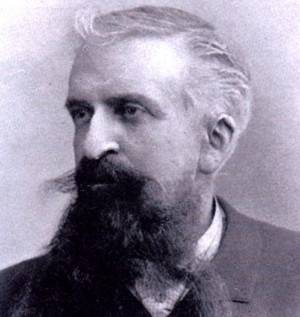
Gustave Le Bon, a towering figure in the fields of social psychology and sociology, was born on May 7, 1841, in Nogent-le-Rotrou, France. His pioneering work on the psychology of crowds has had a profound influence on the study of mass behavior and social influence. Le Bon’s theories, particularly his exploration of crowd psychology, remain relevant even today, making him a critical figure in understanding the dynamics of social influence and collective behavior.
Early Life and Education
Gustave Le Bon grew up in a period of rapid social and industrial change in Europe. The mid-19th century was marked by significant advancements in science, industry, and urbanization, which were reshaping the social fabric of the time. Le Bon’s early life and education were deeply influenced by these changes, setting the stage for his later work in social psychology.
Le Bon pursued medical studies in Paris, where he was exposed to the latest developments in clinical psychology. His education was not limited to medicine; he was a polymath with interests in anthropology, sociology, and even physics. This broad intellectual background provided Le Bon with a unique perspective that he would later apply to his studies of social behavior.
The Influence of Jean-Martin Charcot
During his time in Paris, Le Bon was influenced by the work of Jean-Martin Charcot, a renowned neurologist known for his studies on hysteria and hypnosis at the Salpêtrière Hospital. Charcot’s work on mental illnesses and the use of clinical methods to study the mind had a significant impact on Le Bon, who adapted these approaches to his analysis of social behavior.
Le Bon applied Charcot’s clinical methods to the study of crowds, using concepts such as contagion and suggestion to explain how individuals within a crowd could be influenced by collective emotions and behaviors. This approach marked a departure from traditional individual-focused psychology and laid the groundwork for modern social psychology.
The Psychology of Crowds: A Groundbreaking Work
In 1895, Gustave Le Bon published his seminal work, La Psychologie des Foules (The Psychology of Crowds). This book would become one of the most influential texts in the study of mass psychology, offering insights into the behavior of crowds that continue to resonate in contemporary studies.
Le Bon argued that individuals in a crowd lose their sense of individuality and become part of a collective mind. This collective mind, he suggested, is characterized by emotionality, impulsiveness, and a diminished capacity for critical thinking. According to Le Bon, crowds are driven more by emotions than by reason, making them susceptible to manipulation and suggestion.
Le Bon’s theory was revolutionary because it suggested that the behavior of a crowd could not be understood merely by studying the individuals within it. Instead, he proposed that crowds operate under their own set of psychological laws, which could lead to behavior that is markedly different from that of isolated individuals.
Social Influence and the Power of Suggestion
One of the key concepts in Le Bon’s work is the idea of suggestion. He posited that in a crowd, the power of suggestion is greatly amplified, leading individuals to adopt behaviors and beliefs that they might not consider in isolation. This phenomenon is closely related to the concept of contagion, where emotions and behaviors spread rapidly through a crowd, often leading to irrational or extreme actions.
Le Bon’s exploration of suggestion and contagion highlighted the vulnerability of individuals in a crowd to external influences. This insight has been instrumental in understanding how propaganda, media, and charismatic leaders can influence mass behavior. The implications of Le Bon’s work are particularly evident in the context of political movements, social unrest, and marketing strategies, where the ability to sway public opinion and behavior is crucial.
Criticism and Legacy
While Le Bon’s work was groundbreaking, it was not without its critics. Some scholars argued that his view of crowds as irrational and prone to violence was overly simplistic and did not account for the complexity of social interactions within a crowd. Others criticized his deterministic approach, suggesting that it underestimated the agency of individuals within a crowd.
Despite these criticisms, Le Bon’s work has had a lasting impact on the study of social psychology. His ideas have been expanded and refined by later scholars, including Gabriel Tarde and Sigmund Freud, both of whom acknowledged the importance of Le Bon’s contributions to the understanding of social influence and crowd behavior.
Freud, in particular, drew on Le Bon’s work in his own exploration of group psychology, acknowledging the role of the unconscious and the emotional dynamics within groups. Le Bon’s influence can also be seen in the development of theories related to media effects and communication research, where his insights into the power of suggestion and social influence continue to be relevant.
Beyond Crowd Psychology: Le Bon’s Other Contributions
Le Bon’s intellectual curiosity was not confined to the study of crowds. He made significant contributions to other areas of knowledge, including anthropology, sociology, and even the physical sciences. His work on the psychological laws of the evolution of peoples, published in 1894, explored the cultural and psychological factors that influence the development of civilizations.
In this work, Le Bon proposed that different races and cultures have distinct psychological characteristics that influence their historical development. While some of his ideas in this area have been criticized for promoting racial and cultural stereotypes, they reflect the broader intellectual trends of his time, particularly the interest in social Darwinism and the evolution of societies.
Le Bon was also interested in the concept of leadership and the role of elites in shaping social order. He argued that strong leaders could harness the power of crowds for constructive purposes, but warned that the same power could be used to manipulate and control the masses for more sinister ends. This duality in Le Bon’s thinking reflects his ambivalence about the role of crowds in modern society.
Le Bon’s Impact on Modern Social Movements
The relevance of Gustave Le Bon’s work extends far beyond his lifetime, influencing a wide range of social movements and political strategies in the 20th and 21st centuries. His insights into the dynamics of crowd behavior have been applied to understand everything from the rise of totalitarian regimes to the strategies employed by modern social media platforms to engage and influence users.
Totalitarian leaders such as Adolf Hitler and Benito Mussolini are known to have studied Le Bon’s work, using his theories to develop propaganda techniques that could mobilize and manipulate large groups of people. The idea that a charismatic leader could tap into the irrationality of crowds to gain power was a key element in the rise of fascism in Europe.
In the contemporary world, Le Bon’s theories continue to inform the study of social media dynamics. Platforms like Facebook and Twitter, which aggregate large numbers of people and facilitate rapid communication, can be seen as modern-day manifestations of the crowds Le Bon described. The phenomena of viral content, echo chambers, and online mobs all reflect the principles of contagion, suggestion, and collective behavior that Le Bon identified more than a century ago.
The Historical Context of Le Bon’s Work
To fully understand the significance of Gustave Le Bon’s contributions, it is important to place his work within the historical context of the late 19th and early 20th centuries. This was a period of profound social change, marked by the rise of industrialization, urbanization, and the spread of democratic ideals.
The mass movements that characterized this period, from labor strikes to political revolutions, challenged traditional social orders and created new forms of social organization. The crowd became a powerful force in this new social landscape, capable of both building and destroying.
Le Bon’s work can be seen as a response to these changes. His analysis of crowd behavior was, in part, an attempt to understand the social forces that were reshaping Europe at the time. His concerns about the irrationality of crowds reflected broader anxieties about the stability of social order in an age of mass politics and social unrest.
The Enduring Relevance of Gustave Le Bon
Today, Gustave Le Bon is remembered as one of the founding figures of social psychology, particularly in the study of collective behavior and social influence. His work laid the foundation for many of the concepts and theories that continue to shape our understanding of social dynamics.
Le Bon’s insights into the psychology of crowds remain relevant in our increasingly interconnected world. Whether in the context of political rallies, social media, or mass protests, the principles he identified over a century ago continue to offer valuable insights into how individuals behave in groups and how leaders can influence mass behavior.
His work serves as a reminder of the power of collective action, for better or for worse, and the importance of understanding the psychological forces that drive social change.
Conclusion
Gustave Le Bon’s life and work offer a fascinating glimpse into the development of social psychology and the study of collective behavior. From his early education in medicine and anthropology to his groundbreaking work on crowd psychology, Le Bon’s intellectual journey was marked by a deep curiosity about the forces that shape human behavior.
His theories on the psychology of crowds have had a lasting impact on a wide range of fields, from sociology and psychology to political science and communication studies. While some of his ideas have been controversial, there is no denying the profound influence of his work on the study of social dynamics.
As we continue to grapple with the complexities of mass behavior in the modern world, Gustave Le Bon’s insights remain as relevant as ever. His work serves as a foundational text for anyone interested in understanding the power of social influence and the dynamics of collective behavior.
In the end, Le Bon’s legacy is one of intellectual rigor and a relentless pursuit of knowledge, qualities that have ensured his place as one of the most important figures in the history of social psychology.


