
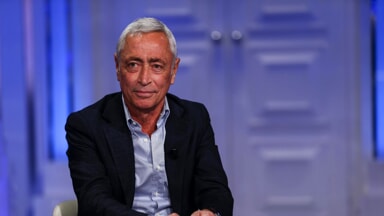
Francesco Le Foche, born on July 28, 1957, in Sezza, a small town in the province of Latina, Italy, is a prominent figure in the field of medicine, particularly known for his work as an immunologist. His calm demeanor and optimistic outlook set him apart from many of his peers during the COVID-19 pandemic, where he became a voice of reason and hope in a time of global uncertainty. This article provides a comprehensive look into the life and career of Francesco Le Foche, exploring his early life, educational background, professional achievements, and his rise to prominence during the pandemic.
Early Life and Passion for Medicine
Francesco Le Foche grew up in the post-war period in Italy, a time marked by rapid social and economic changes. From a young age, he demonstrated a strong determination and belief in his abilities, traits that would later define his career. After completing his secondary education, Le Foche moved to Rome, where he enrolled in the Faculty of Medicine and Surgery at La Sapienza University, one of Italy’s most prestigious institutions. His academic journey was marked by dedication and excellence, culminating in his graduation in 1985.
Le Foche’s interest in medicine was not limited to general practice; he was particularly drawn to the study of immunology, a field that would later prove to be of immense importance as the role of viruses in human health became increasingly significant. By 1990, he had completed his specialization in allergology and clinical immunology, positioning himself at the forefront of a field that would only grow in relevance in the decades to come.
Professional Beginnings and Rise in the Medical Field
Upon completing his specialization, Francesco Le Foche began his professional journey at the Policlinico Umberto I in Rome, one of Italy’s leading medical centers. He worked at the Institute of Infectious and Tropical Diseases, where he was appointed as the medical director responsible for the Day Hospital of Immunoinfectivology. This role was a significant step in his career, allowing him to apply his expertise in immunology to real-world medical challenges.
The early 1990s were a pivotal time for Le Foche, both professionally and personally. In 1990, he won a competitive position related to the AIDS emergency at the Policlinico Umberto I, a critical achievement given the global impact of the AIDS epidemic at the time. His work in this area not only solidified his reputation as a skilled immunologist but also demonstrated his commitment to addressing some of the most pressing health crises of the era.
In addition to his clinical work, Le Foche began to develop his career in academia. He was appointed as a professor of Rheumatology and Biomedical Sciences at La Sapienza University, a role that allowed him to influence the next generation of medical professionals. His teaching style, characterized by clarity and an ability to simplify complex concepts, earned him respect among both students and colleagues. This skill in communication would later become one of his most valuable assets during the COVID-19 pandemic.
Public Role and Media Presence During the COVID-19 Pandemic
The 2020s marked a significant shift in Francesco Le Foche’s career as he became a public figure during the COVID-19 pandemic. As the world grappled with the unprecedented health crisis, experts in virology, immunology, and infectious diseases were thrust into the spotlight, providing guidance and information to a frightened and confused public. Le Foche emerged as one of the most trusted voices in Italy, known for his balanced and optimistic perspective.
Unlike many of his peers who focused on the dangers and restrictions associated with the pandemic, Le Foche took a different approach. He sought to provide hope and reassurance, emphasizing the positive developments in vaccine research and the effectiveness of public health measures. His appearances on popular television programs, such as “Domenica In,” were marked by his ability to convey complex scientific information in a way that was accessible to the general public. This approach not only helped to alleviate public anxiety but also reinforced the importance of following scientific guidance.
Le Foche’s public communication was underpinned by a solid scientific foundation. He frequently cited the successes of countries like the United Kingdom and the United States, where robust vaccination strategies had significantly reduced the impact of the virus. His message was clear: while the situation was serious, there was light at the end of the tunnel, and with collective effort, the pandemic could be overcome.
In collaboration with journalist and writer Giancarlo Dotto, Le Foche authored the book “Sì, andrà tutto bene. Ecco perché il Covid-19 sarà sconfitto”, which translates to “Yes, Everything Will Be Fine: Here’s Why COVID-19 Will Be Defeated.” The book was a blend of scientific insight and accessible communication, aimed at providing readers with a clear understanding of the pandemic and the steps needed to overcome it. This publication further solidified his role as a key figure in Italy’s response to the pandemic.
Challenges and Recent Developments
While Francesco Le Foche’s career has been marked by numerous successes, it has not been without its challenges. In October 2023, Le Foche was the victim of a shocking attack in his office in Rome. A patient with psychological issues violently assaulted him, resulting in serious injuries. The patient, who had expressed dissatisfaction with his treatment, was arrested on charges of attempted murder. This incident highlighted the often underappreciated risks faced by healthcare professionals, particularly in an era where misinformation and distrust in medical authorities can lead to dangerous outcomes.
Despite this traumatic event, Le Foche’s contributions to the field of medicine and public health continue to be recognized. His commitment to patient care, public education, and the advancement of medical science remains unwavering. The attack, while a dark chapter in his life, has not diminished his resolve to serve the community and contribute to the betterment of public health.
Legacy and Impact
Francesco Le Foche’s career is a testament to the importance of scientific expertise, clear communication, and compassionate care in the field of medicine. Over the years, he has not only advanced the understanding of immunology and infectious diseases but has also played a crucial role in guiding the public through one of the most challenging periods in recent history.
Le Foche’s approach to public health during the COVID-19 pandemic was characterized by a blend of optimism and realism. He recognized the severity of the crisis but consistently highlighted the progress being made, particularly in vaccine development and distribution. This balanced perspective helped to foster a sense of hope at a time when many were struggling with fear and uncertainty.
Beyond his public role, Le Foche’s work in academia and clinical practice has had a lasting impact on the medical community. As a professor, he has influenced countless students, many of whom have gone on to become leaders in their own right. His clinical work, particularly in the field of immunoinfectivology, has contributed to better patient outcomes and has helped to shape best practices in the treatment of infectious diseases.
In a broader context, Francesco Le Foche’s career underscores the critical role that healthcare professionals play in society, not just as caregivers but as educators and communicators. His ability to bridge the gap between complex medical science and public understanding has made him a vital figure in Italy’s response to the pandemic and in the ongoing efforts to improve public health.
Conclusion
Francesco Le Foche’s life and career are a reflection of dedication, expertise, and a deep commitment to the well-being of others. From his early days as a medical student to his rise as a leading immunologist and public figure, Le Foche has consistently demonstrated the qualities that define excellence in the medical profession. His contributions during the COVID-19 pandemic, in particular, have left an indelible mark on Italian society, providing hope and guidance during a time of crisis.
As the world continues to navigate the challenges of public health, figures like Francesco Le Foche serve as reminders of the importance of science, empathy, and clear communication in overcoming adversity. His legacy is one of resilience and optimism, qualities that will continue to inspire future generations of healthcare professionals.


