
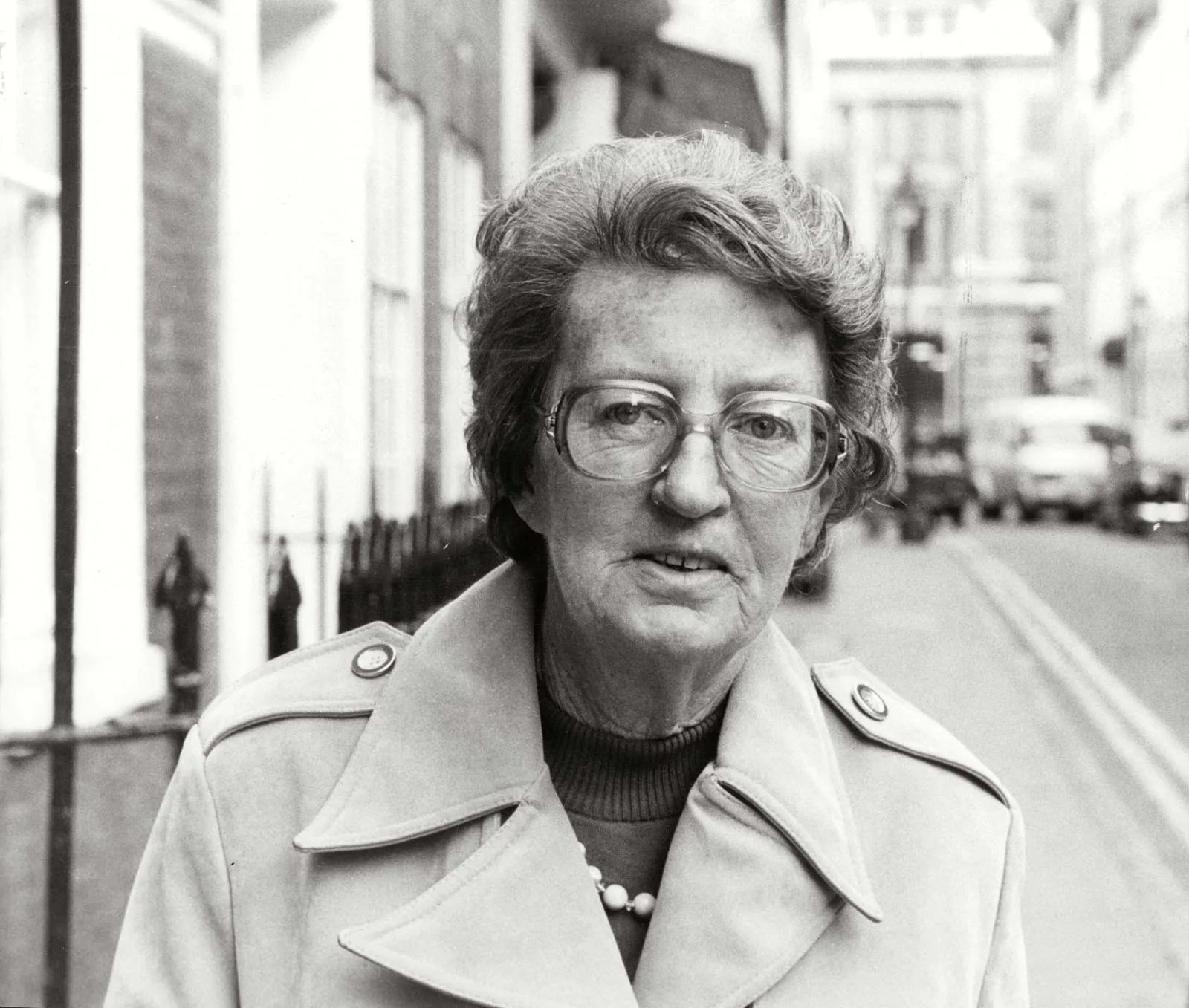
Mary Leakey, born Mary Douglas Nicol on February 6, 1913, is celebrated as one of the most influential figures in the field of anthropology. Her groundbreaking discoveries, particularly in East Africa, have fundamentally reshaped our understanding of human evolution. Through her diligent work alongside her husband, Louis Leakey, Mary helped to solidify the theory that Africa is the cradle of humanity. Her life story is a fascinating journey marked by perseverance, intellectual curiosity, and a relentless pursuit of knowledge that would leave an indelible mark on science and history.
Early Life and Education: A Non-Conventional Beginning
Mary Leakey was born into an unconventional family. Her father, Erskine Nicol, was a well-known landscape artist who led a nomadic life, frequently moving his family across Europe. This upbringing exposed Mary to various cultures and environments, which nurtured her innate curiosity about the world around her. Much of her early life was spent in the Dordogne region of France, an area rich in prehistoric sites, which undoubtedly planted the seeds of her future passion for archaeology.
However, her idyllic childhood came to an abrupt end in 1926 when her father passed away suddenly. This event forced Mary and her mother to return to London, a move that Mary found difficult to adjust to. Known for her rebellious nature, she struggled with the rigidity of formal education and was expelled from several Catholic schools. This lack of formal schooling, however, did not hinder her intellectual growth. Instead, it fueled her desire to learn outside the confines of traditional institutions.
Mary’s early education was largely self-directed, and by 1930, she had developed a keen interest in geology and archaeology. She began attending lectures and courses at the University of London, where her passion for prehistoric studies deepened. Her unique talents in drawing and observation caught the attention of Dr. Gertrude Caton-Thompson, a renowned archaeologist, who invited Mary to illustrate her book, “The Desert Fayoum.” This opportunity would be the first of many that solidified Mary’s path in the field of anthropology.
Meeting Louis Leakey: A Partnership in Science
In 1933, Mary was introduced to Louis Leakey, a charismatic and ambitious anthropologist working on a project for the Royal Anthropological Institute. Louis quickly recognized Mary’s exceptional skills and invited her to join him on an expedition to East Africa. This professional collaboration soon blossomed into a personal relationship, and after Louis’s divorce from his first wife, the two married in late 1936.
The Leakeys’ partnership was one of mutual respect and shared passion for discovery. Together, they embarked on numerous expeditions across Africa, tirelessly searching for evidence that would support the theory that humanity originated on the continent. One of their most significant early discoveries was the fossilized skull of a Miocene ape, known as Proconsul, which provided crucial insights into primate evolution.
However, it was in 1959 that Mary made one of her most famous discoveries—Zinjanthropus boisei (later reclassified as Paranthropus boisei), an early hominin species. This discovery not only brought the Leakeys international fame but also provided concrete evidence that early human ancestors had lived in East Africa, solidifying the region’s importance in the study of human evolution.
Olduvai Gorge and Laetoli: Groundbreaking Discoveries
Following the discovery of Zinjanthropus boisei, the Leakeys focused their efforts on Olduvai Gorge in Tanzania, a site that would yield some of the most significant archaeological finds of the 20th century. Olduvai Gorge became the epicenter of the Leakeys’ research, where they uncovered numerous fossils and stone tools that further illuminated the early stages of human evolution.
While Louis often took the spotlight, leading the public relations efforts and securing funding, it was Mary who meticulously conducted much of the fieldwork. Her patience, attention to detail, and methodical approach to excavation were instrumental in the success of their research. By the mid-1960s, Mary had essentially taken over the work at Olduvai, dedicating herself to the site while Louis pursued other projects.
One of Mary’s most significant achievements came in 1974 when she began excavating at Laetoli, a site located south of Olduvai Gorge. It was here that she made a discovery that would revolutionize the understanding of human evolution. In 1976, Mary and her team uncovered a series of hominin footprints preserved in volcanic ash, dating back approximately 3.6 million years. These footprints, known as the “Laetoli Footprints,” provided irrefutable evidence that early hominins walked upright on two legs, challenging previous theories that bipedalism developed as a result of tool use and increased brain size.
The Laetoli Footprints are considered one of the most important finds in paleoanthropology. They not only confirmed that bipedalism preceded other significant developments in human evolution but also pushed back the timeline for when early hominins began walking on two legs. This discovery has been instrumental in shaping current theories about the evolutionary path that led to modern humans.
Personal Life and Legacy: A Quiet Giant in Anthropology
Despite her extraordinary contributions to science, Mary Leakey remained a private and unassuming figure throughout her life. She was known for her no-nonsense approach to work and her preference for letting her discoveries speak for themselves. Unlike her husband, who was often in the public eye, Mary shunned publicity and focused solely on her research.
Mary and Louis had three sons, the most famous of whom is Richard Leakey, who continued the family tradition of paleoanthropology. Richard’s own discoveries and advocacy for wildlife conservation have made him a prominent figure in his own right, further cementing the Leakey legacy in the scientific community.
Mary’s contributions to anthropology were formally recognized later in her life. Despite lacking a formal academic degree, she received numerous honors and awards, including the Prestwich Medal from the Geological Society of London and the Hubbard Medal from the National Geographic Society. These accolades acknowledged her meticulous fieldwork, her intuitive understanding of archaeology, and her profound impact on the study of human origins.
Mary Leakey passed away on December 9, 1996, at the age of 83. Her death marked the end of an era in anthropology, but her legacy lives on through her discoveries, which continue to inform and inspire researchers today. The Laetoli Footprints, in particular, remain a touchstone for studies on early hominin behavior and evolution.
Historical Context and Nuances: The Leakey Legacy
Mary Leakey’s work must be understood within the broader historical context of 20th-century anthropology. During this period, the field was undergoing significant transformations, moving away from Eurocentric theories of human evolution and embracing the idea that humanity’s origins were in Africa. The Leakeys were at the forefront of this shift, challenging established norms and pushing the boundaries of what was known about our ancestors.
Their work at Olduvai Gorge and Laetoli not only provided concrete evidence for the African origin of humans but also contributed to the growing acceptance of Africa as the “Cradle of Humankind.” The discoveries made by the Leakeys helped to dismantle the previously dominant view that human evolution was a linear process centered in Europe and Asia, instead highlighting the complex and branching nature of human ancestry.
Moreover, Mary’s contributions were instrumental in advancing the role of women in science. At a time when the field was predominantly male-dominated, she proved that women could make significant contributions to research and discovery. Her success paved the way for future generations of female scientists, encouraging them to pursue careers in fields where they were previously underrepresented.
Conclusion: The Enduring Impact of Mary Leakey
Mary Leakey’s life and work have left an indelible mark on the field of anthropology. Her discoveries not only changed our understanding of human evolution but also highlighted the importance of meticulous research, patience, and dedication in scientific inquiry. Mary was a pioneer, not just in the field of paleoanthropology, but also as a role model for women in science.
Her legacy is preserved in the countless researchers who continue to build on her work, exploring the rich archaeological sites of Africa and uncovering new evidence about our ancestors. The Laetoli Footprints, in particular, stand as a testament to her enduring impact, offering a window into a distant past and reminding us of the shared history that connects all humans.
Today, Mary Leakey is remembered as one of the giants of anthropology, a woman whose life was dedicated to uncovering the mysteries of our origins. Her work continues to resonate, inspiring new generations of scientists to look back at the footprints she left behind and to forge their own paths in the quest for knowledge.


