
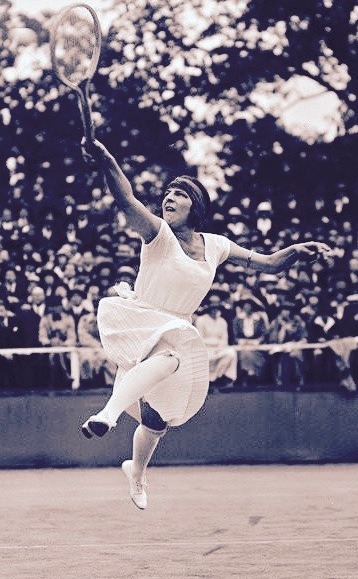
Suzanne Lenglen, born on May 24, 1899, in Paris, France, is widely regarded as the first international female tennis superstar. Her influence on the sport of tennis and her iconic status in the early 20th century transcend mere statistics and victories, embodying a shift in both the athletic and cultural landscapes of the time. Lenglen’s career, spanning from 1914 to 1926, was marked by unprecedented dominance, unparalleled grace on the court, and a unique blend of athleticism and femininity that redefined women’s sports.
Early Life and Introduction to Tennis
Suzanne Rachel Flore Lenglen was born into a wealthy family, which allowed her to pursue her interests without the financial constraints that limited many others of her time. Her father, Charles Lenglen, was instrumental in introducing her to tennis at a young age, recognizing her potential and nurturing her talent with great enthusiasm. Suzanne’s early exposure to the sport, combined with rigorous training, quickly set her apart from her peers.
Suzanne’s upbringing was also marked by a strong emphasis on physical culture, which included dance and other forms of athletic training. This diverse physical education contributed significantly to her later success on the tennis court. The grace and precision she exhibited during matches were not just products of her tennis training but also a result of the coordination and rhythm she developed through dance. Her father’s strict regimen and her own dedication to the sport allowed Suzanne to develop a playing style that was both powerful and elegant, a combination that would soon captivate the world.
Rise to Fame: The First Global Tennis Star
Suzanne Lenglen’s ascent to fame began at a remarkably young age. At just 15 years old, she won her first major title, the World Hard Court Championships, in 1914. This victory marked the beginning of an illustrious career that would see her dominate women’s tennis for over a decade. What set Suzanne apart from her contemporaries was not just her success on the court but the manner in which she achieved it. Her style was a radical departure from the conservative and genteel approach that characterized women’s tennis at the time.
Lenglen’s playing style was aggressive, characterized by powerful serves, precise volleys, and a relentless pursuit of the ball. Her ability to transition quickly from the baseline to the net, a skill honed through her dance training, made her a formidable opponent. She was known for her remarkable agility and stamina, attributes that allowed her to outlast and outmaneuver many of her competitors.
By the time she reached her early twenties, Suzanne Lenglen had already secured her place as the world’s leading female tennis player. Her record speaks for itself: six singles titles and six doubles titles at Wimbledon, six singles titles and three doubles titles at the French Championships (now known as the French Open), and three Olympic medals from the 1920 Antwerp Games, including gold in both singles and mixed doubles, and bronze in women’s doubles.
Cultural Impact: Fashion, Femininity, and the Modern Woman
Suzanne Lenglen was not just a trailblazer in tennis; she was a cultural icon whose influence extended far beyond the sport. In an era when women’s sports were still in their infancy and often dismissed as trivial, Lenglen brought glamour and style to the tennis court, challenging societal norms and redefining what it meant to be a female athlete.
One of the most striking aspects of Suzanne Lenglen’s persona was her fashion sense. She partnered with Jean Patou, a leading French couturier, who designed her tennis outfits. Gone were the cumbersome, ankle-length skirts and high-collared blouses that had previously been the norm for female players. In their place, Lenglen wore calf-length pleated skirts, sleeveless blouses, and bandeau headbands—attire that allowed her to move freely on the court while exuding an air of sophistication and modernity.
Lenglen’s fashion choices were not just about aesthetics; they were a statement of independence and confidence. Her outfits became a symbol of the modern woman—athletic, stylish, and unafraid to challenge traditional gender roles. This blend of athleticism and femininity was revolutionary, paving the way for future generations of female athletes who sought to balance strength and grace both on and off the court.
Controversy and Conflict: The Wimbledon Incident
Suzanne Lenglen’s career was not without its controversies. Perhaps the most famous of these was the incident at Wimbledon in 1926, which marked the beginning of the end of her amateur career. Lenglen, who was scheduled to play in front of Queen Mary, arrived late to her match due to a misunderstanding about the schedule. When she refused to play at the rescheduled time, citing exhaustion and the need to prepare for another match later that day, the decision sparked a public outcry.
The British press, which had previously adored her, turned against her, portraying her as arrogant and disrespectful. The incident damaged her reputation in England, where the expectations of sportsmanship and decorum were rigidly enforced, especially for female athletes. The fallout from the Wimbledon incident marked a turning point in Lenglen’s career, leading her to retire from amateur tennis later that year and turn professional—a move that was almost unheard of for women at the time.
Professional Tennis and Later Life
After leaving the amateur ranks, Suzanne Lenglen embarked on a professional tour in the United States, where she was met with both adulation and curiosity. The decision to turn professional was financially motivated, as it allowed Lenglen to capitalize on her fame and secure her financial future. However, it also marked a significant shift in her career, as professional tennis was not held in the same regard as the amateur game during that period.
Lenglen’s professional matches drew large crowds, eager to witness the legendary player in action. Her style and skill continued to captivate audiences, and she played against some of the top male and female players of the day in exhibition matches. However, the professional circuit did not offer the same level of competition or prestige as the amateur Grand Slam tournaments, and Lenglen’s professional career, though successful, was relatively short-lived.
Following her retirement from competitive tennis, Suzanne Lenglen returned to France, where she opened a tennis school in Paris. Here, she applied the principles of dance and athleticism that had served her so well throughout her career, mentoring the next generation of players. Lenglen’s school quickly gained a reputation for producing skilled and disciplined players, further cementing her legacy in the world of tennis.
Legacy and Untimely Death
Suzanne Lenglen’s life was tragically cut short when she was diagnosed with leukemia in 1938. She passed away on July 4 of that year, just as Wimbledon was underway—a poignant reminder of her profound connection to the sport. She was only 39 years old.
Lenglen’s death was mourned across France and the wider sporting world. Her funeral was attended by many of Paris’s elite, and shortly after her passing, a street in Nice was named Avenue Suzanne Lenglen in her honor. This was just one of many posthumous tributes to Lenglen, whose influence on tennis and women’s sports remains significant to this day.
Suzanne Lenglen’s Enduring Influence
Suzanne Lenglen’s legacy is multi-faceted. As a tennis player, her records and achievements set a standard that would inspire future generations of athletes. Her dominance on the court, combined with her flair for performance, transformed tennis into a spectacle that attracted fans from all walks of life. Her approach to the game—both in terms of strategy and presentation—has influenced the way the sport is played and perceived.
Lenglen’s impact extends beyond the realm of tennis. She was a pioneer for women in sports, challenging the stereotypes and limitations that had previously confined female athletes. By embracing her femininity while also exhibiting strength and skill, Lenglen helped to redefine the image of the female athlete in the public consciousness. She demonstrated that women could be both powerful and graceful, competitive and stylish—qualities that continue to resonate in the world of sports today.
In recognition of her contributions to the sport, the second show court at Roland Garros, the site of the French Open, was named Court Suzanne Lenglen. This honor ensures that Lenglen’s name and legacy are forever linked to one of the most prestigious venues in tennis. Additionally, the International Tennis Federation established the Suzanne Lenglen Cup, awarded to the winner of the women’s singles event at the French Open, further immortalizing her contribution to the sport.
Conclusion: The First Diva of Tennis
Suzanne Lenglen’s life and career were marked by brilliance, controversy, and a legacy that has endured for nearly a century. She was a pioneer in every sense of the word—transforming tennis from a genteel pastime into a dynamic sport and redefining the role of women in athletics. Her influence can still be seen today, not just in the records she set, but in the way modern female athletes navigate the worlds of sport and celebrity.
Lenglen’s story is one of triumph and tragedy, of a woman who pushed the boundaries of what was possible both on and off the court. Her legacy as the first true diva of tennis lives on, inspiring new generations of players to pursue excellence with the same passion and determination that defined her extraordinary career.


