
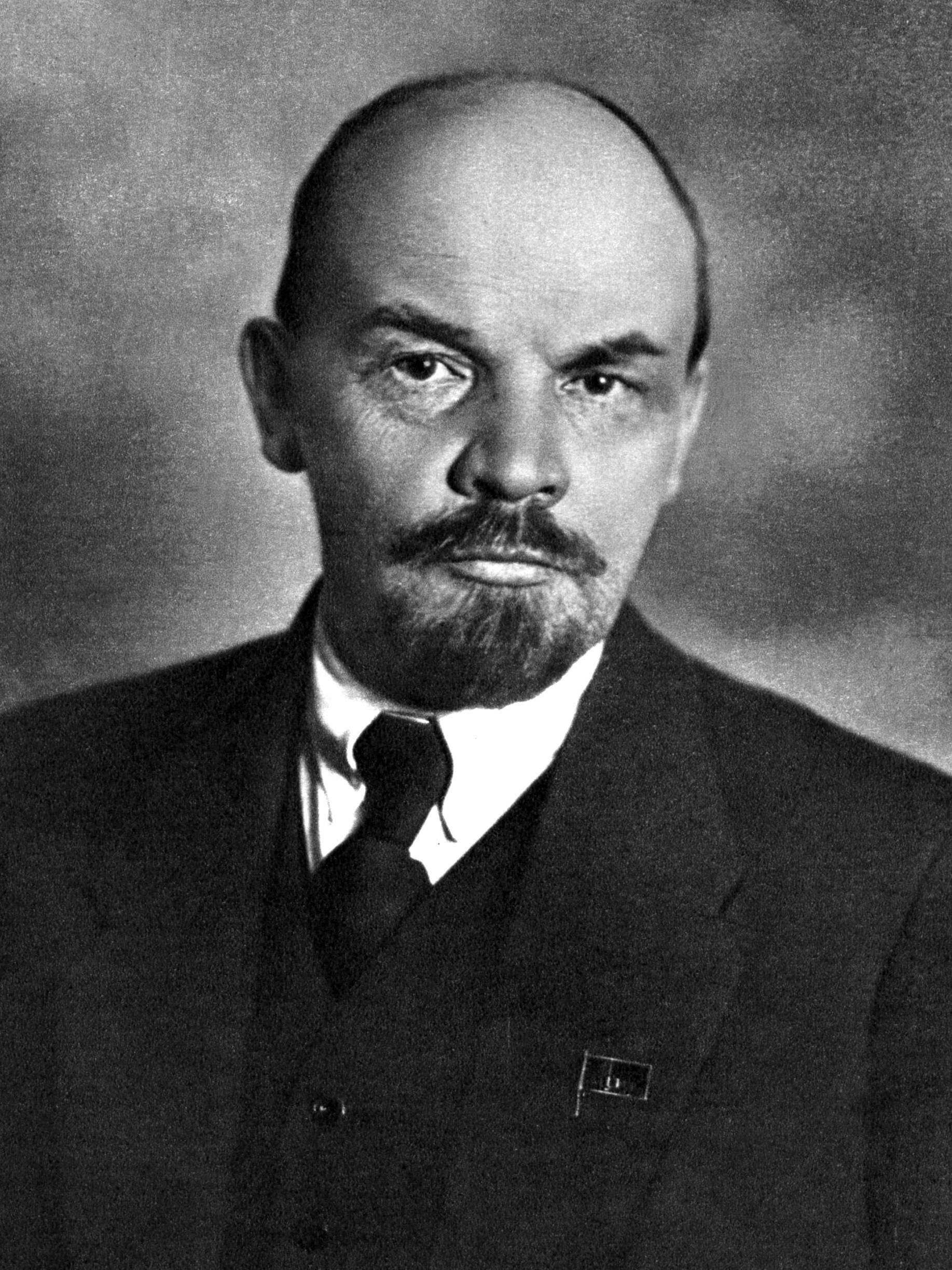
Vladimir Ilyich Ulyanov, more widely known by his alias Lenin, was born on April 22, 1870, in Simbirsk (now Ulyanovsk), Russia. He emerged as a pivotal figure in world history, leading the Bolshevik Revolution and establishing the Soviet Union, the world’s first communist state. Lenin’s life and career are marked by his revolutionary zeal, intellectual rigor, and a relentless pursuit of a socialist society. This article explores Lenin’s life, his rise to prominence, his contributions to political theory, and the historical context that shaped his legacy.
Early Life and Intellectual Formation
Lenin was born into a middle-class family; his father was a school inspector and his mother was well-educated, coming from a family of physicians. Lenin’s upbringing was one of intellectual rigor and discipline, with a strong emphasis on education. His early years coincided with a period of significant social and political turmoil in Russia. The country was grappling with the consequences of rapid industrialization, social inequality, and the autocratic rule of the Tsars.
Lenin’s political awakening was deeply influenced by the execution of his older brother, Alexander Ulyanov, in 1887. Alexander was involved in a plot to assassinate Tsar Alexander III, and his death radicalized the young Lenin, leading him to embrace revolutionary Marxism as the path to overthrowing the oppressive Russian state.
Lenin enrolled in the law faculty at Kazan University but was expelled for participating in student protests against the Tsarist regime. This expulsion marked the beginning of his life as a revolutionary. He continued his studies independently, delving into the works of Karl Marx and Friedrich Engels, particularly Das Kapital, which would profoundly influence his later political philosophy.
The Formation of Revolutionary Ideals
By the early 1890s, Lenin had fully committed himself to the Marxist cause. He moved to St. Petersburg, where he became involved with the local Marxist circles, eventually becoming one of the leading figures in the Russian Social Democratic Labour Party (RSDLP). Lenin’s early political activities were characterized by his dedication to building a disciplined, centralized revolutionary party capable of leading the working class in a struggle against the Tsarist autocracy.
In 1895, Lenin was arrested and sentenced to three years of exile in Siberia, where he continued to develop his revolutionary ideas. During this period, he wrote his first major work, The Development of Capitalism in Russia (1899), in which he argued that capitalism had already taken root in Russia, laying the groundwork for a proletarian revolution.
Lenin’s analysis was in stark contrast to the views of the populists, who believed that Russia could bypass the capitalist stage and move directly to socialism through the peasant commune system. Lenin, however, insisted that Russia’s future lay in the hands of the working class, not the peasantry, and that the country’s path to socialism would be through a proletarian revolution.
The Birth of Bolshevism
Lenin’s commitment to a revolutionary path led to significant ideological differences within the RSDLP. At the party’s Second Congress in 1903, held in London, the party split into two factions: the Bolsheviks, led by Lenin, and the Mensheviks, led by Julius Martov and others. The split was rooted in disagreements over party organization and strategy. Lenin advocated for a small, tightly-knit party of professional revolutionaries, while the Mensheviks favored a more inclusive, mass-membership party.
This division would have profound implications for the future of the Russian revolutionary movement. The Bolsheviks, under Lenin’s leadership, would go on to become the driving force behind the October Revolution of 1917, while the Mensheviks would eventually be sidelined.
In 1901, Lenin moved to Switzerland, where he founded the newspaper Iskra (The Spark), which became the voice of Russian Marxism abroad. The paper played a crucial role in spreading Lenin’s ideas and organizing the revolutionary movement. Lenin’s vision for the party was one of strict centralization and discipline, with a focus on professional revolutionaries rather than mass participation. This approach would later become a defining feature of the Bolshevik Party.
The Revolution of 1905 and Its Aftermath
The 1905 Russian Revolution was a key moment in Lenin’s political career. The revolution was sparked by the defeat of Russia in the Russo-Japanese War and widespread discontent among the Russian population. Workers went on strike, peasants revolted, and there were mutinies in the army. The revolution culminated in the establishment of the first Soviet (workers’ council) in St. Petersburg, a development that Lenin viewed as a sign of the revolutionary potential of the working class.
However, the revolution ultimately failed, leading to a brutal crackdown by the Tsarist regime. The aftermath of the 1905 Revolution deepened the divide between the Bolsheviks and Mensheviks. The Mensheviks believed that the revolution had to be led by the bourgeoisie, with the working class playing a supporting role. Lenin, on the other hand, argued that the proletariat, in alliance with the peasantry, should lead the revolution and establish a dictatorship of the proletariat.
The failure of the 1905 Revolution also forced Lenin to reconsider his strategy. He began to advocate for a more flexible approach, recognizing the need to adapt to changing circumstances and the importance of forging alliances with other revolutionary groups. Despite the setback, Lenin remained convinced that a proletarian revolution in Russia was inevitable.
World War I and Lenin’s Revolutionary Strategy
The outbreak of World War I in 1914 was a turning point for Lenin and the international socialist movement. While many socialist leaders in Europe supported their respective governments in the war, Lenin took a radically different stance. He denounced the war as an imperialist conflict, arguing that it was a product of capitalist rivalries and that the working class had no interest in supporting it.
Lenin called for the transformation of the imperialist war into a civil war, where the working classes would rise up against their governments and turn the conflict into a socialist revolution. This position was highly controversial and led to a further split within the socialist movement. Lenin’s views were encapsulated in his famous slogan: “Turn the imperialist war into a civil war!”
In 1916, Lenin published Imperialism, the Highest Stage of Capitalism, a key work in which he argued that imperialism was an advanced stage of capitalism characterized by the dominance of monopolies and the export of capital. He believed that the contradictions of imperialism would inevitably lead to wars and revolutions.
Lenin’s anti-war stance alienated him from many of his former comrades, but it also solidified his leadership within the Bolshevik Party. As the war dragged on, causing immense suffering and hardship in Russia, Lenin’s call for peace, land, and bread resonated with the Russian people.
The 1917 Russian Revolution
By the time of the February Revolution in 1917, which led to the abdication of Tsar Nicholas II, Lenin was still in exile in Switzerland. The revolution caught him by surprise, but he quickly seized the opportunity to return to Russia. With the help of the Germans, who saw an advantage in destabilizing Russia, Lenin traveled back to Petrograd (formerly St. Petersburg) in a sealed train.
Upon his return, Lenin quickly set to work. He presented his April Theses, a radical document that called for the overthrow of the Provisional Government, the transfer of power to the Soviets, and the withdrawal of Russia from the war. Lenin’s slogan “All power to the Soviets” captured the imagination of the workers, soldiers, and peasants, who were increasingly disillusioned with the Provisional Government’s inability to address their demands.
Lenin’s determination and strategic acumen played a crucial role in the success of the October Revolution. On October 25, 1917, the Bolsheviks, led by Lenin, staged a coup d’état, seizing key government institutions in Petrograd. The Provisional Government was overthrown, and the Bolsheviks declared the establishment of a socialist state.
Building the Soviet State and Lenin’s Later Years
Following the October Revolution, Lenin faced the enormous task of consolidating Bolshevik power and building a new socialist state. The early years of Soviet rule were marked by civil war, foreign intervention, and economic hardship. Lenin implemented a series of radical measures, including the nationalization of industry, the redistribution of land, and the suppression of political opposition.
Lenin’s leadership during this period was characterized by pragmatism and a willingness to adapt his policies to the changing circumstances. For example, in response to the economic crisis caused by the civil war, Lenin introduced the New Economic Policy (NEP) in 1921, which allowed for a partial reintroduction of private enterprise and market mechanisms. The NEP was a temporary retreat from the goals of socialism, but Lenin saw it as necessary to stabilize the economy and secure the survival of the Soviet state.
Despite his successes, Lenin’s health began to decline rapidly in the early 1920s. He suffered a series of strokes that left him partially paralyzed and unable to participate fully in the day-to-day affairs of the government. During this time, Lenin grew increasingly concerned about the future of the Soviet state, particularly the rise of Joseph Stalin, whom he saw as a threat to the ideals of the revolution.
Lenin’s last major work, State and Revolution, written in 1917, laid out his vision for a proletarian state, emphasizing the need for a dictatorship of the proletariat as a transitional stage towards the abolition of the state altogether. However, by the time of his death on January 21, 1924, Lenin’s vision was already being overshadowed by the rise of Stalinism.
Lenin’s Legacy and Impact on World History
Lenin’s impact on world history is profound and far-reaching. As the architect of the Bolshevik Revolution and the founder of the Soviet Union, Lenin’s ideas and actions shaped the course of the 20th century. His theories on imperialism, revolution, and the role of the state have influenced countless political movements and leaders around the world.
Lenin’s legacy is complex and contested. On one hand, he is revered by many as a champion of the working class, a visionary who sought to build a just and egalitarian society. On the other hand, his use of violence, suppression of political dissent, and establishment of a one-party state have led to criticisms of his methods and the authoritarian nature of the Soviet regime.
The Soviet Union, which Lenin helped to create, became one of the world’s superpowers, playing a central role in global politics until its dissolution in 1991. The impact of Lenin’s ideas can still be seen today in the continued existence of communist parties and movements around the world.
In conclusion, Lenin was a revolutionary leader whose life and work left an indelible mark on the 20th century. His contributions to Marxist theory, his leadership in the Russian Revolution, and his role in the establishment of the Soviet Union make him one of the most significant figures in modern history. While his legacy remains controversial, there is no denying the profound influence Lenin had on the course of world events.


