
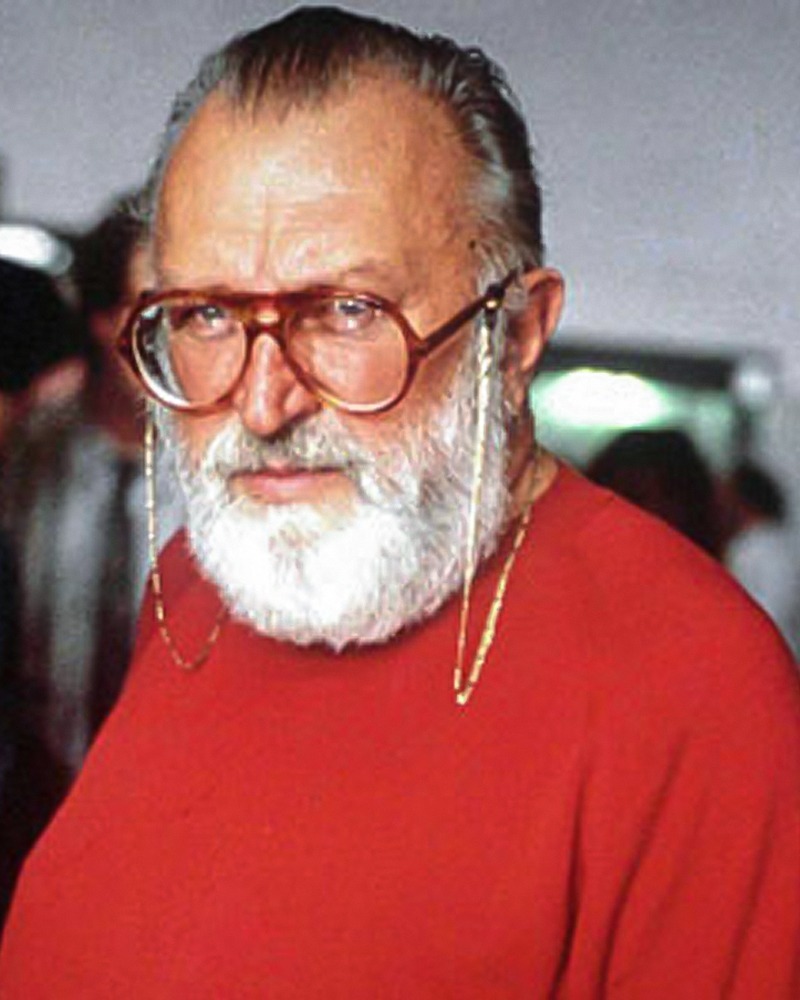
Sergio Leone, a towering figure in the world of cinema, is often hailed as one of the most influential filmmakers of the 20th century. Born on January 3, 1929, in Rome, Italy, Leone’s impact on the film industry, particularly in the Western genre, has been profound and enduring. His work not only redefined the Western genre but also left an indelible mark on global cinema, influencing a generation of filmmakers who followed in his footsteps.
Early Life and Introduction to Cinema
Sergio Leone was born into a cinematic family. His father, Vincenzo Leone, known by his pseudonym Roberto Roberti, was a director of silent films, while his mother, Edvige Valcarenghi, was a prominent actress in the same era. This early exposure to the world of cinema undoubtedly shaped Leone’s future. By the age of 18, Leone was already working in the film industry, learning the ropes and honing his craft.
His first significant break came in 1948 when he worked as an assistant on the film “Ladri di Biciclette” (Bicycle Thieves), directed by Vittorio De Sica. This experience laid the foundation for Leone’s understanding of cinematic storytelling. He continued to work as an assistant director, gaining valuable experience on films like “Ben-Hur” (1959), where he played a crucial role in directing the second unit.
The 1960s: The Birth of the Spaghetti Western
The 1960s marked the beginning of Leone’s journey as a director, and it was during this decade that he would make his most significant contributions to cinema. In 1961, Leone directed his first film, “The Colossus of Rhodes,” a historical epic that showcased his talent for creating grand, visually stunning spectacles. However, it was his next project that would catapult him to international fame.
In 1964, Leone directed “A Fistful of Dollars,” the first film in what would become known as the “Dollars Trilogy.” This film, starring Clint Eastwood, was a groundbreaking reinterpretation of the American Western. Leone’s unique vision brought a new level of realism and grit to the genre. The film’s success was immediate, and it established Leone as a major force in cinema. However, it also led to controversy, as the film was accused of plagiarizing Akira Kurosawa’s “Yojimbo.” Despite the legal challenges, “A Fistful of Dollars” became a massive success, particularly in Europe.
Leone’s contribution to the Western genre was not just in storytelling but also in style. He introduced a new level of violence and moral ambiguity, coupled with a distinctive visual style that included extreme close-ups and long, tense standoffs. The soundtrack, composed by Ennio Morricone, became iconic, further cementing the film’s place in cinematic history.
Following the success of “A Fistful of Dollars,” Leone continued to explore and expand the Western genre. He directed “For a Few Dollars More” in 1965 and “The Good, the Bad and the Ugly” in 1966. These films, together with “A Fistful of Dollars,” formed the “Dollars Trilogy,” which is now considered one of the greatest achievements in the history of cinema. The trilogy’s influence extended far beyond the Western genre, inspiring filmmakers like Quentin Tarantino, Robert Rodriguez, and even Martin Scorsese.
The Crude Realism of Leone’s Westerns
One of the defining characteristics of Leone’s Westerns was their raw, unfiltered portrayal of the Old West. Unlike traditional Westerns, which often romanticized the American frontier, Leone’s films presented a more realistic, and often brutal, depiction of life in the West. His characters were not the clean-cut heroes of classic Hollywood Westerns; they were rugged, morally complex individuals, often driven by greed, revenge, or survival.
Leone’s attention to detail extended to every aspect of his films. His characters appeared dirty, unshaven, and weathered by the harsh environment. The landscapes were barren and unforgiving, and the violence was sudden and unrelenting. This stark realism was a departure from the polished, idealized vision of the West that had dominated the genre for decades.
Leone also understood the power of silence. Many of his most memorable scenes are marked by an absence of dialogue, allowing the tension to build through the actors’ expressions and the meticulous pacing of the editing. This use of silence, combined with Morricone’s haunting scores, created moments of unbearable suspense, leaving audiences on the edge of their seats.
1968: “Once Upon a Time in the West” – A Magnum Opus
In 1968, Sergio Leone was invited to the United States to direct “Once Upon a Time in the West.” This film, which he had been planning for years, was a grand, operatic meditation on the mythology of the American West. Leone saw this film as his magnum opus, and he spared no effort in bringing his vision to life.
“Once Upon a Time in the West” was shot in the breathtaking landscapes of Monument Valley, a location made famous by director John Ford. However, Leone’s vision of the West was darker and more introspective. The film’s narrative was slow and deliberate, reflecting the inevitable march of time and the death of the Old West. The characters, portrayed by Henry Fonda, Charles Bronson, and Claudia Cardinale, were larger than life, yet deeply human, each driven by their own personal motivations and tragedies.
Despite its artistic ambition, “Once Upon a Time in the West” was not an immediate success. The film was heavily edited before its release, which affected its reception. However, over time, it has been re-evaluated and is now considered one of the greatest Westerns ever made. The film’s influence is evident in the work of many contemporary filmmakers, and it remains a touchstone for anyone exploring the genre.
The 1970s and 1980s: A Shift in Focus
After “Once Upon a Time in the West,” Leone continued to explore different aspects of the human condition through his films. In 1971, he directed “Duck, You Sucker!” (also known as “A Fistful of Dynamite”), a film set during the Mexican Revolution. This film was more political in nature, reflecting Leone’s growing interest in the impact of revolution and the complexities of human nature. It was a departure from the Westerns that had made him famous, but it still carried Leone’s distinctive style and thematic concerns.
Leone’s final film, “Once Upon a Time in America” (1984), was a sprawling epic that spanned several decades in the lives of a group of Jewish gangsters in New York City. The film was a deeply personal project for Leone, and he spent over a decade developing it. “Once Upon a Time in America” was a meditation on memory, regret, and the passage of time. It was a fitting conclusion to Leone’s career, showcasing his ability to blend epic storytelling with intimate, character-driven drama.
Despite its initial mixed reception, “Once Upon a Time in America” has since been recognized as a masterpiece. The film’s non-linear structure, complex characters, and haunting score by Ennio Morricone have made it a classic of the crime genre.
Legacy and Influence
Sergio Leone passed away on April 30, 1989, at the age of 60, but his legacy lives on. His films continue to be studied, analyzed, and celebrated by filmmakers and audiences alike. Leone’s influence can be seen in the work of countless directors, from Quentin Tarantino to the Coen Brothers. His unique blend of realism, stylization, and storytelling has left an indelible mark on the world of cinema.
Leone’s work transcended the boundaries of genre, and his films remain timeless explorations of human nature, power, and the passage of time. His mastery of the craft of filmmaking, combined with his deep understanding of the human condition, ensures that his films will continue to resonate with audiences for generations to come.


