
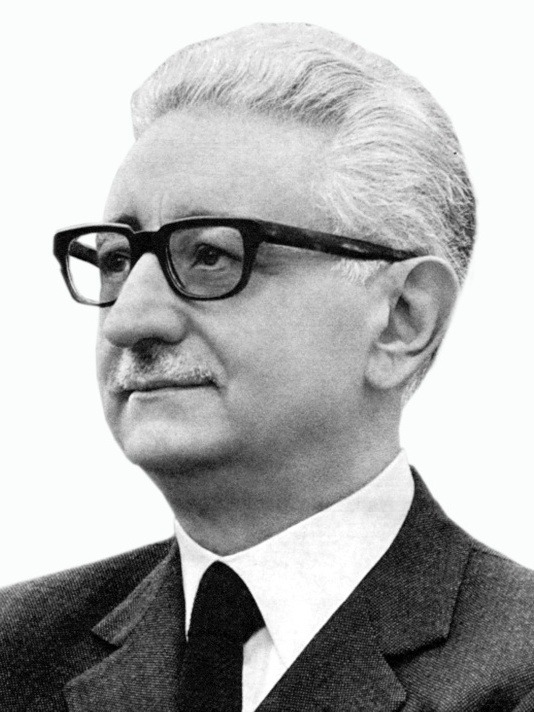
Giovanni Leone, an iconic figure in Italian politics, left an indelible mark on the nation as a scholar, lawyer, and statesman. Born on November 3, 1908, in Naples, Leone’s life was a journey marked by remarkable achievements, profound influence, and a legacy that continues to resonate in Italy’s political and legal spheres. His contributions spanned multiple domains, from academia to the highest office in the land, making him one of Italy’s most significant post-war figures.
Early Life and Education
Giovanni Leone was born into a well-respected family in Naples, a city known for its rich cultural and intellectual heritage. From an early age, Leone displayed a keen intellect and a deep interest in the law, which would become the cornerstone of his career. He pursued his higher education at the University of Naples, where he earned a degree in Jurisprudence in 1929, followed by a degree in Social Political Sciences the next year. These academic achievements set the stage for a distinguished career in law and public service.
Academic Career and Legal Expertise
Leone’s academic journey was as illustrious as his political career. He became a “libero docente” (equivalent to an associate professor) in Criminal Law and Procedure, and by 1933, he was appointed to teach the subject at the University of Camerino. His expertise and dedication quickly elevated him in the academic world, and by 1935, he secured a full professorship after topping the national competition for the chair in Criminal Law and Procedure.
Throughout his academic career, Leone taught at some of Italy’s most prestigious universities, including the Universities of Messina, Bari, Naples, and Rome. His contributions to legal scholarship were substantial, with numerous publications in criminal law that were translated into several languages. Leone’s legal acumen was not just recognized in Italy; he served as President of the Italian Group of the International Association of Penal Law and was a member of its International Steering Committee. His work in these roles underscored his global influence in the field of criminal law.
Entry into Politics: A New Chapter
Giovanni Leone’s transition from academia to politics came during a tumultuous period in Italy’s history. In 1944, as World War II drew to a close and Italy was rebuilding, Leone joined the Christian Democracy (Democrazia Cristiana, DC), a centrist political party that would dominate Italian politics for decades. His entry into politics was swift and impactful; by 1945, he was elected Secretary of the Neapolitan Committee of the DC.
Leone’s legal background made him a valuable asset to the newly formed Italian Republic. In 1946, he was elected to the Constituent Assembly, where he played a crucial role in drafting the Italian Constitution, particularly in shaping the sections related to the judiciary. This work was foundational for the new democratic state, ensuring that the rule of law would be a central pillar of the Italian Republic.
Parliamentary Career: Leadership and Influence
Leone’s political career in the Italian Parliament was marked by a series of significant roles. He was elected to the Chamber of Deputies in 1948, and his influence grew rapidly. By 1950, he was serving as Vice President of the Chamber, a position he held again in 1953. His leadership qualities were further recognized when he was elected President of the Chamber of Deputies in 1955, a role he reprised in 1958 and 1963.
As President of the Chamber of Deputies, Leone was known for his fair and balanced approach to parliamentary proceedings. He navigated the often turbulent waters of Italian politics with a calm demeanor and a deep respect for democratic principles. His tenure in this role was a testament to his commitment to upholding the integrity of Italy’s legislative processes.
Prime Minister of Italy: Twice at the Helm
Giovanni Leone’s political career reached new heights when he served as Prime Minister of Italy twice, first from June to December 1963 and again from June to December 1968. Both tenures were during challenging times, marked by economic difficulties and political instability. Despite these challenges, Leone’s leadership was characterized by a pragmatic approach to governance and a focus on maintaining political stability.
During his time as Prime Minister, Leone dealt with a range of issues, from labor strikes to economic reforms. His ability to manage complex political dynamics earned him respect across the political spectrum, even as Italy grappled with the social and economic upheavals of the 1960s.
The Presidency: A Controversial and Historic Tenure
Leone’s most prominent role came when he was elected the sixth President of the Italian Republic on December 24, 1971, after a marathon series of votes. His election was historic, not only because of the intense political maneuvering that led to his victory but also because he was the first Senator for Life to be elected President. This was a unique achievement, underscoring Leone’s standing within the Italian political establishment.
Leone’s presidency was marked by significant events and controversies, most notably the kidnapping and assassination of former Prime Minister Aldo Moro by the Red Brigades in 1978. In a desperate bid to save Moro’s life, Leone made the controversial decision to pardon a member of the Red Brigades, hoping it would lead to Moro’s release. Unfortunately, this decision did not have the intended effect, and Moro was tragically killed. The fallout from this event, combined with other political pressures, led to calls for Leone’s resignation, which he tendered on June 15, 1978.
Post-Presidency: A Life of Reflection
After his resignation, Leone chose not to return to active politics. Instead, he retreated from the public eye, spending his remaining years in relative seclusion at his villa in Formello, near Rome. Although he remained a Senator for Life, Leone distanced himself from the Christian Democracy party, possibly due to the lack of support he received during the turbulent end of his presidency.
Leone’s withdrawal from public life did not diminish his legacy. He remained a respected figure in Italian law and politics, and his contributions to the Italian Republic were widely acknowledged. His death on November 9, 2001, marked the end of an era, but his influence on Italy’s legal and political landscape continues to be felt.
Legacy and Historical Context
Giovanni Leone’s legacy is a complex one, reflecting both his significant contributions to Italian law and governance and the controversies that marked his later years. As a legal scholar, his work helped shape modern criminal law in Italy, and his publications remain influential. As a politician, his role in drafting the Italian Constitution and his leadership during key moments in the Republic’s history have left a lasting impact.
Leone’s presidency, while controversial, was also a reflection of the turbulent times in which he served. The 1970s were a period of great social and political upheaval in Italy, with the rise of terrorism and widespread economic challenges. Leone’s efforts to navigate these challenges, while not always successful, demonstrated his commitment to the Italian state and his belief in the rule of law.
Historically, Giovanni Leone’s tenure as President is often viewed through the lens of the Aldo Moro affair, but his broader contributions to Italian society should not be overlooked. He was a man of deep intellect, a committed public servant, and a figure who played a key role in shaping the direction of post-war Italy.
Conclusion: A Life of Service
Giovanni Leone’s life was one of service to his country, marked by significant achievements and profound challenges. From his early days as a legal scholar to his role in shaping the Italian Constitution, and from his leadership in Parliament to his controversial presidency, Leone’s career was a testament to his dedication to the Italian Republic.
While his presidency ended in controversy, Leone’s overall legacy is one of a statesman who sought to uphold the principles of democracy and the rule of law, even in the face of immense pressure. His contributions to Italy’s legal and political frameworks continue to be recognized and respected, making him one of the most important figures in Italy’s post-war history.


