
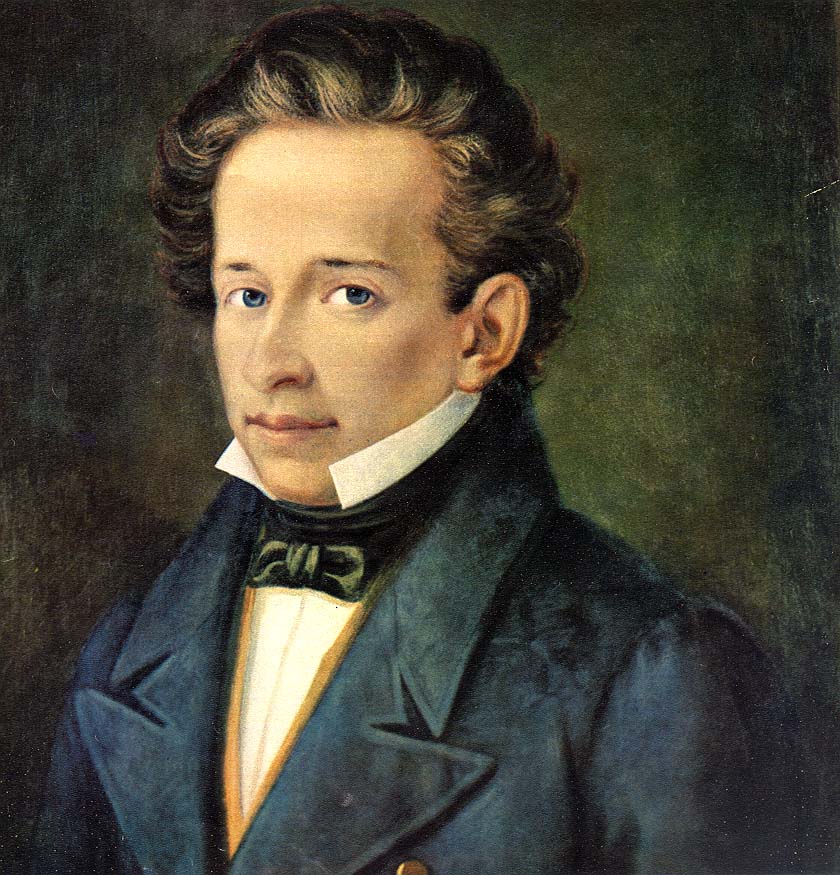
Giacomo Leopardi, born on June 29, 1798, in Recanati, Italy, is one of the most significant and revered figures in Italian literature. His life and works have left an indelible mark on the literary world, especially within the Romantic movement. This article delves deep into Leopardi’s life, exploring his journey from a child prodigy immersed in books to a poet whose profound reflections on life, suffering, and existence continue to resonate with readers around the globe. We will explore the nuances of his life, the historical context in which he lived, and the key highlights that defined his fame.
Early Life and Intellectual Upbringing
Giacomo Leopardi was born into an aristocratic family, his father, Count Monaldo Leopardi, was a man of culture who owned a vast library filled with thousands of volumes. This library became young Giacomo’s sanctuary, a place where he spent countless hours immersing himself in a wide array of subjects, ranging from classical literature to philosophy and languages. By the age of thirteen, Leopardi was already fluent in multiple languages, including Greek, Latin, French, and English, and had begun writing his own works.
Leopardi’s early education was marked by what he later described as “seven years of mad and desperate study.” His intense and solitary intellectual pursuits, however, came at a cost. The long hours of study, combined with a lack of physical activity, led to severe health issues that plagued him throughout his life. He developed a spinal condition that caused him great pain and physical deformity, contributing to his sense of isolation and melancholy.
Despite his father’s hopes that Giacomo would lead a more balanced and active life, Leopardi was consumed by his thirst for knowledge. This period of intense study laid the foundation for his later works, where his deep understanding of classical literature and philosophy would shine through. However, it also fostered a growing sense of despair, as Leopardi began to grapple with the limitations of human existence and the futility of intellectual pursuits in the face of inevitable suffering and death.
Transition from Erudition to Poetry
Between 1815 and 1816, Giacomo Leopardi experienced what is often referred to as his “literary conversion.” This was a crucial turning point in his life, where he shifted his focus from pure erudition to poetry. This transformation was driven by his realization that mere scholarly knowledge could not satisfy the deeper longings of his soul. He began to see poetry as a means to express his innermost feelings, thoughts, and philosophical reflections.
Leopardi’s early poetic works were heavily influenced by his classical education, but they also reflected his growing sense of existential despair. In 1816, he wrote some of his first significant poetic compositions, including “Le Rimembranze” (Remembrances), which hinted at the themes of nostalgia and loss that would dominate much of his later work. During this period, he also engaged in the cultural debate between classicism and romanticism, defending classical poetry while gradually developing his own unique voice that transcended traditional literary boundaries.
Leopardi’s “conversion” was not only literary but also philosophical and ideological. He began to distance himself from his father’s conservative political and religious views, embracing a more secular and skeptical worldview. This shift is evident in his increasing focus on themes of human suffering, the illusion of happiness, and the inevitable decay of all things—a worldview that would later be termed “pessimism,” though Leopardi himself resisted this label, arguing that his philosophy was rooted in realism rather than pessimism.
The Crisis of Faith and Philosophical Pessimism
As Giacomo Leopardi’s health continued to decline, his outlook on life grew increasingly bleak. He suffered from a severe spinal condition that not only caused him physical pain but also deepened his sense of alienation from the world around him. This physical suffering, coupled with his intellectual pursuits, led him to a profound existential crisis. By 1819, Leopardi was contemplating suicide, struggling with the realization that human life, in his view, was essentially meaningless—a cycle of suffering, illusion, and inevitable death.
Leopardi’s philosophical evolution during this period is reflected in his shift from poetry to philosophy. He began to explore the idea that the human condition was defined by an insatiable longing for happiness that could never be fulfilled. This led to what is known as his “philosophical pessimism,” the belief that life is fundamentally painful and that human beings are doomed to live in a state of perpetual dissatisfaction.
One of the most important works from this period is the “Zibaldone,” a massive collection of notes and reflections that Leopardi kept over several years. In it, he delves into topics such as the nature of human desire, the role of imagination in creating illusions of happiness, and the inherent contradictions of existence. The “Zibaldone” offers invaluable insights into Leopardi’s thought process and serves as a testament to his intellectual rigor and depth.
Unrequited Love and Emotional Turmoil
The theme of unrequited love is a recurring motif in Giacomo Leopardi’s life and work. His physical deformities and social isolation made it difficult for him to form close relationships, and many of his romantic feelings were directed toward women who did not return his affection. One such case was his infatuation with his cousin, Geltrude Cassi Lazzari, which, like many of his other romantic endeavors, ended in disappointment.
Leopardi’s unfulfilled romantic desires fueled his poetic imagination, leading to the creation of some of his most poignant works. His love poems are characterized by a deep sense of longing and melancholy, as he grapples with the pain of unattainable love and the realization that idealized notions of affection and companionship are often illusions. These experiences deepened his sense of alienation and further reinforced his philosophical pessimism, as he came to see love as another source of suffering and disillusionment.
Despite his personal struggles, Leopardi continued to write prolifically during this period, producing some of his most famous works, including “A Silvia” and “L’infinito.” These poems, while deeply personal, also reflect broader themes of human existence, capturing the tension between the desire for connection and the inevitability of solitude.
Journey Beyond Recanati: A Search for Meaning
In 1822, Giacomo Leopardi made his first significant departure from his hometown of Recanati, a move that marked the beginning of his physical and intellectual journey beyond the confines of his birthplace. He traveled to Rome, where he hoped to find a more stimulating intellectual environment and to escape the stifling atmosphere of Recanati. However, his experience in Rome was largely disappointing. The city, which he had idealized as a center of culture and enlightenment, proved to be a place of superficiality and moral decay.
Leopardi’s disillusionment with Rome deepened his sense of isolation and despair. He returned to Recanati, but the experience only intensified his desire to leave again. In the following years, Leopardi moved to various cities, including Milan, Bologna, and Florence, in search of intellectual companionship and a place where he could continue his literary work. These years of wandering were marked by a sense of restlessness and dissatisfaction, as Leopardi struggled to find a place where he could truly belong.
Despite his physical and emotional struggles, Leopardi’s time in these cities was also a period of intense creative activity. He formed important friendships with other intellectuals and writers, such as Pietro Giordani and Antonio Ranieri, who provided him with support and encouragement. It was during this period that Leopardi began to publish some of his most important works, including the “Canti,” a collection of poems that would later become one of the cornerstones of Italian literature.
The “Canti” and the Pinnacle of Literary Fame
The publication of the “Canti” in 1831 marked the pinnacle of Giacomo Leopardi’s literary career. This collection of poems, which includes some of his most famous works such as “L’infinito,” “A Silvia,” and “La Ginestra,” established Leopardi as one of the greatest poets of the Italian Romantic movement. The “Canti” are characterized by their lyrical beauty, emotional depth, and philosophical insight, exploring themes of love, nature, memory, and the human condition.
In “L’infinito,” one of his most celebrated poems, Leopardi reflects on the boundless nature of the human imagination and the contrast between the infinite and the finite. The poem captures the essence of Leopardi’s philosophical thought, as he grapples with the tension between the desire for transcendence and the limitations of human existence.
“A Silvia,” another masterpiece, is a poignant meditation on the fleeting nature of youth and beauty. The poem, written in memory of a young woman who died prematurely, reflects Leopardi’s deep sense of loss and his belief in the futility of human aspirations. The “Canti” as a whole can be seen as a testament to Leopardi’s ability to transform his personal suffering into universal themes, creating works that continue to resonate with readers across generations.
Final Years and Legacy
In the final years of his life, Giacomo Leopardi’s health continued to decline, but his creative output remained undiminished. In 1833, he moved to Naples with his close friend Antonio Ranieri, seeking a warmer climate that might alleviate his chronic ailments. It was in Naples, under the shadow of Mount Vesuvius, that Leopardi wrote some of his last and most profound works, including “Il tramonto della luna” and “La ginestra.”
These late poems are marked by a deep sense of resignation and acceptance of the harsh realities of life. “La ginestra,” in particular, is a powerful meditation on the resilience of the human spirit in the face of inevitable destruction. The poem uses the image of the gorse, a hardy plant that grows on the slopes of Vesuvius, as a symbol of the endurance of life in a hostile world.
Giacomo Leopardi died on June 14, 1837, at the age of 39. His death marked the end of a life marked by intellectual brilliance, profound suffering, and a relentless search for truth. Despite his relatively short life, Leopardi’s contributions to literature and philosophy have left an enduring legacy. His works continue to be studied and admired for their emotional depth, philosophical insight, and literary beauty.
Conclusion: The Enduring Influence of Giacomo Leopardi
Giacomo Leopardi’s life and work represent the quintessential struggle of the Romantic poet—a relentless quest for meaning in a world that often seems devoid of it. His ability to articulate the complexities of human existence, the pain of unfulfilled desires, and the inevitability of suffering has made him a timeless figure in literature.
Leopardi’s legacy extends far beyond the confines of Italian literature. His works have been translated into numerous languages, and his ideas have influenced thinkers and writers across the globe. In a world where the search for meaning and the confrontation with existential despair remain central to the human experience, Giacomo Leopardi’s voice continues to resonate, offering both comfort and challenge to those who dare to confront the depths of their own souls.


