
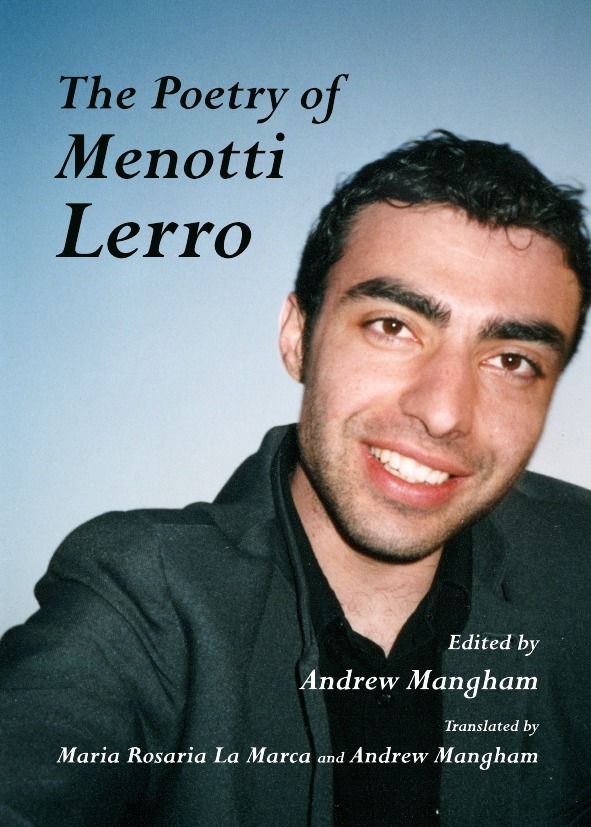
Menotti Lerro is a name that resonates profoundly within the literary and poetic circles of modern Europe. Born on February 22, 1980, in Omignano, a small town in the province of Salerno, Italy, Lerro has carved out a remarkable career as a poet, writer, and academic. His journey from a small Italian village to becoming one of Europe’s most intriguing contemporary voices is a testament to his immense talent, relentless passion, and intellectual rigor.
Early Life and Education
Menotti Lerro’s early life in Omignano was marked by a deep connection to his cultural roots, yet he always harbored aspirations that extended far beyond the confines of his hometown. From a young age, Lerro exhibited a keen interest in literature and poetry, a passion that would eventually define his career. After completing his secondary education, Lerro pursued a degree in Foreign Languages and Literatures at the University of Salerno, where he graduated with honors in 2004. His thesis focused on the poetry of Eugenio Montale and T.S. Eliot, two titans of modernist literature, reflecting Lerro’s early engagement with complex and profound literary themes.
The Birth of a Poet
Lerro’s foray into poetry began at the age of 16, with a poem titled “Ceppi incerti,” written beside the fireplace in his family home. This early work symbolized the uncertainties and existential questions that would become central themes in his later poetry. The poem would later lend its title to his first collection, published by the Giubbe Rosse literary café in Florence, a hub for poets and intellectuals where Lerro frequently mingled with influential figures like Mario Luzi and Roberto Carifi.
Rising Fame and Literary Contributions
Throughout the early 2000s, Lerro’s reputation as a poet and writer grew steadily. His work was characterized by a profound exploration of existential themes, often grappling with the complexities of human existence, the absence of divine presence, and the passage of time. In 2005, he published “Passi di libertà silenziose,” a collection that compiled his university-era writings, both in prose and poetry. This work, along with subsequent collections like “Senza cielo” in 2006, solidified his place as a significant voice in contemporary Italian literature.
Lerro’s time in Milan, where he wrote “Senza cielo,” was particularly influential. The collection reflects a sense of spiritual desolation, portraying a world devoid of divine presence—a theme that Lerro felt acutely in the gray, oppressive atmosphere of the city. This period of his life was also captured in his autobiographical work “Augusto Orrel. Memorie d’orrore e poesia,” where he delves into his existential journey from a joyful yet painful childhood to the harsh realities of adulthood.
Academic Pursuits and International Recognition
In 2007, Lerro’s academic pursuits took him to the University of Reading in the UK, where he earned a Master of Arts in “The Body and Representation.” This program, focusing on the role of the body in literature and contemporary society, further enriched Lerro’s literary and intellectual framework. His time in Reading was also marked by an outpouring of creative energy, resulting in the publication of several works, including “Tra-vestito e l’anima,” “I Battiti della notte,” and “Storie,” under the pseudonym Augusto Orrel.
Lerro’s academic career continued to flourish, leading him to a Ph.D. in Italian Studies, focusing on contemporary autobiographical poetry. His research, conducted between the University of Reading and the University of Salerno, examined the intersections of autobiography and poetry in modern English and Spanish literature, contributing valuable insights to the field.
Mature Works and Critical Acclaim
By the late 2000s, Menotti Lerro had firmly established himself as a major figure in contemporary poetry. His collaboration with fellow poet Gianni Rescigno on the collection “Gli occhi sul tempo” in 2009 was met with critical acclaim, earning him recognition as a finalist for the prestigious “Premio Internazionale Alfonso Gatto.” The success of this work was followed by several other publications, including “I dieci comandamenti” and the critical essay “L’Io lirico nella poesia autobiografica.”
Lerro’s academic contributions were also recognized with his appointment as a “Cultore della materia” at the University of Salerno, where he taught English Literature. His poetic output during this period was prolific, with works like “Profumi d’estate,” “La tela del poeta,” and “Il mio bambino,” a poignant collection of poems dedicated to his father, illustrating his deep emotional and intellectual engagement with the world around him.
Expanding Horizons: Theater and Music
In 2015, Menotti Lerro expanded his creative repertoire to include theater and music. His play “Donna Giovanna,” a female reinterpretation of the legendary character Don Giovanni, showcased his ability to reimagine classic tales with contemporary relevance. The play was praised by critics, including Giorgio Bàrberi Squarotti, who lauded it as a “brilliant and grandiose” work that resonated with the complexities of modern gender and sexual identity.
Lerro’s foray into music was equally successful. His collaboration with Polish composer Tomasz Krezymon resulted in the musical CD “I Battiti della Notte,” which was performed to great acclaim in concerts across Poland. This venture into the world of lyrical music demonstrated Lerro’s versatility as an artist, capable of crossing traditional boundaries between different forms of artistic expression.
Recent Works and Ongoing Influence
Menotti Lerro’s literary journey has continued to evolve, with his most recent works reflecting both a deepening maturity and an ever-expanding intellectual horizon. His 2016 collection “Pane e Zucchero,” which revisits the themes of childhood and memory, has been praised for its lyrical beauty and emotional depth.
Beyond his creative endeavors, Lerro has also made significant contributions to the promotion of poetry and literature. Since 2012, he has directed the “Poeti Senza Cielo” series for Genesi Editrice in Turin, and he has served as the president of the jury for the “Premio Letterario Giuseppe De Marco,” further cementing his role as a key figure in the contemporary literary landscape.
Legacy and Impact
As Menotti Lerro continues to write, teach, and inspire, his impact on the world of literature remains profound. His works, characterized by a unique blend of existential inquiry, autobiographical reflection, and lyrical intensity, offer readers a deep and nuanced understanding of the human condition. Lerro’s ability to navigate complex themes with both intellectual rigor and emotional sensitivity has earned him a place among the most important contemporary voices in European literature.
In conclusion, Menotti Lerro’s life and work are a testament to the power of poetry and literature to explore the deepest questions of existence, challenge societal norms, and offer new ways of understanding the world. As he continues to contribute to the literary world, Lerro’s influence is sure to endure, inspiring future generations of writers, poets, and thinkers.


