
Introduction
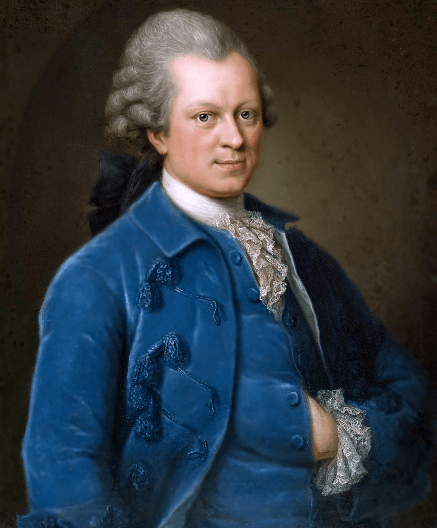
Gotthold Ephraim Lessing is a towering figure in the history of German literature and philosophy, known for his contributions to the Enlightenment movement. Born on January 22, 1729, in Kamenz, Saxony, Lessing’s life and work have had a profound influence on the intellectual landscape of the 18th century and beyond. As a playwright, philosopher, and critic, he championed ideas of tolerance, rationalism, and the pursuit of truth. This article delves into the life, achievements, and enduring legacy of Gotthold Ephraim Lessing, exploring his age, fame, and the key moments that defined his remarkable career.
Early Life and Education
Gotthold Ephraim Lessing was born into a family deeply rooted in the Lutheran faith. His father, Johan Gottfried Lessing, was a pastor and theologian, which exposed Gotthold to religious and philosophical debates from a young age. The eldest of twelve children, Lessing displayed an early aptitude for learning, particularly in the classical languages of Greek and Latin. His education at the prestigious Latin school in Meissen laid the groundwork for his intellectual pursuits.
At the age of 17, Lessing enrolled at the University of Leipzig, where he initially studied theology and medicine. However, his passion for literature and the arts quickly took precedence. Leipzig, a major cultural hub, provided Lessing with opportunities to engage with the vibrant intellectual scene of the time. He wrote and produced his first play, “The Young Scholar” (“Der junge Gelehrte”), at just 19 years old. This satirical comedy marked the beginning of his lifelong commitment to theater and literary criticism.
The Berlin Years and Early Writings
In 1748, Lessing moved to Berlin, where he became an active participant in the city’s intellectual circles. His time in Berlin was marked by prolific literary production, including plays, essays, and critical works. One of his early successes was the play “The Jews” (“Die Juden”), which tackled themes of religious tolerance and social justice. This work was significant not only for its content but also for its timing, as it coincided with the early stages of the Enlightenment in Germany.
During this period, Lessing also worked as a journalist and editor for various publications. His role at the “Berlinische Privilegierte Zeitung” allowed him to interact with some of the leading thinkers of the time, including Voltaire, Johann Georg Sulzer, and Friedrich Nicolai. These connections further fueled his intellectual development and reinforced his commitment to Enlightenment ideals.
Enlightenment Ideals and Philosophical Contributions
Lessing’s work is deeply intertwined with the intellectual currents of the Enlightenment. He believed in the power of reason and was a fierce advocate for intellectual freedom. His philosophical outlook was characterized by a rejection of dogmatism and an emphasis on critical inquiry. Lessing argued that the pursuit of knowledge was more valuable than the possession of absolute truths, a stance that placed him in opposition to both religious orthodoxy and the rigid structures of traditional philosophy.
One of Lessing’s most influential works, “Laocoön: An Essay on the Limits of Painting and Poetry” (1766), explored the differences between the visual and literary arts. In this seminal text, Lessing argued that painting and poetry operate in different domains—space and time, respectively—and should be judged according to their distinct criteria. This work not only contributed to the field of aesthetics but also demonstrated Lessing’s analytical rigor and his ability to synthesize complex ideas.
Drama and the National Theater
Lessing’s contributions to drama were equally groundbreaking. His plays often dealt with themes of morality, human nature, and the complexities of social relationships. “Minna von Barnhelm” (1767), a comedy that explores themes of honor, love, and forgiveness, is widely regarded as one of the first German national dramas. The play was a commercial success and established Lessing as a leading playwright of his time.
In 1767, Lessing was appointed as the dramaturg (literary director) of the National Theater in Hamburg, a role that allowed him to further influence German theater. His work at the National Theater led to the publication of the “Hamburg Dramaturgy” (“Hamburgische Dramaturgie”), a series of critical essays in which Lessing outlined his vision for German drama. In these essays, he championed the ideas of Aristotle, advocating for a return to the classical principles of drama, particularly the unity of time, place, and action.
Later Life and Legacy
In the latter part of his life, Lessing continued to write and engage with the intellectual debates of his time. He became a close friend and collaborator of Moses Mendelssohn, a prominent Jewish philosopher. Their friendship was instrumental in shaping Lessing’s views on religion and tolerance, which culminated in his play “Nathan the Wise” (“Nathan der Weise”). Written in 1779, this play is perhaps Lessing’s most famous work and is considered a masterpiece of Enlightenment literature. “Nathan the Wise” is a plea for religious tolerance and understanding, set against the backdrop of the Crusades. The play’s central theme is the idea that no single religion holds a monopoly on truth, a radical notion at a time when religious conflicts were still prevalent in Europe.
Lessing’s personal life was marked by tragedy. In 1776, he married Eva König, a widow he had known for several years. However, their happiness was short-lived. Eva died in 1778, just days after giving birth to their son, who also did not survive. These losses deeply affected Lessing, and his later works reflect a more somber and reflective tone.
Despite these personal hardships, Lessing remained intellectually active until his death on February 15, 1781, in Braunschweig. His legacy as a playwright, philosopher, and critic has endured, influencing generations of writers and thinkers. Lessing’s commitment to the principles of the Enlightenment—reason, tolerance, and the relentless pursuit of knowledge—continues to resonate in contemporary discussions of philosophy and human rights.
Historical Context and Influence
To fully appreciate Lessing’s contributions, it’s essential to understand the broader historical context in which he lived. The 18th century was a time of significant intellectual and social change in Europe. The Enlightenment, with its emphasis on reason, science, and individual rights, was challenging traditional authority in various domains, including religion, politics, and the arts.
Lessing’s work can be seen as part of this broader movement. His critiques of religious dogmatism and his advocacy for tolerance were in line with the Enlightenment’s push for greater freedom of thought. However, Lessing also went beyond the typical Enlightenment rhetoric by engaging deeply with the philosophical and aesthetic questions of his time. His exploration of the boundaries between different forms of art, as seen in “Laocoön,” and his reflections on the nature of knowledge, demonstrate a nuanced understanding of the complexities of human experience.
Lessing’s influence extended beyond Germany. His ideas were part of a broader European conversation about the nature of art, religion, and society. His friendship with Mendelssohn, for example, played a crucial role in the development of the Haskalah, the Jewish Enlightenment movement. Lessing’s insistence on the importance of dialogue and understanding between different cultures and religions remains relevant today, particularly in an increasingly globalized world.
Conclusion
Gotthold Ephraim Lessing was a pivotal figure in the German Enlightenment, whose works continue to be studied and celebrated for their intellectual depth and moral clarity. His life was marked by a relentless pursuit of knowledge and a commitment to the principles of reason and tolerance. Through his plays, essays, and philosophical writings, Lessing challenged the conventions of his time and laid the groundwork for future generations of thinkers and artists.
Lessing’s legacy is one of intellectual courage and moral conviction. His willingness to question established norms and his dedication to the pursuit of truth have made him a lasting figure in the history of ideas. As we continue to grapple with the challenges of our own time, Lessing’s work serves as a reminder of the enduring power of reason and the importance of maintaining an open and inquisitive mind.


