
Introduction:
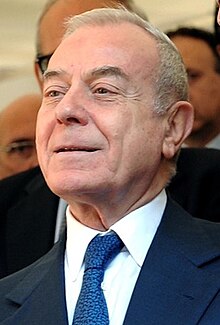
Gianni Letta is a prominent figure in Italian politics and journalism, renowned for his close association with former Italian Prime Minister Silvio Berlusconi. Born on April 15, 1935, in Avezzano, near L’Aquila, Italy, Letta’s life has been marked by significant contributions to journalism, politics, and public service. His journey from a journalist to a trusted advisor in one of the most influential political circles in Italy is a testament to his expertise, loyalty, and strategic acumen.
Early Life and Education:
Gianni Letta was born into a modest family in Avezzano. His early years were shaped by the post-war environment of Italy, which influenced his later career choices. Letta pursued a degree in law, graduating with distinction. However, his passion for communication and public service soon led him away from the legal profession and into the world of journalism.
Career Beginnings in Journalism:
Letta began his journalism career as a correspondent for several news outlets, including RAI and ANSA. His early work was characterized by a dedication to covering events with accuracy and integrity. In 1958, Letta joined the editorial team of the Roman daily newspaper Il Tempo. Over the years, he worked his way up through various roles, including foreign editor, provincial editor, and eventually editor-in-chief. His leadership at Il Tempo from 1973 to 1987 was marked by a commitment to maintaining the paper’s reputation for quality journalism during a time of significant political and social change in Italy.
Transition to Politics:
In 1987, Gianni Letta made a pivotal career shift when he accepted an offer from Silvio Berlusconi to join the Fininvest Group, one of Italy’s leading media and entertainment companies. This move marked the beginning of a long and influential partnership with Berlusconi. Letta’s role within Fininvest extended beyond journalism; he became a key advisor and strategist for Berlusconi as the media mogul transitioned into politics.
When Berlusconi entered the political arena and won the 1994 elections, Letta was appointed Undersecretary to the Prime Minister’s Office, a position he held during Berlusconi’s subsequent terms from 2001 to 2006 and again after the 2008 elections. Letta’s influence in these roles was profound; he was often referred to as Berlusconi’s right-hand man, responsible for managing sensitive political negotiations and serving as a bridge between the government and various institutions.
Key Contributions and Roles:
Gianni Letta’s political career is notable not only for his close association with Berlusconi but also for his ability to navigate complex political landscapes. His role as Undersecretary involved overseeing a wide range of governmental functions, from media relations to public administration. Letta was known for his discretion, diplomatic skills, and ability to maintain stability within the government during turbulent times.
One of the highlights of Letta’s career was his involvement in international affairs. In 2007, he was appointed as an international consultant for Goldman Sachs, one of the most powerful investment banks in the world. This role allowed Letta to leverage his vast experience in politics and finance, further solidifying his reputation as a trusted advisor on the global stage.
Challenges and Controversies:
Despite his many achievements, Gianni Letta’s career has not been without controversy. His close ties to Berlusconi, a polarizing figure in Italian politics, have sometimes placed Letta in the crosshairs of political opponents and the media. Critics have questioned his role in various political decisions and his influence over Italy’s media landscape. However, Letta’s reputation for integrity and his ability to maintain a low profile during contentious moments have helped him navigate these challenges.
Legacy and Impact:
Gianni Letta’s impact on Italian politics and journalism is significant. His career is a study in loyalty, discretion, and strategic thinking. Letta’s ability to work behind the scenes, advising and guiding key political figures, has made him one of the most influential figures in modern Italian history.
His legacy is also reflected in the respect he commands across the political spectrum. Even those who opposed Berlusconi’s policies have often acknowledged Letta’s professionalism and commitment to public service. His influence extends beyond Italy, with his work at Goldman Sachs and other international roles highlighting his global reach.
Personal Life:
Despite his high-profile career, Gianni Letta has managed to keep his personal life relatively private. He is known for his humility and dedication to his work, qualities that have endeared him to colleagues and political allies alike. Letta’s personal philosophy has always emphasized service over personal gain, a principle that has guided him throughout his career.
Conclusion:
Gianni Letta’s life and career offer a fascinating glimpse into the intersections of journalism, politics, and global finance. His journey from a small town in Italy to the corridors of power in Rome and beyond is a testament to his skill, determination, and unwavering commitment to public service. As one of the most trusted advisors in Italian political history, Letta’s influence will be felt for years to come.


