
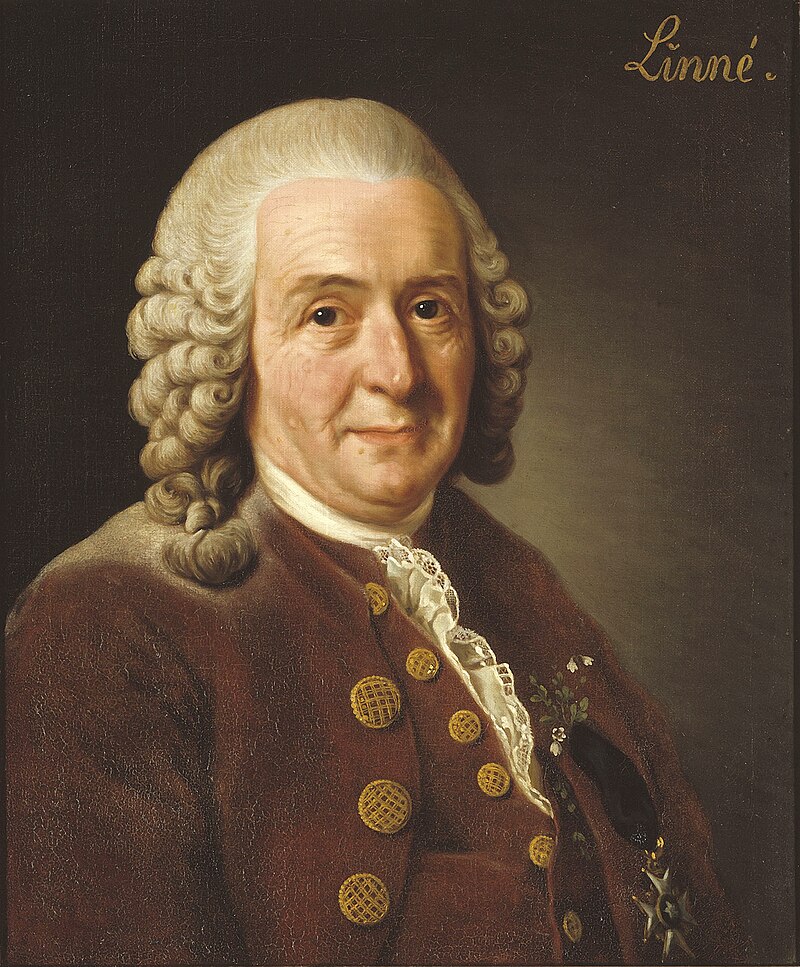
Carl Nilsson Linnaeus, commonly known as Linneo or Carl von Linné, was born on May 23, 1707, in Rashult, Smaland, Sweden. He became one of the most influential figures in the history of science, particularly in the fields of botany, taxonomy, and medicine. This article delves into the life, fame, and lasting impact of Linneo, exploring the nuances of his contributions and the historical context in which he worked.
Early Life and Influences
Born into a modest family, Linneo was the son of Christina Broderson and Nils Ingemarson, a farmer who later inherited the role of a pastor in their local Protestant community. Linneo’s father, Nils, had a profound interest in botany, which he passed on to his son. The family’s surname, “Linnaeus,” was derived from the Swedish word “lind,” meaning “lime tree,” a name that would become synonymous with the scientific classification of life.
From a young age, Linneo was encouraged to pursue a career in the clergy, but his passion for botany led him down a different path. His early education under the guidance of Johan Rothman, a scientist who recognized Linneo’s potential, laid the foundation for his future endeavors. In 1727, Linneo enrolled at the University of Lund to study medicine, driven by his interest in the medicinal properties of plants.
Academic Pursuits and the Birth of Taxonomy
Linneo’s academic journey took him to the University of Uppsala, Sweden’s premier institution, where he studied under the guidance of Olaus Rudbeck the Younger. It was here that Linneo began to develop his revolutionary system of classification, which would later become the cornerstone of modern taxonomy.
In 1730, while still a student, Linneo wrote a short treatise titled “Preludia Sponsaliorum Plantarum” (The Wedding of Plants), where he first introduced his method of classifying plants based on their reproductive organs—pistils, stamens, and petals. This innovative approach was both groundbreaking and controversial, as it linked the classification of plants to their sexual characteristics. Despite facing criticism and accusations of immorality from the Lutheran community, Linneo’s work gained recognition in academic circles.
The Expeditions and Contributions to Science
Despite his academic success, Linneo’s financial situation was precarious. In 1731, his expedition to Lapland, one of the most remote regions of Sweden, was funded by the Uppsala Academy of Sciences. The findings from this journey were later published in “Lachesis lapponica,” a work that would only see the light of day posthumously in the early 19th century.
Linneo’s thirst for knowledge and exploration led to another expedition in 1734, the results of which were published in “Flora Lapponica” in 1737. This work showcased the plants of Lapland according to Linneo’s sexual classification system. It was during this period that Linneo introduced and refined the binomial nomenclature, a system of taxonomy where each organism is given two Latin names: the genus (nomen genericum) and the species.
Fame and Recognition
Linneo’s reputation as a botanist grew rapidly, not just within Sweden but across Europe. After completing his studies in medicine at the University of Harderwijk in the Netherlands, Linneo continued his work at the University of Leiden. His fame as a scientist was solidified when he returned to Sweden in 1738, where he worked as a physician, focusing particularly on the treatment of syphilis.
In 1739, Linneo married Sara Morea, the daughter of a physician, and together they founded the Royal Swedish Academy of Sciences. Linneo’s academic career reached new heights in 1741 when he secured a professorship at the University of Uppsala, initially in medicine. However, his true passion lay in botany, and he soon exchanged his medical chair for one in botany, dietetics, and materia medica. Under his leadership, the Uppsala Botanical Garden was reorganized according to his classification system, making it a model for botanical gardens worldwide.
Later Years and Legacy
Linneo’s contributions to science extended beyond botany. He was a pioneer in classifying all forms of life, including animals and minerals, and his work laid the groundwork for future scientific advancements. In 1758, he acquired the estate of Hammarby, where he established a museum to house his extensive collection of specimens.
In 1761, Linneo was ennobled by King Adolf Frederick of Sweden, at which point he adopted the name Carl von Linné. However, the later years of his life were marked by personal challenges, including bouts of depression and increasing pessimism. Despite his struggles, Linneo’s scientific endeavors never waned.
Linneo suffered several minor strokes in 1774 and passed away on January 10, 1778, in Uppsala. He was buried in the Uppsala Cathedral, where his legacy as the “Father of Modern Taxonomy” continues to be honored.
Historical Context and Impact
Linneo’s work did not emerge in a vacuum. The 18th century was a time of significant scientific exploration and discovery. The Age of Enlightenment fostered an environment where empirical observation and classification were highly valued. Linneo’s work was both a product of and a contributor to this intellectual movement.
His classification system, based on the reproductive organs of plants, was revolutionary because it provided a universal framework for naming and categorizing living organisms. This system not only facilitated communication among scientists but also paved the way for future developments in biology, ecology, and environmental science.
Linneo’s Influence on Modern Science
Today, Linneo’s influence can be seen in various scientific disciplines. The binomial nomenclature system he developed is still in use, forming the basis for the scientific names of all living organisms. His work also had a profound impact on the development of evolutionary biology. Charles Darwin, the father of evolution, was heavily influenced by Linneo’s work, particularly the emphasis on classification and the relationships between different species.
Moreover, Linneo’s contributions extend beyond science. His work has cultural and historical significance, symbolizing the transition from medieval to modern science. His methods of observation and classification are still taught in schools and universities around the world, making him one of the most enduring figures in the history of science.
Conclusion
Carl Linnaeus, known as Linneo, was a towering figure in the history of science. His innovative classification system and contributions to botany, taxonomy, and medicine have left an indelible mark on the world. Despite facing criticism and personal challenges, Linneo’s work laid the foundation for modern scientific inquiry and continues to influence contemporary research.
As we reflect on Linneo’s life and legacy, it is clear that his contributions extend far beyond the field of botany. He was a true pioneer, whose work bridged the gap between the natural world and the scientific community, shaping our understanding of life on Earth.


