
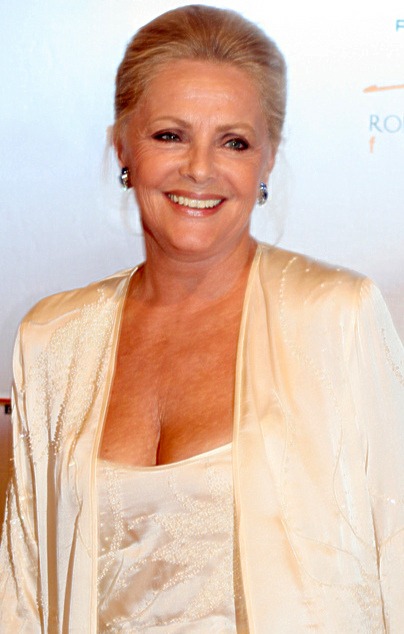
Virna Lisi, born Virna Pieralisi on November 8, 1936, in Jesi, Italy, was one of the most iconic figures in Italian cinema, known for her stunning beauty and remarkable acting talent. Her career, which spanned over six decades, saw her evolve from a young starlet in Italian cinema to an internationally recognized actress who left an indelible mark on both European and Hollywood films. This article delves into the life, career, and lasting impact of Virna Lisi, exploring the nuances of her journey from a provincial town in Italy to the glittering world of international cinema.
Early Life and Entry into Cinema
Virna Lisi was born in the small town of Jesi, located in the Marche region of Italy. Her father, Ubaldo Pieralisi, moved the family to Rome in the early 1950s, where Virna’s life took an unexpected turn. At a very young age, she caught the attention of Italian singer Giacomo Rondinella, who was struck by her extraordinary beauty. Rondinella introduced her to a film producer, and soon after, Virna found herself in the world of Italian cinema.
Lisi’s entry into acting was almost accidental, but her natural talent and striking appearance quickly made her a sought-after actress. She debuted in a series of Neapolitan films, including “E Napoli canta” and “Desiderio ‘e sole,” which helped her gain initial recognition. However, it was the 1955 film “Le diciottenni,” a remake of the classic “Ore 9: lezione di chimica,” that truly launched her career.
By the mid-1950s, Virna Lisi was already becoming a household name in Italy. Her performance in “La donna del giorno” (1956), directed by Francesco Maselli, further solidified her status as one of the most promising young actresses of her generation. Her ethereal beauty and on-screen presence made her a perfect fit for costume dramas, such as “Caterina Sforza, leonessa di Romagna” (1958) and “Romolo e Remo” (1961), where she portrayed historical figures with grace and elegance.
Rise to International Fame
Virna Lisi’s undeniable talent soon attracted the attention of international filmmakers. In the early 1960s, she began to expand her career beyond Italy, appearing in several French and American productions. One of her first significant international roles was in “Eva” (1962), directed by Joseph Losey, where she starred alongside Jeanne Moreau. This film, along with her role in “The Black Tulip” (1963) opposite Alain Delon, marked the beginning of her international career.
Lisi’s beauty and charm did not go unnoticed in Hollywood. In 1965, she starred alongside Jack Lemmon in the comedy “How to Murder Your Wife,” directed by Richard Quine. This film showcased her comedic talents and introduced her to a broader audience. Lisi’s Hollywood experience, however, was a double-edged sword. While it brought her international recognition, it also pigeonholed her as the quintessential blonde bombshell, a typecast she was eager to escape.
During her brief stint in Hollywood, Lisi worked with some of the industry’s biggest stars, including Frank Sinatra in “Assault on a Queen” (1966) and Tony Curtis in “Not with My Wife, You Don’t!” (1966). Despite these opportunities, Lisi grew increasingly dissatisfied with the roles she was offered, which often prioritized her looks over her acting abilities. This frustration led her to leave Hollywood and return to Europe, where she could pursue more challenging and diverse roles.
Returning to European Cinema: The Mature Actress
Upon her return to Italy in the late 1960s, Virna Lisi was determined to redefine her career. She took on a series of roles that allowed her to showcase her depth as an actress, moving away from the glamorous image that Hollywood had crafted for her. One of her most notable performances during this period was in the anthology film “Le bambole” (1965), directed by Dino Risi, where she starred alongside Nino Manfredi. This film allowed Lisi to display her comedic timing and versatility.
Lisi’s collaboration with renowned Italian directors like Mario Monicelli, in “Casanova 70” (1965) with Marcello Mastroianni, and Pietro Germi, in “Signore & Signori” (1966), further established her as a serious actress capable of handling complex roles. She continued to work in both comedic and dramatic films, proving that she was more than just a pretty face.
Throughout the 1970s, Lisi’s film appearances became more selective. She starred in films like “Beyond Good and Evil” (1977) directed by Liliana Cavani and “Ernesto” (1978) by Salvatore Samperi, which explored deeper and more challenging themes. These roles allowed Lisi to portray more mature characters, reflecting her own evolution as an actress.
One of the most significant turning points in Lisi’s career came in 1994 when she portrayed Catherine de’ Medici in the French historical drama “La Reine Margot,” directed by Patrice Chéreau. This role earned her widespread acclaim, including the Best Actress award at the Cannes Film Festival and a César Award. Lisi’s portrayal of the manipulative and complex queen was a far cry from the roles she had played earlier in her career, showcasing her range and depth as an actress.
Legacy and Impact on Cinema
Virna Lisi’s career is a testament to her resilience and determination to be more than just a beautiful face in the film industry. Her decision to leave Hollywood at the height of her fame and return to Europe to pursue more meaningful roles reflects her commitment to her craft. Over the course of her career, Lisi worked with some of the most influential directors in both European and American cinema, leaving behind a legacy of diverse and memorable performances.
Lisi’s impact on cinema extends beyond her acting. She was a trailblazer for women in the industry, particularly in how she navigated her career. At a time when actresses were often typecast based on their looks, Lisi refused to be boxed in, seeking out roles that challenged her and allowed her to grow as an artist. Her ability to transition from ingénue to character actress set a precedent for future generations of actresses.
In addition to her film work, Lisi also made significant contributions to television, starring in several successful Italian TV series and miniseries throughout the 1980s and 1990s. These projects, such as “Buon Natale… Buon anno” (1989) directed by Luigi Comencini, further endeared her to Italian audiences and showcased her versatility.
Personal Life and Final Years
Virna Lisi’s personal life was marked by stability and devotion to her family. In 1960, she married Franco Pesci, an architect and former president of AS Roma football club. The couple had one son, Corrado, born in 1962, who later gave them three grandchildren. Lisi was known for her dedication to her family, often choosing roles that allowed her to balance her career with her responsibilities as a wife and mother.
Lisi’s final years were spent surrounded by her family, and she continued to work in film and television up until the early 2010s. Tragically, in 2013, she lost her husband Franco, with whom she had shared over five decades of marriage. The following year, on December 18, 2014, Virna Lisi passed away at the age of 78, leaving behind a legacy of grace, talent, and determination.
Conclusion: The Enduring Legacy of Virna Lisi
Virna Lisi’s life and career are a remarkable example of how beauty, talent, and intelligence can coexist in the world of cinema. From her early days as a stunning young actress in Italian films to her later years as an acclaimed character actress, Lisi’s journey was one of constant evolution. She navigated the challenges of the film industry with grace, refusing to be typecast and always striving for roles that allowed her to explore the depths of human emotion.
Lisi’s legacy is one that will endure for generations. She broke barriers for women in film, proving that actresses could successfully transition from youthful roles to mature, complex characters. Her work continues to inspire, and she remains a beloved figure in Italian cinema. As we remember Virna Lisi, we celebrate not just her beauty, but her incredible talent and the impact she had on the world of film.


