
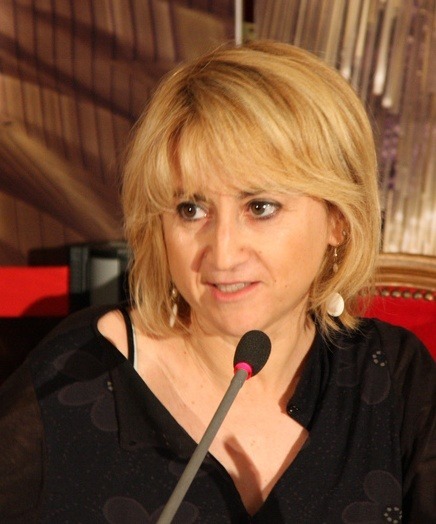
Luciana Littizzetto, born on October 29, 1964, in Turin, Italy, is one of the most celebrated and influential figures in the Italian entertainment industry. Known for her sharp wit, comedic timing, and ability to tackle controversial topics with humor, Littizzetto has carved out a unique space for herself in the worlds of television, film, and literature. Her career spans over three decades, during which she has become a household name, not just as a comedian but also as a cultural commentator and advocate for social issues. This article explores the life, career, and impact of Luciana Littizzetto, offering insights into her rise to fame and her enduring influence in Italian popular culture.
Early Life and Education
Luciana Littizzetto was born and raised in Turin, a city that has significantly influenced her comedic style and outlook on life. Growing up in a working-class family, Littizzetto’s early life was far removed from the world of entertainment. Her parents instilled in her a strong work ethic and a love for education, values that would later play a crucial role in her diverse career.
Littizzetto initially pursued a path that was seemingly far removed from comedy. She studied music and graduated with a diploma in piano from the Conservatorio Giuseppe Verdi in Turin in 1984. Music was her first passion, and she even spent nine years teaching music in middle schools. However, Littizzetto’s creative instincts pushed her towards a different path. She later enrolled at the University of Turin, where she earned a degree in literature in 1990, with a thesis on the history of melodrama titled “The Mythology of Night and Moon in the Romantic Melodrama of the Early 19th Century.” This academic background, coupled with her natural comedic talent, laid the foundation for her future career in entertainment.
The Road to Comedy: Early Career and Breakthrough
Littizzetto’s entry into the world of comedy was gradual. While still teaching, she began to explore her interest in acting and comedy by attending the I.D.A.S. (Istituto d’Arte e Spettacolo) in Turin, where she honed her skills under the guidance of renowned actor and director Arnoldo Foà. This training led to her first roles as a voice actress and performer in local theater productions.
Her big break came in 1991 when she won the “Ettore Petrolini” prize at the Bravograzie cabaret festival in Aosta with her performance in “Videobox.” This victory opened the doors to television, leading to an appearance on the popular “Maurizio Costanzo Show,” where her comedic talents were quickly recognized. It was during this period that Littizzetto began to make a name for herself as a comedian who could blend sharp social commentary with humor.
By the early 1990s, Littizzetto had transitioned fully into the world of comedy, leaving her teaching job behind. She became a regular on the Italian comedy circuit, performing in clubs and theaters across the country. Her style, characterized by a mix of satire, absurdity, and a deep understanding of human nature, resonated with audiences. Littizzetto’s ability to tackle issues of gender, society, and politics with humor challenged the traditional male-dominated comedy scene in Italy.
Television Stardom: A Household Name
The mid-1990s marked the beginning of Littizzetto’s rise to national fame. In 1992, she joined the cast of “Avanzi,” a cult television show on Raitre, where she further developed her comedic persona. The show, known for its satirical take on Italian politics and society, provided the perfect platform for Littizzetto to showcase her talents. Her characters, such as Sabrina (“Minchia Sabbry”), became iconic, and her catchphrases turned into cultural phenomena.
Littizzetto’s growing popularity on television led to more opportunities. She became a fixture on shows like “Mai dire Gol,” where she continued to create memorable characters and sketches. Her humor was often bold and unapologetic, addressing topics that were considered taboo in Italian society. Littizzetto’s ability to push boundaries while maintaining a broad appeal made her a standout figure in Italian comedy.
In addition to her television work, Littizzetto also ventured into radio, co-hosting shows with prominent figures like Piero Chiambretti. Her radio work further expanded her audience and solidified her reputation as one of Italy’s top comedians.
Film and Writing: Expanding Her Creative Horizons
While television was the primary platform for Littizzetto’s comedy, she also found success in film and writing. Her film debut came in 1997 with a role in “Tutti giù per terra,” directed by Davide Ferrario. The film, based on a novel by Giuseppe Culicchia, was a critical success and showcased Littizzetto’s versatility as an actress. She followed this with roles in popular films like “Tre uomini e una gamba” (1997) and “E allora mambo!” (1999), both of which were box office hits.
Littizzetto’s success in film was paralleled by her achievements as a writer. She published several books that blended humor with sharp social commentary. Her books, such as “Sola come un gambo di sedano” (2001) and “Rivergination” (2006), became bestsellers in Italy, further cementing her status as a cultural icon. These works showcased her ability to engage with readers on topics ranging from relationships to societal norms, all through the lens of comedy.
In 2004, Littizzetto released “Col cavolo,” a book that offered a humorous take on contemporary life, and it quickly became a favorite among her fans. Her writing style, characterized by wit and relatability, resonated with a wide audience, making her one of the most successful comedic authors in Italy.
Collaborations and Continued Success
One of the defining aspects of Littizzetto’s career has been her long-standing collaboration with television host Fabio Fazio. Starting in 2005, Littizzetto became a regular guest on Fazio’s show “Che tempo che fa,” where her weekly segments became one of the highlights of the program. Her interactions with Fazio, marked by playful banter and insightful humor, were a major draw for viewers. The chemistry between the two led to Littizzetto becoming an integral part of the show, contributing significantly to its success.
Littizzetto’s collaboration with Fazio extended beyond “Che tempo che fa.” In 2013 and 2014, the duo co-hosted the prestigious Sanremo Music Festival, one of Italy’s most-watched television events. Littizzetto’s presence brought a new level of humor and irreverence to the festival, and her performances were widely praised. This period marked the peak of her television career, as she balanced her roles as a comedian, actress, and writer with remarkable skill.
Personal Life and Advocacy
Despite her public persona, Littizzetto has managed to keep much of her personal life private. However, she has been open about her relationship with Davide Graziano, a musician and former drummer of the band Africa Unite. The couple, who were together from 1997 to 2018, adopted two children, demonstrating Littizzetto’s commitment to family despite the demands of her career.
Littizzetto has also been an advocate for various social causes, using her platform to speak out on issues such as gender equality and LGBTQ+ rights. Her humor often incorporates these themes, challenging societal norms and encouraging her audience to think critically about the world around them.
Legacy and Impact: A Cultural Icon
Luciana Littizzetto’s impact on Italian culture is undeniable. Over the course of her career, she has redefined what it means to be a female comedian in a traditionally male-dominated industry. Her ability to blend humor with social commentary has made her a unique and influential voice in Italian entertainment.
Littizzetto’s legacy is not just in the characters she has created or the jokes she has told, but in the way she has used comedy to address serious issues. She has shown that humor can be a powerful tool for social change, and her work has inspired a new generation of comedians and writers in Italy.
In recent years, Littizzetto has continued to evolve as an artist, exploring new mediums and platforms. Her move, along with Fabio Fazio, to a new program on the Nove channel in 2023 demonstrates her ability to adapt and remain relevant in an ever-changing media landscape.
Conclusion: The Enduring Influence of Luciana Littizzetto
As Luciana Littizzetto enters the next phase of her career, her influence on Italian entertainment remains as strong as ever. She has proven herself to be not just a comedian, but a multifaceted artist whose work resonates with people across generations. Her journey from a music teacher in Turin to one of Italy’s most beloved entertainers is a testament to her talent, perseverance, and willingness to challenge the status quo.
Littizzetto’s contributions to television, film, literature, and social commentary have left an indelible mark on Italian culture. As she continues to push boundaries and explore new creative avenues, there is no doubt that her legacy will endure for many years to come.


