
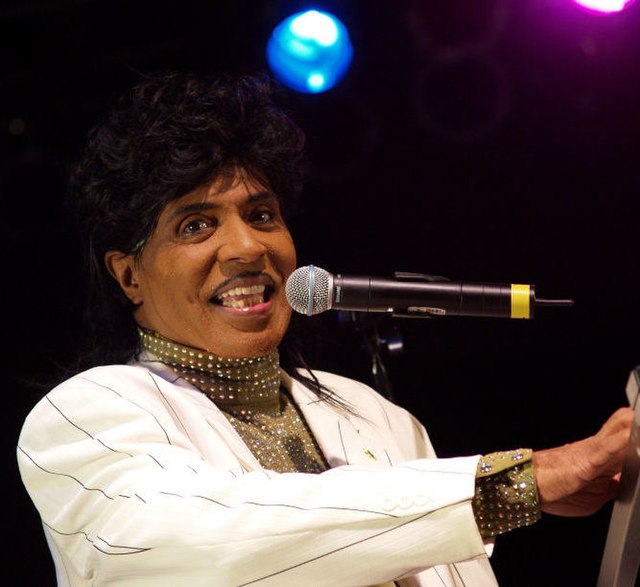
Little Richard, born Richard Wayne Penniman on December 5, 1932, in Macon, Georgia, is one of the most influential figures in the history of music. Known as “The Architect of Rock and Roll,” Little Richard’s flamboyant performances, electrifying piano playing, and powerful voice helped shape the sound and style of rock and roll in the mid-20th century. His contributions to music extend beyond just his hits; he was a trailblazer who broke racial barriers and influenced generations of musicians across various genres. This article explores Little Richard’s life, career, and enduring legacy.
Early Life and Musical Beginnings
Richard Wayne Penniman was born into a large, religious family as one of twelve children. His father, Charles Penniman Sr., was a church deacon and a bricklayer who also ran a moonshine business, while his mother, Leva Mae Stewart, was a homemaker. Raised in a deeply religious environment, Richard grew up singing in the church, which laid the foundation for his powerful vocal style.
From a young age, Richard was drawn to music, particularly the vibrant gospel sounds he heard in church. However, his early life was fraught with challenges, including struggles with his identity and his family’s conservative values. As a child, he faced criticism and ridicule for his effeminate behavior and interests, which led to tensions within his family, particularly with his father.
Despite these challenges, Richard’s passion for music only grew stronger. He learned to play the piano and began performing with his family’s gospel group, The Penniman Singers. His love for music extended beyond gospel, as he was also influenced by the rhythm and blues (R&B) sounds he heard on the radio. By the time he was a teenager, Richard was determined to pursue a career in music, despite his father’s disapproval.
The Birth of Little Richard
In 1951, at the age of 18, Richard Penniman began his professional music career, performing in local clubs and honing his craft. He adopted the stage name “Little Richard,” a nickname he earned due to his small stature. His early recordings were influenced by the R&B sounds of the time, but they failed to gain significant attention. It wasn’t until he met producer Robert Blackwell in 1955 that his career took a dramatic turn.
Blackwell recognized Richard’s raw talent and encouraged him to explore a more energetic and flamboyant style. This led to the creation of “Tutti Frutti,” a song that would become one of the most iconic tracks in rock and roll history. Released in 1955, “Tutti Frutti” was an instant hit, reaching the top of the charts and propelling Little Richard to stardom. The song’s catchy, nonsensical lyrics, combined with Richard’s dynamic piano playing and exuberant vocals, captured the spirit of a new musical era.
Following the success of “Tutti Frutti,” Little Richard released a string of hits that cemented his status as a rock and roll pioneer. Songs like “Long Tall Sally,” “Good Golly, Miss Molly,” and “Lucille” became anthems of the 1950s, defining the sound of rock and roll. Richard’s music was characterized by its upbeat tempo, driving rhythm, and wild, energetic delivery, which set the stage for the rock music that would dominate the decades to come.
Cultural Impact and Breaking Barriers
Little Richard’s influence extended far beyond his music. As an African American artist in the segregated United States, he played a crucial role in breaking down racial barriers in the music industry. His concerts were among the first to attract both black and white audiences, challenging the norms of the time. In an era when racial segregation was still prevalent, Little Richard’s ability to bring together people of different races was a powerful statement.
However, Richard’s rise to fame was not without controversy. His flamboyant stage presence, which included heavy makeup, flashy clothing, and pompadour hairstyles, challenged the conservative values of the 1950s. His androgynous appearance and suggestive lyrics shocked many and led to backlash from conservative groups, who accused him of corrupting the morals of America’s youth. Despite this, or perhaps because of it, Little Richard’s popularity continued to soar, as he became a symbol of rebellion and freedom.
Richard’s impact on other musicians cannot be overstated. He influenced a wide range of artists across genres, including Elvis Presley, The Beatles, The Rolling Stones, Jimi Hendrix, and James Brown. Paul McCartney, in particular, was heavily influenced by Richard’s vocal style and energetic stage performances, which he often emulated in his own work with The Beatles.
The 1957 Retirement and Return to Music
At the height of his fame in 1957, Little Richard shocked the music world by announcing his retirement from rock and roll to pursue a religious path. During a tour in Australia, he claimed to have seen visions that led him to believe he needed to abandon his life of excess and dedicate himself to the church. Upon returning to the United States, he enrolled in a Christian university and began studying to become a minister.
For several years, Richard focused on his faith, preaching and recording gospel music. However, the pull of rock and roll proved too strong, and by 1962, he made a triumphant return to the music scene. His comeback tour in the United Kingdom was particularly significant, as he was supported by up-and-coming bands like The Beatles and The Rolling Stones. This tour reintroduced Little Richard to a new generation of fans and reaffirmed his status as a rock and roll icon.
In the mid-1960s, Little Richard hired a young guitarist named Jimi Hendrix, who joined his band for a series of tours. Hendrix, who would later become one of the most influential guitarists in history, was deeply inspired by Richard’s stage presence and showmanship. The collaboration between these two legends was brief but left a lasting impact on the music world.
Struggles and Redemption
Despite his successful return to music, Little Richard’s life in the 1960s and 1970s was marked by personal struggles. He battled addiction to drugs and alcohol, and his lifestyle became increasingly erratic. In 1977, a near-fatal confrontation with his friend Larry Williams, who was also struggling with addiction, served as a wake-up call for Richard. This incident, where Williams threatened Richard with a gun during a drug-fueled argument, made Richard realize that he needed to make significant changes in his life.
In the late 1970s, Richard once again turned to religion, renouncing his past excesses and dedicating himself to evangelism. He became an ordained minister and spent much of the 1980s preaching in churches across the United States. Despite his religious commitments, Richard continued to perform and record music, believing that he could serve God through his art.
During this period, Richard’s influence continued to be recognized by the music industry. He appeared in several films, including the 1986 comedy “Down and Out in Beverly Hills,” and contributed to various soundtracks. In 1986, he was one of the first inductees into the Rock and Roll Hall of Fame, an honor that solidified his legacy as one of the founding fathers of rock and roll.
Later Years and Legacy
In the 1990s and 2000s, Little Richard continued to perform and make public appearances, though his health began to decline. He suffered from hip problems and other ailments, which eventually led him to retire from performing. Despite his physical challenges, Richard’s spirit remained undiminished, and he continued to be a vocal advocate for equality and social justice.
Little Richard’s contributions to music and culture have been widely recognized. He received numerous awards and honors, including a Grammy Lifetime Achievement Award in 1993 and an NAACP Image Award. In 2004, Rolling Stone magazine ranked him eighth on their list of the 100 Greatest Artists of All Time, a testament to his enduring influence on the music industry.
Richard’s signature song, “Tutti Frutti,” was selected by the Library of Congress in 2010 for preservation in the National Recording Registry, ensuring that future generations will have access to this iconic piece of music history. The song’s impact is evident in the countless artists who have covered it, including Elvis Presley, Pat Boone, and even international acts like Queen and Sting.
Historical Context and Cultural Influence
Little Richard’s rise to fame occurred during a transformative period in American history. The 1950s were marked by the civil rights movement, the beginnings of rock and roll, and significant social change. Richard’s music, with its fusion of gospel, blues, and rhythm and blues, played a pivotal role in the creation of rock and roll, a genre that would come to define the cultural landscape of the 20th century.
His ability to cross racial barriers through his music was revolutionary. At a time when segregation was the law of the land, Richard’s concerts were some of the first to bring together black and white audiences. This was not just a musical achievement but a social one, as it challenged the status quo and helped pave the way for greater integration in American society.
Little Richard’s influence extended beyond music. His flamboyant persona and unapologetic self-expression paved the way for future generations of artists who would push the boundaries of gender, sexuality, and race in popular culture. Artists like David Bowie, Prince, and Lady Gaga have all cited Little Richard as an influence, demonstrating the far-reaching impact of his work.
Conclusion
Little Richard’s life and career are a testament to the power of music to transcend boundaries and bring people together. As one of the pioneers of rock and roll, he not only shaped the sound of a generation but also challenged societal norms and broke down racial barriers. His contributions to music, culture, and social change are immeasurable, and his legacy continues to inspire artists and audiences around the world.
Even after his death on May 9, 2020, at the age of 87, Little Richard remains a towering figure in the history of music. His influence can be heard in the work of countless musicians who have followed in his footsteps, and his spirit of rebellion and innovation lives on in the rock and roll ethos. As “The Architect of Rock and Roll,” Little Richard’s place in history is secure, and his music will continue to resonate for generations to come.


