
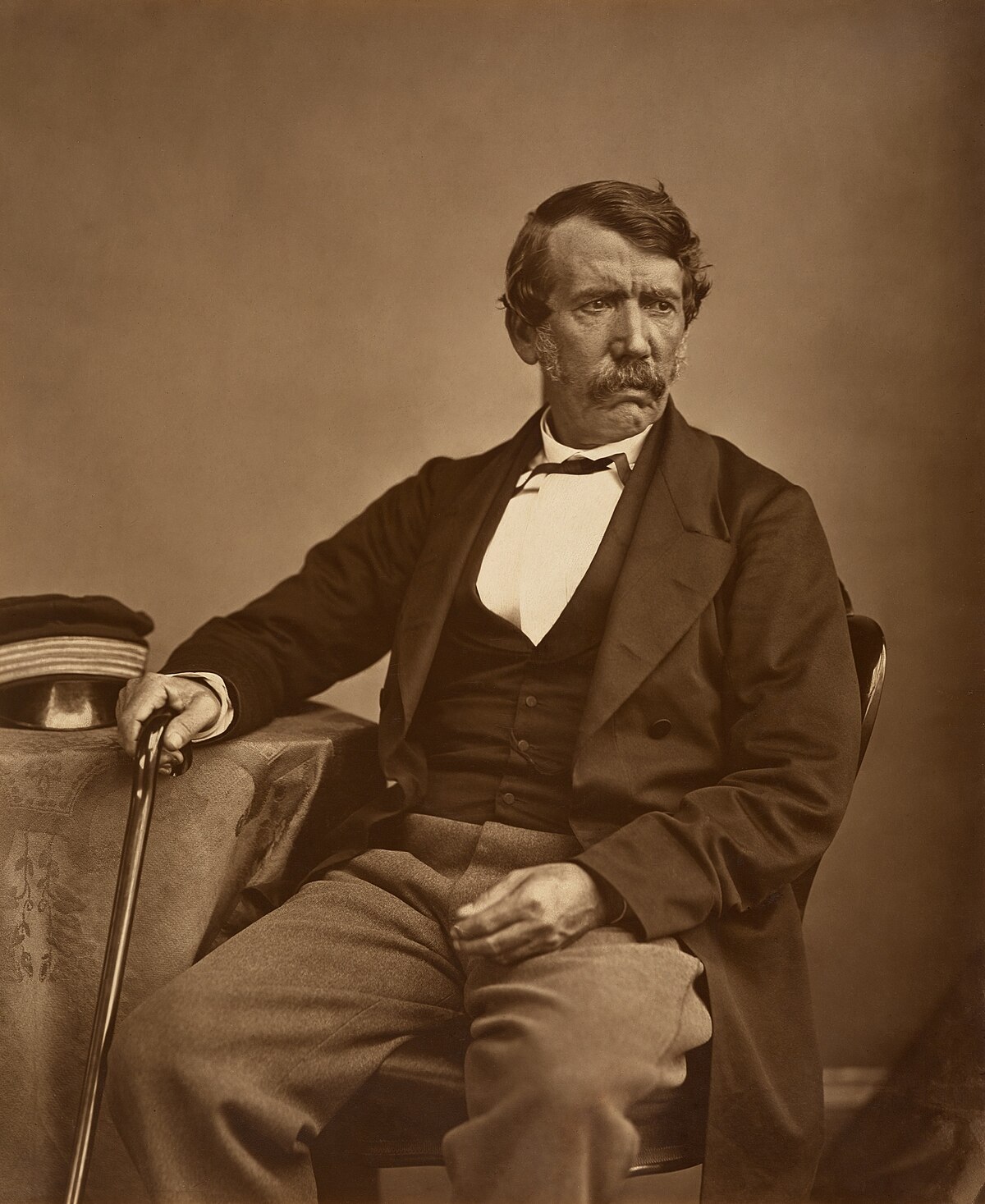
David Livingstone, born on March 19, 1813, in Blantyre, Scotland, is one of history’s most renowned explorers, missionaries, and anti-slavery advocates. His life was marked by an unrelenting pursuit of knowledge, a deep commitment to his religious and humanitarian beliefs, and an unwavering dedication to exploring the unknown territories of Africa. Livingstone’s legacy is a testament to the power of perseverance, curiosity, and a deep sense of moral purpose.
Early Life and Education
David Livingstone was born into a working-class family in the small Scottish town of Blantyre. His father, Neil Livingstone, was a devout Christian and a Sunday school teacher who instilled in young David a strong sense of religious duty. The family was not wealthy, and from a young age, Livingstone worked in a cotton mill to help support them. Despite these humble beginnings, he was determined to pursue education.
Livingstone attended school while working in the mill, demonstrating an early interest in science and theology. His fascination with the natural world and his commitment to his faith led him to study medicine and theology at the University of Glasgow. These studies were not just a means to an end; they were the foundation of what would become his life’s work. By 1838, Livingstone had joined the London Missionary Society with the intent of traveling to China to spread Christianity. However, the outbreak of the First Opium War in China forced him to reconsider his destination.
The Call to Africa
In 1840, Livingstone’s focus shifted to Africa, a continent that was largely unknown to Europeans at the time. The London Missionary Society assigned him to a mission in southern Africa, among the Bantu-speaking Bechuana people, in what is now Botswana. Livingstone arrived in Africa in July 1841, beginning what would be a lifelong association with the continent.
Livingstone’s work as a missionary was deeply intertwined with his role as an explorer. He believed that Christianity, commerce, and civilization were the three pillars that could transform Africa. His missionary efforts were not solely focused on spiritual conversion; he sought to improve the lives of African people through education and by advocating against the slave trade.
Marriage and Early Explorations
In 1844, Livingstone married Mary Moffat, the daughter of another missionary, Robert Moffat. Mary accompanied him on many of his early journeys across Africa. Together, they endured the hardships of the African wilderness, including diseases, hostile environments, and the challenges of raising a family in such conditions. Despite the difficulties, their marriage was a partnership rooted in mutual respect and shared mission.
Between 1852 and 1856, Livingstone embarked on a series of expeditions that would cement his reputation as one of the greatest explorers of his time. During these years, he became the first European to cross the width of southern Africa from the Atlantic Ocean to the Indian Ocean. His journeys took him through vast, uncharted territories, where he encountered numerous African tribes and kingdoms.
It was during this period that Livingstone made one of his most famous discoveries—the Victoria Falls. Known to the local Kololo people as Mosi-oa-Tunya, or “The Smoke that Thunders,” Livingstone renamed the falls in honor of Queen Victoria. This discovery brought him international fame and solidified his reputation as a trailblazer in the exploration of Africa.
The Zambezi Expedition and Challenges
Livingstone’s growing fame allowed him to return to England, where he published a book detailing his travels and observations, which became a bestseller. This success enabled him to secure government support for a new expedition to explore the Zambezi River, which he believed could be a key route for commerce and the spread of Christianity in Africa.
The Zambezi Expedition, which began in 1858, was fraught with difficulties. Livingstone had hoped to find a navigable route that would facilitate trade and missionary work. However, the expedition encountered numerous challenges, including impassable rapids, disease, and a high mortality rate among the expedition members. Many of the missionaries who accompanied him died of malaria, and Livingstone himself contracted the disease multiple times.
The expedition, which lasted until 1864, ended in what many considered a failure. The Zambezi River proved far less navigable than Livingstone had anticipated, and the high cost of the expedition, coupled with its limited success, led to criticism back in England. Despite this, Livingstone’s determination remained unshaken. He continued to believe in the potential of Africa and was undeterred by the setbacks he had encountered.
The Quest for the Nile’s Source
Undeterred by the failure of the Zambezi Expedition, Livingstone returned to Africa in 1866, this time with the goal of discovering the source of the Nile River. The Nile’s source had been a mystery for centuries, and it was a subject of intense speculation and debate among European geographers and explorers.
Livingstone’s quest took him deep into the interior of Central Africa, where he faced immense challenges. The journey was grueling, and he was often plagued by illness, including bouts of malaria and dysentery. Livingstone’s determination to find the Nile’s source was driven by more than just geographical curiosity; he saw it as a way to further his mission of opening Africa to the world and ending the slave trade.
Despite his efforts, Livingstone did not succeed in finding the true source of the Nile. Instead, he reached the Lualaba River, which he mistakenly believed to be a tributary of the Nile. In reality, it was part of the Congo River system. This error was a significant setback, but it did not diminish Livingstone’s reputation as a courageous and dedicated explorer.
The Legendary Meeting with Henry Morton Stanley
By 1869, Livingstone had lost contact with the outside world for several years. His whereabouts and condition were unknown, leading to growing concern in Europe. The New York Herald newspaper sent journalist and explorer Henry Morton Stanley to find him, a mission that would become one of the most famous expeditions in the history of exploration.
Stanley finally located Livingstone on November 10, 1871, in the town of Ujiji on the shores of Lake Tanganyika. The meeting between the two men is one of the most iconic moments in the history of exploration, immortalized by Stanley’s famous greeting: “Dr. Livingstone, I presume?” This phrase, whether uttered exactly as recorded or not, has become synonymous with the Victorian era’s spirit of exploration and adventure.
Despite being physically weakened by years of illness and hardship, Livingstone refused to leave Africa. He was determined to continue his explorations and complete his mission. Stanley, after spending some time with Livingstone, returned to England, leaving the aging explorer to pursue his quest.
Final Years and Legacy
David Livingstone’s final years were marked by a relentless pursuit of his goals, despite the severe toll that years of exploration had taken on his health. He continued to explore the regions around Lake Bangweulu in present-day Zambia, driven by his desire to map the African interior and find the source of the Nile.
On May 1, 1873, Livingstone died in a small village near Lake Bangweulu. He succumbed to malaria and internal bleeding caused by dysentery. His death marked the end of an era of exploration, but his legacy was far from over.
Livingstone’s loyal African attendants, Chuma and Susi, carried his body over 1,000 miles to the coast so that it could be returned to England. His remains were buried in Westminster Abbey, but his heart was buried in Africa, at the site of his death—a symbolic gesture that underscored his deep connection to the continent he had spent his life exploring.
Impact on Africa and the World
David Livingstone’s impact on Africa and the wider world cannot be overstated. He was one of the first Europeans to venture into the heart of Africa, providing detailed maps and accounts that would pave the way for future explorers. His work helped to open Africa to the world, leading to increased interest in the continent from both missionaries and colonial powers.
Livingstone’s strong anti-slavery stance also had a lasting impact. He used his platform to draw attention to the horrors of the East African slave trade, advocating for its abolition. His writings and speeches inspired others to take up the cause, contributing to the eventual end of the slave trade in the region.
In the years following his death, Livingstone became a symbol of Victorian heroism and moral fortitude. His life story was celebrated in schools, churches, and homes across Britain and beyond. He was seen as a model of Christian virtue, perseverance, and the civilizing mission that many in the West believed was their duty to bring to the rest of the world.
However, modern perspectives on Livingstone are more nuanced. While he is still recognized for his contributions to exploration and his humanitarian efforts, there is also an acknowledgment of the complex legacy of European colonialism in Africa. Livingstone’s expeditions, while driven by noble intentions, were part of a broader movement that ultimately led to the colonization and exploitation of African peoples and resources.
Conclusion
David Livingstone’s life was a remarkable journey of exploration, faith, and humanitarianism. From his humble beginnings in Scotland to his final days in the heart of Africa, Livingstone embodied the spirit of the Victorian era’s great explorers. His discoveries, his unwavering commitment to his principles, and his efforts to bring attention to the injustices of the slave trade have left an indelible mark on history.
Livingstone’s legacy is a complex one, reflecting both the achievements and the contradictions of his time. He remains a figure of great admiration and respect, not only for what he accomplished but also for the ideals he stood for—ideals that continue to inspire new generations of explorers, humanitarians, and those committed to making the world a better place.


