
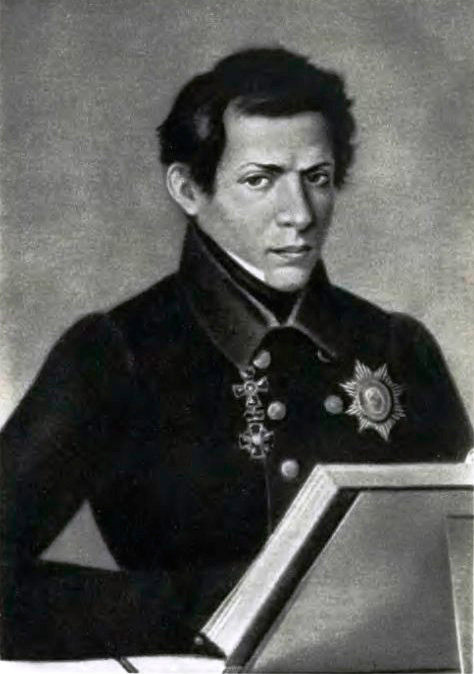
Nikolai Ivanovich Lobachevsky, born on December 1, 1792, in Nizhny Novgorod, Russia, is celebrated as one of the most influential mathematicians in history. His groundbreaking work on non-Euclidean geometry fundamentally changed the field of mathematics and laid the groundwork for many modern scientific advancements. Despite his significant contributions, Lobachevsky’s work was not fully recognized during his lifetime, and he faced numerous challenges, both personally and professionally. This article provides a detailed exploration of Lobachevsky’s life, his path to fame, and the key highlights of his academic career, while offering insights into the historical context and lasting impact of his work.
Early Life and Education
Nikolai Lobachevsky was born into a modest family in Nizhny Novgorod, Russia. His father, Ivan Maksimovich Lobachevsky, worked in territorial observation, while his mother, Praskovia Alexandrovna Lobachevskaya, managed the household. Nikolai was one of three children, and the family struggled financially after the death of his father when Nikolai was just seven years old. In 1800, his mother moved the family to Kazan, a city on the edge of Siberia, where the young Lobachevsky attended the Kazan Gymnasium, a government-funded school.
In 1807, at the age of 15, Lobachevsky graduated from the gymnasium and enrolled at Kazan University as a free student. Kazan University, which had been founded only three years earlier, was one of the many educational reforms initiated by Emperor Alexander I. Initially, Lobachevsky intended to study medicine, but he soon switched his focus to mathematics and physics, fields that would define his future career.
One of the most influential figures in Lobachevsky’s academic development was Martin Bartels, a German mathematician who was a professor at Kazan University. Bartels, who had previously taught the famous mathematician Carl Friedrich Gauss, recognized Lobachevsky’s talent and mentored him, guiding his interest in mathematics. Under Bartels’ tutelage, Lobachevsky developed a deep understanding of mathematical theories, including the history of mathematics, which played a crucial role in shaping his future work.
Academic Career and Challenges
Lobachevsky graduated with a Master’s degree in physics and mathematics in 1811 and immediately began his doctoral studies. By 1814, he was appointed as an adjunct professor at Kazan University, and in 1816, he became an extraordinary professor. His academic career advanced rapidly, and in 1822, he was promoted to a full professorship.
During this period, Kazan University faced significant challenges. The institution was plagued by administrative difficulties, and Lobachevsky, known for his fairness and independent character, became an advocate for academic integrity and improvement. He was appointed Dean of the Department of Mathematics and Physics from 1820 to 1825 and later served as the university’s Chief Librarian from 1825 to 1835. Lobachevsky’s commitment to the university extended beyond his teaching responsibilities; he played a crucial role in acquiring scientific equipment, expanding the university library, and improving the overall academic standards.
In 1826, following the ascension of Tsar Nicholas I, a more tolerant regime was established, and the atmosphere at Kazan University began to change. Lobachevsky was appointed Rector of the university in 1827, a position he held for 19 years. His tenure as rector was marked by significant advancements in the university’s infrastructure, including the construction of new buildings, the establishment of an observatory, and the enhancement of medical and scientific facilities.
Pioneering Work in Non-Euclidean Geometry
Nikolai Lobachevsky is best known for his development of non-Euclidean geometry, a revolutionary concept that challenged the long-standing assumptions of Euclidean geometry. Since the time of the ancient Greek mathematician Euclid, the fifth postulate, also known as the parallel postulate, had been a topic of debate. The postulate states that given a line and a point not on that line, there is exactly one line parallel to the given line that passes through the point. For centuries, mathematicians attempted to prove this postulate as a theorem derived from Euclid’s other axioms, but all efforts were unsuccessful.
Rather than attempting to prove the fifth postulate, Lobachevsky took a bold and innovative approach. He explored the possibility of a geometry in which the fifth postulate did not hold. In this new geometry, known as hyperbolic geometry, multiple lines could be drawn through a point parallel to a given line, fundamentally altering the nature of geometric space.
Lobachevsky’s work on non-Euclidean geometry began in 1823, but it was not until 1826 that he presented his ideas publicly. His first paper on the subject, “A Concise Outline of the Foundations of Geometry,” was presented at a meeting of the Department of Physical and Mathematical Sciences at Kazan University. Unfortunately, the original manuscript of this paper has not survived, but the ideas were later incorporated into his published works.
In 1829, Lobachevsky published his first full account of non-Euclidean geometry in the Kazan Messenger. This work, titled “On the Foundations of Geometry,” introduced the world to the concept of hyperbolic geometry. However, the reception was far from enthusiastic. The leading mathematician of the time, Mikhail Ostrogradsky, rejected the work when it was submitted to the Academy of Sciences in St. Petersburg, and Lobachevsky’s ideas were largely ignored by the mathematical community.
Later Career and Continued Research
Despite the lack of recognition, Lobachevsky continued to refine and expand his theories. In 1834, he developed a method for approximating the roots of algebraic equations, a technique that became known as the Dandelin-Graffe method, named after other mathematicians who independently discovered it. In Russia, this method is still referred to as the Lobachevsky method, highlighting his contribution to numerical analysis.
In 1837, Lobachevsky published “Géométrie imaginaire,” a summary of his work in non-Euclidean geometry. This was followed by his most comprehensive work, “Geometrical Investigations on the Theory of Parallels,” published in Berlin in 1840. This publication caught the attention of Carl Friedrich Gauss, who privately expressed admiration for Lobachevsky’s work. However, Gauss did not publicly endorse the new geometry, and Lobachevsky remained largely unrecognized in his time.
Lobachevsky’s personal life also saw significant developments during this period. In 1832, at the age of 40, he married Varvara Alexivna Moiseeva, a woman from a wealthy family. The couple had seven children, and the demands of family life, along with the expenses of improving his estate, left Lobachevsky in financial difficulty after his retirement in 1846.
Legacy and Recognition
Nikolai Lobachevsky’s later years were marked by personal and professional hardships. His health began to decline, and he suffered from blindness in his final years. The death of his eldest son further compounded his grief, and he spent his last years in financial strain and relative obscurity. Lobachevsky died on February 12, 1856, in Kazan, at the age of 64, without knowing the impact his work would eventually have on the world.
It was only after his death that Lobachevsky’s contributions to mathematics were fully recognized. In 1866, a decade after his passing, his work was translated into French by the mathematician J. Hoüel, which helped to spread his ideas across Europe. The Italian mathematician Eugenio Beltrami provided a concrete model of Lobachevsky’s geometry in 1868, which further validated his theories.
By the late 19th century, the acceptance of non-Euclidean geometry began to grow, thanks in part to the work of mathematicians like Felix Klein and Henri Poincaré. The development of the Erlangen Program by Klein and the applications of non-Euclidean geometry in Poincaré’s work laid the groundwork for the mathematical framework used in Einstein’s theory of general relativity.
Today, Lobachevsky is remembered as one of the founders of non-Euclidean geometry, a field that has had profound implications not only in mathematics but also in physics and philosophy. His pioneering spirit, willingness to challenge established norms, and perseverance in the face of adversity serve as an inspiration to mathematicians and scientists worldwide.
Conclusion
Nikolai Lobachevsky’s life and work exemplify the challenges and triumphs of a visionary thinker. Despite the lack of recognition during his lifetime, his contributions to mathematics have had a lasting impact on the world. Lobachevsky’s non-Euclidean geometry opened new avenues of thought, leading to advancements in various scientific disciplines. His legacy is a testament to the power of innovation and the enduring importance of challenging conventional wisdom.
As we reflect on Lobachevsky’s life, we are reminded of the importance of perseverance, intellectual curiosity, and the courage to explore uncharted territories in the pursuit of knowledge.


