
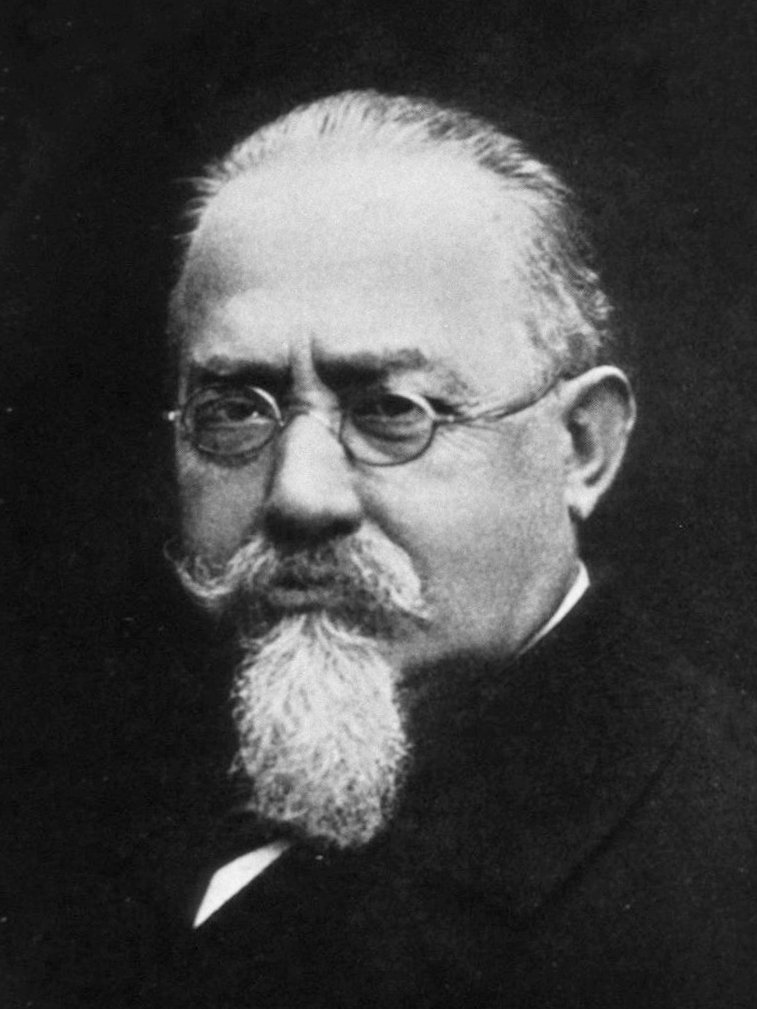
Cesare Lombroso, born Marco Ezechia Lombroso on November 6, 1835, in Verona, Italy, is one of the most controversial figures in the history of criminology. Known as the father of criminology and a key figure in the development of the field of criminal anthropology, Lombroso’s work has sparked debates that continue to resonate in modern discussions on crime, psychology, and human behavior. His life and theories provide a fascinating glimpse into the intersection of science, society, and morality during the late 19th and early 20th centuries.
Early Life and Education
Lombroso was born into a well-off Jewish family in Verona, a city rich with historical and cultural heritage. His upbringing was relatively privileged, allowing him access to quality education from a young age. Lombroso’s intellectual curiosity was apparent early on, leading him to pursue studies in various disciplines. He attended the University of Pavia, where he earned his degree in medicine in 1858. His academic journey also took him to the universities of Padua and Vienna, where he furthered his knowledge in medical sciences.
During his time at university, Lombroso was deeply influenced by the prevailing scientific currents of the era, particularly the theories of evolution proposed by Charles Darwin. Darwin’s ideas on natural selection and the survival of the fittest profoundly impacted Lombroso’s thinking, laying the groundwork for his later theories on criminality and human behavior.
Military Service and Early Career
After completing his studies, Lombroso served as a military doctor during the campaign against brigandage following the unification of Italy. His experiences during this period played a crucial role in shaping his views on crime and deviance. He observed firsthand the harsh realities of life in rural southern Italy, where poverty, ignorance, and violence were rampant. These observations led him to question the root causes of criminal behavior and sparked his lifelong interest in criminology.
Lombroso’s early career was marked by a broad range of interests. In addition to his work as a physician, he conducted research on various medical and anthropological subjects. He studied diseases such as cretinism and pellagra, conditions that were widespread in certain parts of Italy at the time. His work in these areas earned him recognition as a diligent and innovative researcher.
In 1871, Lombroso was appointed as the director of the psychiatric hospital in Pesaro, a position that allowed him to delve deeper into the study of mental illness. His time in Pesaro was pivotal, as it was here that he began to formulate his theories on the connection between physical characteristics and criminal behavior—a concept that would later become central to his legacy.
The Birth of Criminal Anthropology
Cesare Lombroso is perhaps best known for his pioneering work in criminal anthropology, a field that he effectively founded. His most famous theory, often referred to as the “born criminal” theory, posited that criminality was an innate trait, identifiable through specific physical characteristics. Lombroso believed that certain individuals were biologically predisposed to criminal behavior due to atavistic features—traits that were seen as primitive or reminiscent of earlier stages of human evolution.
Lombroso’s method involved meticulous measurements of the skulls and facial features of criminals, a practice rooted in the pseudoscience of phrenology. He believed that anomalies such as asymmetry of the face, large jaws, and certain cranial measurements could indicate a predisposition to criminality. His seminal work, L’Uomo Delinquente (The Criminal Man), first published in 1876, laid out these theories in detail. The book went through multiple editions and became highly influential, shaping criminological thought for decades.
Controversies and Criticisms
While Lombroso’s theories gained widespread attention, they were also met with significant criticism, both during his lifetime and in the years that followed. Critics argued that Lombroso’s ideas were overly deterministic, reducing complex human behaviors to mere physical traits. His work was also criticized for its lack of scientific rigor and for perpetuating stereotypes, particularly against marginalized groups.
Moreover, Lombroso’s theories were often used to justify social inequalities and oppressive policies. His ideas about the biological basis of criminality were co-opted by proponents of eugenics and other discriminatory ideologies. This darker aspect of Lombroso’s legacy has led to ongoing debates about the ethical implications of his work.
Despite these controversies, Lombroso’s contributions to criminology cannot be entirely dismissed. He was among the first to approach the study of crime from a scientific perspective, moving away from the moralistic and religious explanations that had dominated the field. His emphasis on the importance of empirical observation and data collection laid the groundwork for modern criminological research.
Later Career and Exploration of Pseudoscience
In the later stages of his career, Lombroso expanded his research to include various other fields that, while now considered pseudoscientific, were highly influential in his time. He developed an interest in graphology, the study of handwriting as an indicator of personality traits, and parapsychology, particularly the study of spiritualism and supernatural phenomena. Lombroso’s fascination with these areas reflected the broader scientific curiosity of the era, where boundaries between legitimate science and pseudoscience were often blurred.
One of Lombroso’s more controversial forays was into the world of spiritualism. While he never fully embraced spiritualist beliefs, he did investigate various phenomena associated with it, such as séances and mediumship. His approach was characteristic of his broader scientific method: a relentless pursuit of understanding, even if it led him into areas that were, at best, speculative.
Lombroso’s work in these fields, though not as respected today, was part of a larger trend in 19th-century science, where the unknown and the mysterious were subjects of serious inquiry. His attempts to explain phenomena like spiritualism using scientific concepts, such as the fourth dimension, were indicative of the intellectual climate of the time, which often sought to reconcile emerging scientific knowledge with traditional beliefs and superstitions.
Legacy and Impact
Cesare Lombroso died on October 19, 1909, in Turin, Italy, leaving behind a complex and contentious legacy. While many of his theories have been discredited, his influence on the field of criminology is undeniable. Lombroso’s work marked a significant shift in the study of crime, moving away from purely moralistic interpretations and towards a more scientific and empirical approach.
Lombroso’s ideas paved the way for subsequent developments in criminology, including the study of psychological and sociological factors in criminal behavior. Although his theories on the biological basis of crime have been largely debunked, they served as a catalyst for further research into the causes of criminal behavior, leading to a more nuanced understanding of the interplay between biology, environment, and social factors.
In modern criminology, Lombroso is often seen as a flawed but pivotal figure—a man whose work reflects both the possibilities and the dangers of early scientific inquiry. His emphasis on observation and data collection remains a cornerstone of criminological research, even as his specific conclusions have been largely abandoned.
Historical Context and Nuances
To fully understand Lombroso’s work, it is essential to consider the broader historical and scientific context in which he operated. The 19th century was a period of rapid scientific advancement, but it was also a time when many now-discredited ideas were taken seriously. Phrenology, the study of skull shapes as an indicator of mental faculties, and physiognomy, the assessment of a person’s character based on their physical appearance, were widely accepted in scientific circles.
Lombroso’s work can be seen as part of this broader trend of attempting to apply scientific principles to the study of human behavior. However, his theories were also a product of the social and political climate of his time. The late 19th century was marked by increasing interest in the concept of social Darwinism—the application of Darwinian principles to human society. Lombroso’s emphasis on the biological basis of crime can be viewed as an extension of these ideas, reflecting the belief that certain individuals were inherently superior or inferior based on their physical characteristics.
It is also important to note the influence of Italian unification on Lombroso’s work. The newly unified Italy faced significant social and economic challenges, including widespread poverty and crime. Lombroso’s theories offered a way to explain and address these issues, even if his solutions were ultimately misguided.
Conclusion
Cesare Lombroso remains a towering figure in the history of criminology, despite the significant flaws in his theories. His work was instrumental in shifting the study of crime from a moral and religious issue to one that could be analyzed through the lens of science. Although his ideas about the biological roots of criminality have been discredited, Lombroso’s emphasis on observation, data collection, and the search for underlying causes has had a lasting impact on the field.
Lombroso’s life and work are a reminder of the complexities and challenges of scientific inquiry, particularly in areas as fraught with ethical and social implications as criminology. His legacy is a mixed one, reflecting both the potential for scientific advancement and the dangers of overreaching in the quest for knowledge. As we continue to explore the causes of crime and human behavior, the lessons of Lombroso’s life—both positive and negative—remain relevant today.


