
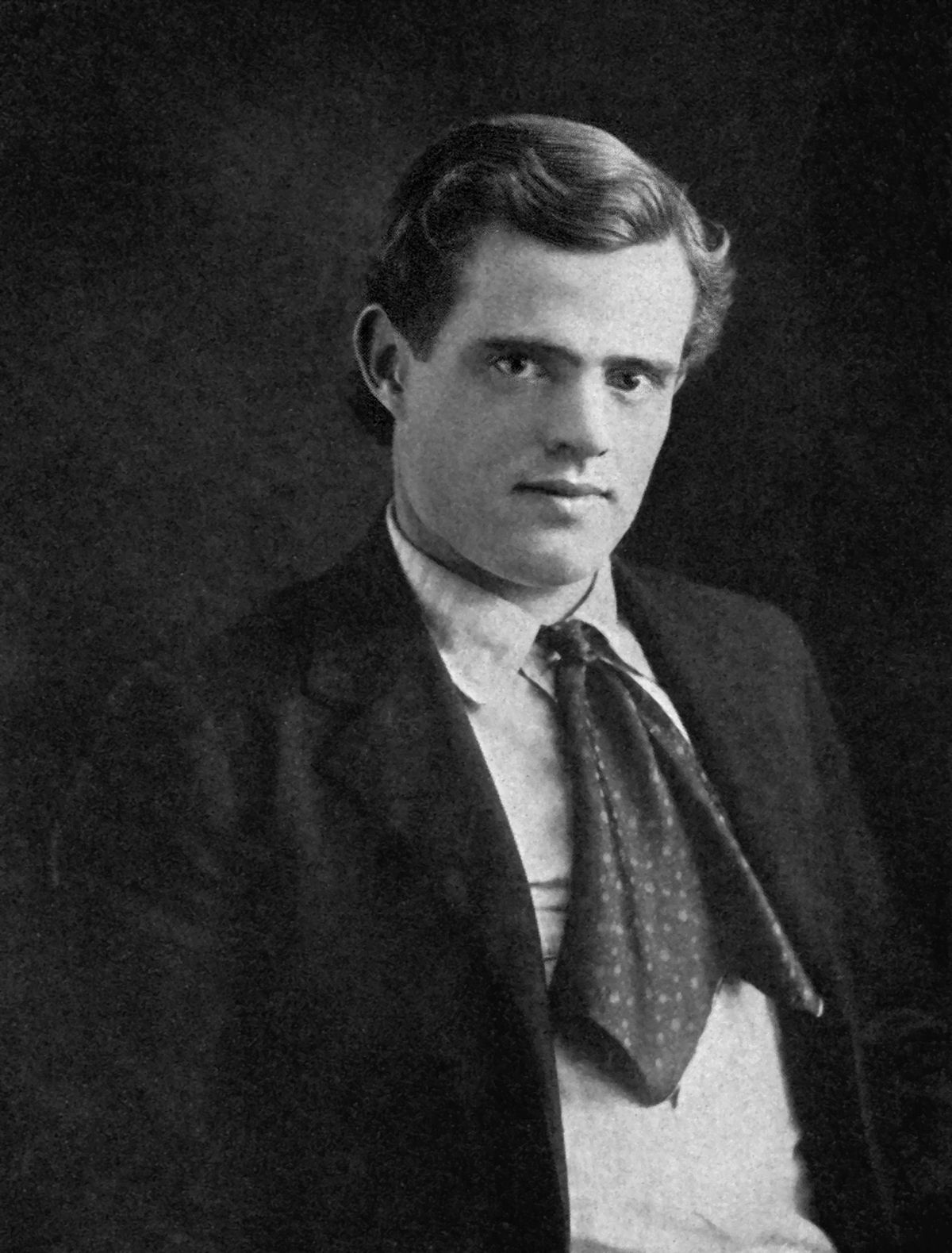
Jack London, born John Griffith Chaney on January 12, 1876, in San Francisco, California, is one of the most celebrated and enigmatic figures in American literature. Known for his rugged individualism, adventurous spirit, and profound social consciousness, London’s life and work continue to captivate readers worldwide. His journey from a turbulent childhood to becoming one of the highest-paid and most prolific writers of his time is as fascinating as the stories he penned. This article delves into the age, fame, and life highlights of Jack London, exploring the nuances of his complex personality and the historical context that shaped his work.
Early Life and Formative Years
Jack London’s early life was marked by hardship and uncertainty. Born out of wedlock to Flora Wellman, a spiritualist and music teacher, and William Chaney, an itinerant astrologer who denied paternity, London’s upbringing was anything but stable. His mother, suffering from psychological issues, was unable to provide a nurturing environment, leading London to be raised largely by Virginia Prentiss, a former slave who served as his wet nurse and surrogate mother.
Growing up in poverty in the rough neighborhoods of Oakland, California, London was exposed to the harsh realities of life from a young age. His stepfather, John London, a Civil War veteran, struggled to support the family, leading Jack to take on various menial jobs to contribute to the household income. These early experiences of economic struggle and social marginalization would later profoundly influence his writing.
London’s formal education was sporadic, but he was an avid reader, finding solace and escape in books. His passion for reading sparked a desire to write, but before pursuing a literary career, London led a life filled with adventure and peril. As a teenager, he worked as a sailor, a seal hunter, and a laborer in a jute mill. He also joined the ranks of the “hobo” lifestyle, traveling across the United States and Canada as a vagabond, experiencing firsthand the struggles of the working class and the downtrodden.
The Call of Adventure and the Klondike Gold Rush
One of the defining moments in Jack London’s life was his participation in the Klondike Gold Rush in 1897. Lured by the promise of wealth, London joined thousands of prospectors who ventured into the frozen wilderness of the Yukon Territory in Canada. Although he returned home empty-handed after a year, the experience left an indelible mark on him, providing the raw material for some of his most famous works.
The harsh conditions of the Yukon, the brutal struggle for survival, and the stark contrast between the savage wilderness and human civilization became central themes in London’s writing. His first major success, The Call of the Wild (1903), is a novel that reflects these experiences. The story of Buck, a domesticated dog who is forced to revert to his primal instincts to survive in the wilderness, became an instant bestseller and established London as a leading voice in American literature.
Literary Success and Thematic Exploration
Jack London’s literary career was characterized by prolific output and an exploration of diverse themes, ranging from adventure and survival to social justice and existential despair. Over the course of his life, London published 49 volumes, including novels, short stories, essays, and journalism. His works often drew on his personal experiences, blending fiction with social commentary.
One of London’s most autobiographical novels, Martin Eden (1909), tells the story of a working-class sailor who dreams of becoming a writer. The novel reflects London’s own struggles with the literary establishment and his ambivalence towards fame and success. Martin Eden is a profound exploration of the individual’s quest for meaning and recognition in a society that often values wealth and status over true artistic talent.
London’s fascination with the natural world and the concept of “survival of the fittest,” influenced by Charles Darwin’s theory of evolution, is evident in works like White Fang (1906) and The Sea-Wolf (1904). White Fang, the story of a wild wolf-dog’s domestication, and The Sea-Wolf, which explores the brutal philosophy of a Nietzschean sea captain, both highlight London’s belief in the inherent struggle for survival that defines both the animal kingdom and human society.
In addition to adventure and survival, London was deeply concerned with social issues, particularly the plight of the working class and the exploitation of labor. His firsthand experiences of poverty and social injustice fueled his passion for socialism, which he articulated in works like The People of the Abyss (1903), a harrowing exposé of the appalling conditions in London’s East End, and The Iron Heel (1908), a dystopian novel that imagines a future in which a tyrannical oligarchy crushes a socialist revolution.
Struggles with Alcohol and Personal Demons
Despite his literary success, Jack London’s life was plagued by personal struggles and demons. He was known for his excessive drinking, which eventually led to a dependence on alcohol that he documented in his semi-autobiographical work John Barleycorn (1913). The book is a candid and unflinching account of London’s battle with alcoholism, exploring the seductive and destructive power of alcohol.
London’s drinking, combined with his relentless work ethic and a string of failed relationships, took a toll on his health. He suffered from various ailments, including kidney disease, which was exacerbated by his heavy drinking. His personal life was marked by turmoil, including a failed first marriage to Elizabeth “Bessie” Maddern and a tumultuous second marriage to Charmian Kittredge, who became his literary executor after his death.
The Final Years and Legacy
Jack London’s final years were a mix of literary productivity and declining health. He continued to write prolifically, but his physical and mental health deteriorated rapidly. On November 22, 1916, at the age of 40, Jack London died at his ranch in Glen Ellen, California. The exact cause of his death remains a subject of debate, with some attributing it to kidney failure, while others suggest it was a possible suicide exacerbated by his chronic illness and substance abuse.
Despite his relatively short life, Jack London’s impact on American literature is profound and enduring. His works have been translated into numerous languages and continue to be read by millions around the world. London’s ability to blend adventure with social commentary, his vivid portrayal of the struggle for survival, and his exploration of the darker aspects of human nature have ensured his place in the pantheon of great American writers.
Historical Context and Influence
To fully appreciate Jack London’s work, it is essential to consider the historical and cultural context in which he wrote. London came of age during a period of significant social and economic change in the United States. The late 19th and early 20th centuries were marked by rapid industrialization, urbanization, and the rise of the labor movement. These changes brought about stark contrasts between wealth and poverty, progress and exploitation, which are reflected in London’s writing.
London was also influenced by the literary and philosophical movements of his time, particularly naturalism and realism. Inspired by the works of Émile Zola and influenced by the scientific theories of Charles Darwin, London’s writing often emphasized the deterministic forces of nature and society that shape human destiny. His characters are frequently depicted as being at the mercy of their environment, driven by primal instincts and the struggle for survival.
London’s socialist beliefs also played a significant role in his writing. He was a committed advocate for workers’ rights and social justice, and his political views are evident in many of his works. In The Iron Heel, for example, London imagines a dystopian future in which a powerful oligarchy suppresses a socialist revolution, reflecting his concerns about the growing power of corporate interests and the exploitation of the working class.
Critical Reception and Posthumous Legacy
During his lifetime, Jack London was one of the most popular and well-paid writers in America. However, his work was often dismissed by literary critics, who viewed his writing as too commercial and sensational. It was not until years after his death that London began to receive more serious critical attention, particularly from scholars interested in his exploration of social and political themes.
Today, London’s work is recognized for its literary merit as well as its cultural and historical significance. His novels and short stories are studied in schools and universities around the world, and his influence can be seen in the works of later writers, particularly those who explore themes of adventure, survival, and social justice.
London’s legacy is also preserved through the Jack London State Historic Park in California, which includes his ranch and the ruins of the Wolf House, a massive stone mansion he built but never lived in. The park serves as a testament to London’s enduring influence and offers visitors a glimpse into the life of one of America’s most fascinating literary figures.
Conclusion
Jack London’s life was as adventurous and tumultuous as the stories he wrote. From his humble beginnings in San Francisco to his rise as one of America’s most beloved writers, London’s journey was marked by a relentless pursuit of experience, knowledge, and meaning. His works continue to resonate with readers because they explore universal themes of survival, human nature, and social justice.
London’s ability to capture the raw, unfiltered realities of life, coupled with his deep empathy for the struggles of the marginalized, has ensured his place in the annals of American literature. As we continue to grapple with the complexities of modern life, Jack London’s stories of courage, resilience, and the indomitable human spirit remain as relevant today as they were over a century ago.


