
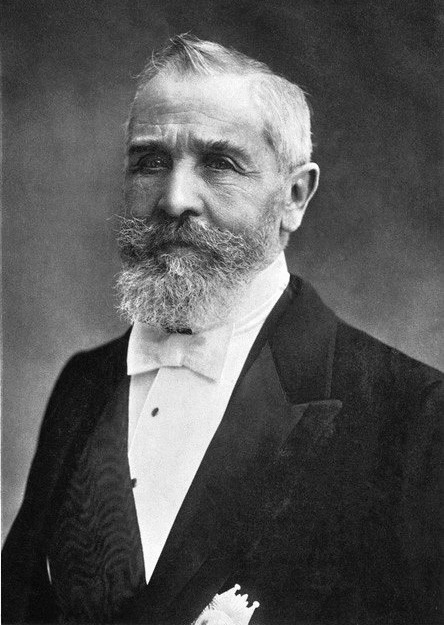
Émile Loubet, a key figure in the history of the French Third Republic, was born on December 30, 1838, in Marsanne, France. Rising from modest beginnings, Loubet’s career trajectory took him from the rural heartland of France to the highest office in the land. His life is a testament to the power of political acumen, steadfast principles, and a deep commitment to public service. This article provides an in-depth look at Loubet’s life, his rise to fame, and the significant milestones that defined his career.
Early Life and Education
Born into a family of farmers, Émile Loubet was the youngest of three children. His father, Agostino Loubet, served as a local councilor and later became the mayor of Marsanne. This early exposure to public service had a profound impact on Émile, instilling in him the values of civic duty and political engagement.
Loubet’s education was marked by excellence, particularly in law. After completing his legal studies, he established a law practice in Montélimar, a town that would become central to his political career. It was here that he met and married Marie-Louise Picard in 1869, with whom he had three children: Margherita, Denis, and Paolo Émile.
Loubet’s entry into politics was swift and decisive. In 1870, just a year after his marriage, he was elected mayor of Montélimar, a position he held for several years. This role was the beginning of a long and distinguished political career that would eventually lead him to the presidency of France.
Rise in Politics: From Local to National Influence
Loubet’s rise in French politics was marked by his steady ascent through various political offices. In 1876, he was elected to the French Chamber of Deputies as a representative of the Drôme department. Aligning himself with the moderate Republicans, Loubet quickly established himself as a capable and pragmatic politician.
One of the key moments in Loubet’s early political career came in 1877 when he was among the 363 deputies who opposed the government of “moral order” under the monarchist Duke of Broglie. This group, known as the “Bloc des 363,” played a crucial role in forcing President Patrice de MacMahon to dissolve the Chamber of Deputies. This event was a significant step towards the establishment of a more firmly republican government in France.
By 1885, Loubet had been elected to the French Senate, where he continued to build his reputation as a skilled legislator and a champion of republican values. His tenure in the Senate was marked by his involvement in several important legislative initiatives, particularly those related to public works and infrastructure, reflecting his commitment to improving the lives of ordinary French citizens.
Leadership Roles: Minister and Prime Minister
Loubet’s growing influence in the Senate did not go unnoticed. In 1887-1888, he was appointed Minister of Public Works in the government of Prime Minister Pierre Tirard. In this role, Loubet oversaw significant infrastructure projects that were vital to the modernization of France. His success as a minister further solidified his standing within the Republican Party.
In February 1892, Loubet’s political career reached a new peak when he was appointed Prime Minister by President Sadi Carnot, a close friend and political ally. As Prime Minister, Loubet also held the portfolio of Minister of the Interior, placing him at the center of government during a tumultuous period in French history.
Loubet’s tenure as Prime Minister was marked by several challenges, including the rise of anarchist terrorism and the social unrest associated with the labor strikes in Carmaux. Despite these difficulties, Loubet’s government managed to maintain stability and order, earning him respect across the political spectrum. However, his government fell in November 1892, leading him to continue serving as Minister of the Interior in the subsequent administration led by Alexandre Ribot.
In 1896, Loubet was elected President of the French Senate, a position that further enhanced his reputation as a statesman. His leadership in the Senate, coupled with his extensive experience in both legislative and executive roles, made him an ideal candidate for the presidency of the Republic.
In February 1899, following the death of President Félix Faure, Loubet was elected President of France. His presidency came at a critical time for the Third Republic, which was facing both internal and external challenges. One of the most significant issues of his presidency was the Dreyfus Affair, a political scandal that had deeply divided French society.
Loubet played a pivotal role in the resolution of the Dreyfus Affair. In 1899, he granted a pardon to Captain Alfred Dreyfus, who had been wrongfully convicted of treason. This act of clemency was a crucial step towards Dreyfus’s eventual exoneration and helped to heal some of the deep rifts in French society.
Loubet’s presidency was also notable for his foreign policy achievements. He was the first head of a Catholic state to visit the King of Italy in Rome after 1870, a gesture that signaled France’s commitment to improving relations with Italy. However, this visit also led to the severing of diplomatic relations with the Vatican, as it was seen as a recognition of the Italian state’s authority over Rome, which the Pope considered his territory.
During his presidency, Loubet hosted several important state visits, including those of King Edward VII of England, King Victor Emmanuel III of Italy, and Tsar Nicholas II of Russia. These visits underscored France’s growing influence in European affairs and its commitment to maintaining peace and stability on the continent.
Legacy and Retirement
Loubet’s term as President ended in January 1906, making him the first French President of the Third Republic to serve a full seven-year term. His presidency is often remembered for its stability and his efforts to mediate the various political and social conflicts that characterized the early years of the Third Republic.
After leaving office, Loubet retired from public life and returned to Montélimar, where he lived quietly until his death on December 20, 1929, at the age of 90. His retirement was marked by a deliberate withdrawal from the political scene, as he chose not to comment on the political developments of the time, preferring instead to focus on his personal life.
Nuances and Historical Context
Understanding Émile Loubet’s legacy requires placing his achievements within the broader context of French and European history during the late 19th and early 20th centuries. Loubet’s rise to prominence coincided with a period of significant political change in France, as the country transitioned from a monarchy to a republic.
Loubet’s political career was shaped by the challenges of this transition, including the tensions between monarchists and republicans, the rise of socialism, and the threat of anarchist violence. His ability to navigate these challenges with pragmatism and a commitment to republican values was a key factor in his success.
Loubet’s presidency also occurred during a time of shifting alliances and growing nationalism in Europe. His efforts to strengthen France’s relationships with other European powers, particularly through state visits and diplomatic engagement, were crucial in maintaining the balance of power on the continent.
Moreover, Loubet’s handling of the Dreyfus Affair reflects his broader commitment to justice and the rule of law. The Affair was not just a political scandal; it was a battle over the soul of the French Republic, pitting those who believed in the principles of justice and equality against those who sought to maintain the status quo. Loubet’s decision to pardon Dreyfus, despite the political risks, demonstrated his belief in the fundamental values of the Republic.
Conclusion: The Enduring Legacy of Émile Loubet
Émile Loubet’s life and career offer valuable insights into the complexities of French politics during a pivotal period in the nation’s history. His journey from a small-town mayor to the President of France is a testament to his political skill, dedication, and unwavering commitment to the republican ideals of liberty, equality, and fraternity.
As a statesman, Loubet is remembered for his pragmatism, his ability to navigate the turbulent waters of French politics, and his efforts to promote peace and stability in Europe. His presidency was marked by significant achievements, including the resolution of the Dreyfus Affair, the strengthening of France’s diplomatic ties, and his efforts to mediate internal conflicts.
In retirement, Loubet’s decision to step away from the political spotlight reflects his belief in the importance of public service over personal ambition. His legacy continues to be honored in France, where he is remembered as a leader who embodied the best qualities of the Third Republic.
Loubet’s life serves as a reminder of the importance of integrity, justice, and diplomacy in political leadership. His contributions to French and European history remain relevant today, offering lessons for those who seek to navigate the complex challenges of governance in the modern world.


