
Introduction
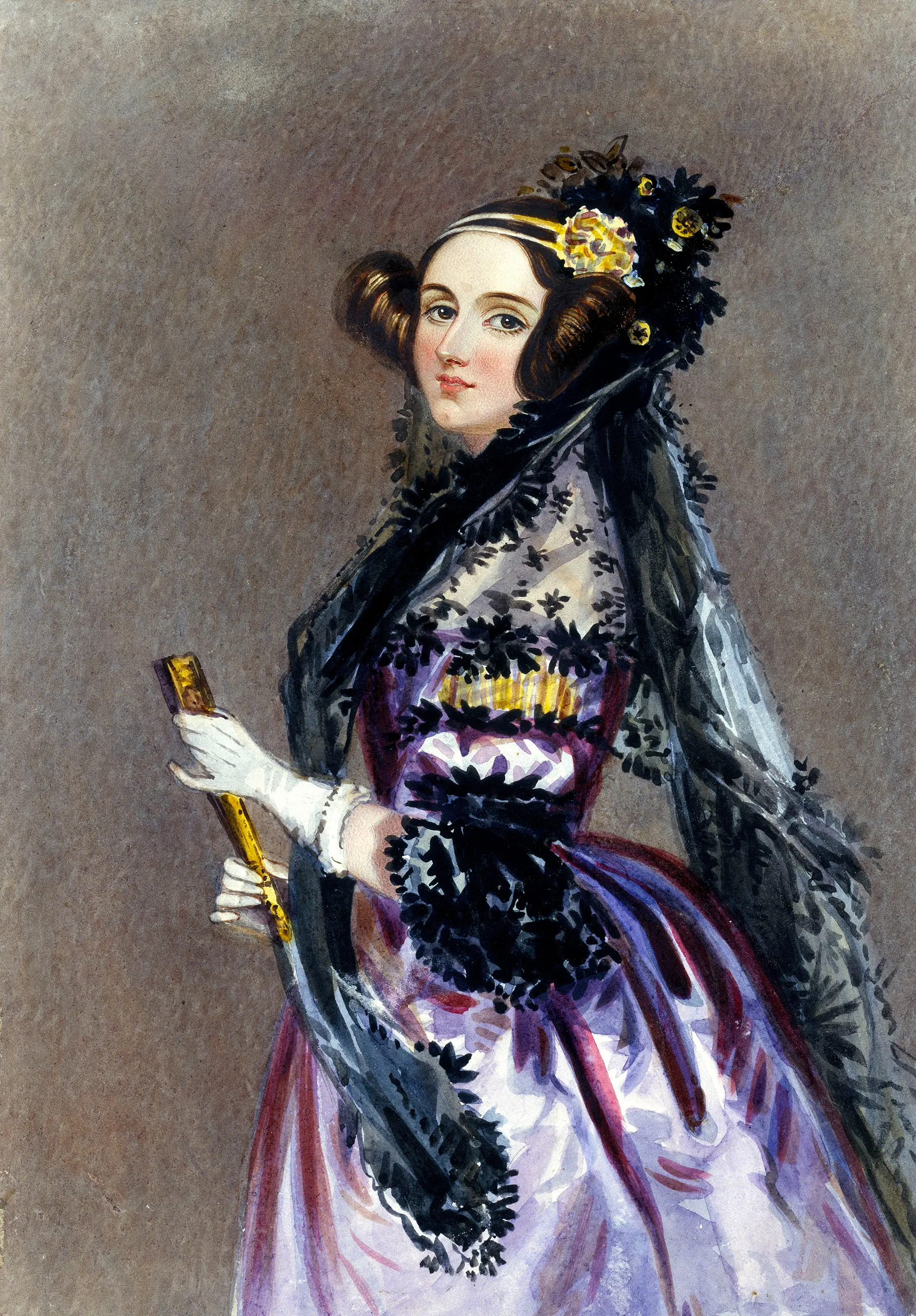
Ada Lovelace, born Augusta Ada Byron on December 10, 1815, in London, is celebrated as one of the foremost pioneers of computing. Her visionary work in the early 19th century laid the foundation for modern computing and programming, making her a significant figure in both the history of mathematics and the evolution of technology. This detailed exploration of Lovelace’s life highlights her contributions, achievements, and the enduring legacy she has left behind.
Early Life and Background
Ada Lovelace was the only legitimate child of the famous poet Lord Byron and his wife, Annabella Milbanke. Her early life was marked by instability; her parents separated when she was just a month old, and her father, Lord Byron, left England permanently in 1816. Despite the tumultuous start, Ada’s mother, Annabella, ensured that Ada received a rigorous education, particularly in subjects traditionally reserved for men.
Education and Early Influences
Ada’s education was influenced heavily by her mother, who wanted to steer her away from poetry, following her father’s legacy, and towards mathematics and science. Ada’s early education was overseen by notable figures including Mary Somerville, a renowned mathematician and science writer, and Augustus De Morgan, a prominent logician. Somerville’s encouragement and De Morgan’s instruction were pivotal in shaping Lovelace’s academic interests and skills in mathematics and logic.
Ada Lovelace’s health was fragile during her youth, with severe illnesses such as headaches and measles affecting her mobility and overall well-being. Despite these challenges, her intellectual curiosity and aptitude for mathematics flourished.
Rise to Prominence
Meeting Charles Babbage
A key moment in Ada Lovelace’s life was her meeting with Charles Babbage in 1833. Babbage, a mathematician and inventor, was working on the design for his Analytical Engine, an early mechanical computer. Ada was deeply fascinated by Babbage’s work and began to study his ideas and concepts. Her engagement with Babbage and his machine marked the beginning of a profound intellectual partnership.
Contributions to Computing
Ada Lovelace’s most significant contribution came through her work on Babbage’s Analytical Engine. In 1843, she translated an article by the Italian mathematician Luigi Federico Menabrea about the engine, adding extensive notes and commentary. Her notes included a description of an algorithm for calculating Bernoulli numbers, which is considered the first computer program.
Lovelace’s insight extended beyond the mere mechanics of Babbage’s machine. She recognized its potential for applications beyond simple arithmetic, theorizing that the machine could be programmed to perform any intellectual task. This foresight placed her at the forefront of early computing and laid the groundwork for the concept of general-purpose computers.
Legacy and Recognition
Influence on Modern Computing
Although Babbage’s Analytical Engine was never completed during his lifetime, Ada Lovelace’s work had a lasting impact on the field of computing. Her ideas anticipated many aspects of computer programming and artificial intelligence, making her a pioneering figure in the history of technology.
Lovelace’s contributions were long unrecognized, but in recent decades, her role has been increasingly celebrated. The programming language Ada, developed by the U.S. Department of Defense in 1983, was named in her honor, reflecting her foundational influence on software development.
Ada Lovelace Day and Cultural Impact
Ada Lovelace Day, celebrated annually on October 7th, honors her legacy and aims to raise awareness of women in science, technology, engineering, and mathematics (STEM). Her life and achievements have inspired various cultural representations, including the film Conceiving Ada (1997) and numerous biographies and articles.
Ada Lovelace passed away on November 27, 1852, from uterine cancer at the age of 36. She was buried in the church of St. Mary Magdalene in Hucknall, Nottinghamshire, alongside her father, Lord Byron.
Conclusion
Ada Lovelace’s life and achievements exemplify the intersection of intellect, innovation, and perseverance. Her pioneering work in computing, despite the limitations of her time, laid the foundation for future technological advancements. Lovelace’s contributions extend far beyond her era, influencing the development of modern computing and programming. Her legacy is a testament to her vision and intellectual prowess, making her a revered figure in the history of technology.
Ada Lovelace’s story serves as a reminder of the profound impact that one individual can have on the course of history. Her innovative thinking and dedication continue to inspire new generations in the fields of mathematics and computer science.


