
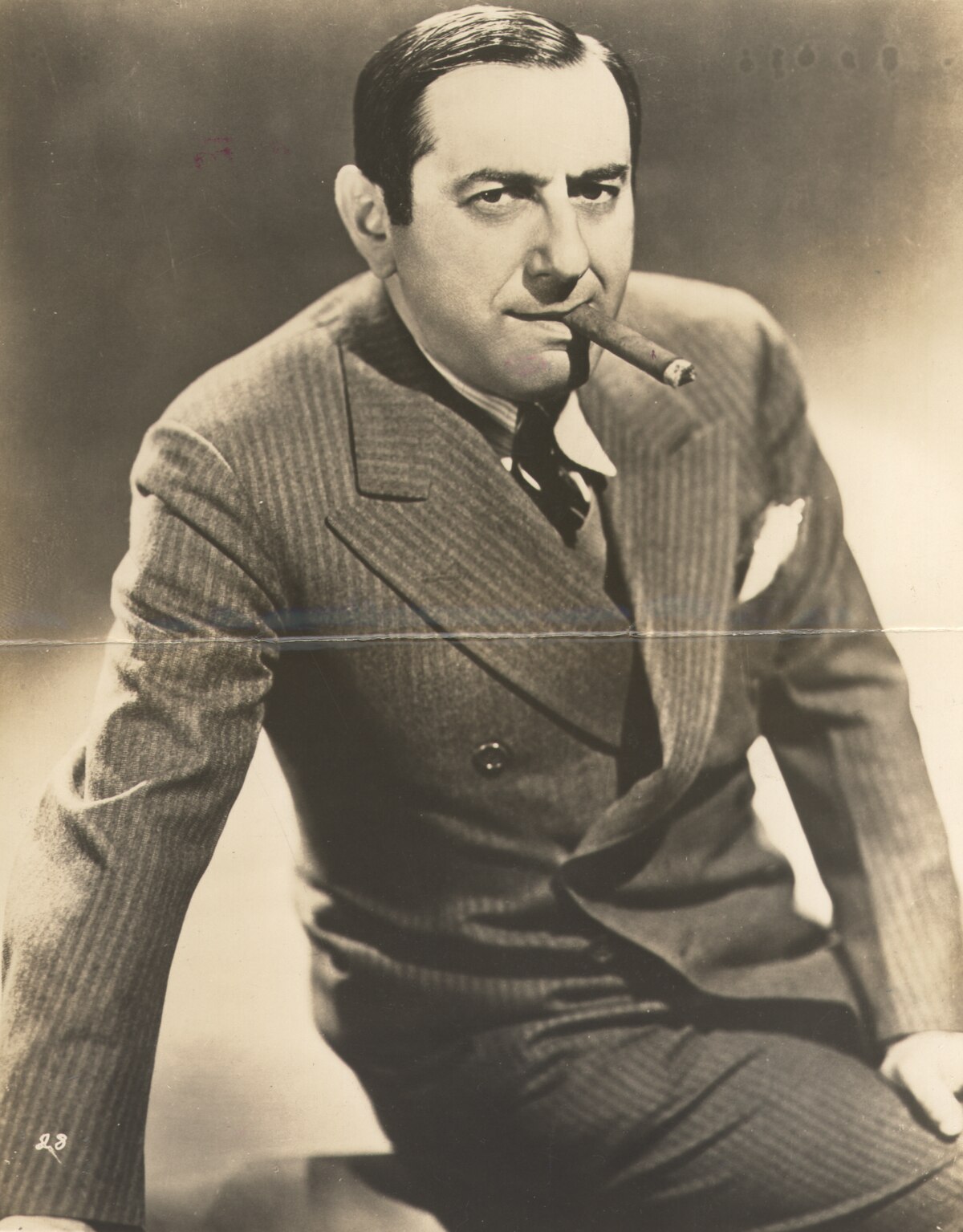
Ernst Lubitsch is a name that resonates deeply within the history of cinema. Born on January 28, 1892, in Berlin, Germany, Lubitsch’s journey from a young, aspiring actor to one of Hollywood’s most revered directors is a tale of persistence, talent, and a unique vision that has left a lasting legacy in the world of film. His life, though tragically cut short at the age of 56, was marked by significant achievements and a profound impact on the art of filmmaking.
Early Life and Beginnings
Ernst Lubitsch was born into a middle-class Jewish family in Berlin. His father, a well-established women’s tailor, had high hopes for his son, envisioning a future for him within the family business. However, Lubitsch harbored different ambitions. From a young age, he displayed a keen interest in acting and the performing arts. Despite his father’s reservations, Lubitsch pursued his passion, balancing his time between working in his father’s shop during the day and performing in theaters at night. By the age of sixteen, he had already begun to carve out a path for himself in the world of theater.
The true turning point in Lubitsch’s early career came in 1911 when he met Max Reinhardt, a prominent figure in German theater. Reinhardt offered Lubitsch a position in his prestigious “Deutsches Theater,” providing the young actor with the opportunity to hone his craft under the guidance of one of the most influential directors of the time. Simultaneously, Lubitsch took on various roles at Berlins Bioscopes studios, where he gained valuable experience in the burgeoning film industry.
The Rise to Fame
Lubitsch’s rise to fame was propelled by his role as the character Meyer, an exaggerated portrayal of a Jewish man, which showcased his ability to use subtle irony to highlight societal flaws. This role not only brought him widespread recognition but also provided him with the opportunity to transition from acting to directing. Lubitsch’s early directorial efforts included silent films such as The Eyes of the Mummy (1918), Madame Dubarry (1919), Anna Boleyn (1920), and Theonis, the Woman of Pharaohs (1922). These films were instrumental in establishing Lubitsch as a talented filmmaker with a distinct style.
His success in Europe did not go unnoticed across the Atlantic. In 1922, Lubitsch received an invitation from Hollywood, spearheaded by the iconic actress Mary Pickford, who was eager to work with the German director. The decision to leave Germany for America was a difficult one, but Lubitsch ultimately made the leap, marking the beginning of his illustrious career in Hollywood.
The Lubitsch Touch
Lubitsch’s entry into Hollywood marked the evolution of his signature style, often referred to as “The Lubitsch Touch.” This unique approach to filmmaking combined sophisticated humor, subtle irony, and a keen social commentary that set his films apart from the mainstream. Lubitsch had a remarkable ability to explore complex themes with a lightness of touch that made his work both entertaining and thought-provoking.
In Hollywood, Lubitsch quickly made a name for himself with films such as Rosita (1923), starring Mary Pickford. Despite the challenges of working with Pickford, who was known for her strong personality, the film was a commercial success and solidified Lubitsch’s reputation as a talented director. Following this, Lubitsch signed a contract with Warner Bros., where he directed several notable silent films, including Marriage Circle (1924), The Student Prince in Old Heidelberg (1927), and The Love Parade (1929).
As the film industry transitioned from silent films to “talkies,” Lubitsch seamlessly adapted to the new medium. His early sound films, such as Monte Carlo (1930), Trouble in Paradise (1932), and The Merry Widow (1934), showcased his mastery of dialogue and his ability to infuse even the most mundane conversations with wit and charm.
Hollywood Success and Legacy
Lubitsch’s success in Hollywood was not only due to his directorial prowess but also his understanding of the American audience. He had a remarkable talent for setting his films in European settings, which allowed him to critique American society in a way that was both palatable and engaging for American viewers. This indirect critique became a hallmark of Lubitsch’s work, making his films both timeless and universal.
One of Lubitsch’s most famous films, Ninotchka (1939), starring Greta Garbo, exemplifies his ability to blend comedy with social commentary. The film, which featured Garbo in her first comedic role, was a critical and commercial success. It was famously marketed with the tagline, “Garbo Laughs!” highlighting the novelty of seeing the usually stoic actress in a lighthearted role. Ninotchka remains a classic example of Lubitsch’s ability to tackle serious subjects—such as the clash between communism and capitalism—with a deft comedic touch.
Lubitsch’s work during this period also included To Be or Not to Be (1942), a satirical take on Nazi Germany starring Carole Lombard and Jack Benny. The film was both daring and controversial, using humor to address the horrors of World War II. Despite its initial mixed reception, To Be or Not to Be has since been recognized as one of Lubitsch’s most important works, demonstrating his courage in using comedy as a vehicle for serious social commentary.
Challenges and Final Years
Despite his success, Lubitsch’s life was not without its challenges. He suffered from severe heart problems, enduring multiple heart attacks throughout his career. These health issues eventually took a toll on his ability to work, but Lubitsch remained dedicated to his craft until the very end. His final film, That Lady in Ermine (1948), was left incomplete due to his declining health and was finished by fellow director Otto Preminger.
In recognition of his contributions to the film industry, Lubitsch was awarded an honorary Academy Award in 1947. However, he did not live long enough to fully enjoy this accolade. Ernst Lubitsch passed away on November 30, 1947, at the age of 56, leaving behind a body of work that continues to influence filmmakers and entertain audiences to this day.
Historical Context and Influence
To fully appreciate Lubitsch’s work, it is important to consider the historical context in which he operated. Born at the end of the 19th century, Lubitsch came of age during a time of significant social and political upheaval. The early 20th century saw the rise of the film industry as a powerful cultural force, and Lubitsch was at the forefront of this movement.
His early films, produced in Germany during the silent film era, were influenced by the expressionist movement, which emphasized visual style and emotional intensity. Lubitsch’s ability to blend these elements with his unique brand of humor set him apart from his contemporaries and helped to define the emerging genre of the sophisticated comedy.
When Lubitsch moved to Hollywood in the 1920s, he brought with him a distinctly European sensibility that resonated with American audiences. His films often featured glamorous settings, witty dialogue, and a focus on the intricacies of human relationships. This combination of elements became known as “The Lubitsch Touch,” a term that continues to be used to describe films that combine elegance, humor, and insight into the human condition.
Lubitsch’s influence on the film industry is immeasurable. He paved the way for future generations of filmmakers, particularly in the genre of romantic comedy. Directors such as Billy Wilder, who worked with Lubitsch early in his career, have cited him as a major influence. Wilder famously said, “He could do more with a closed door than most directors could do with an open fly.” This quote highlights Lubitsch’s skill in suggesting more than he showed, a hallmark of his subtle and sophisticated style.
Conclusion
Ernst Lubitsch’s legacy as one of Hollywood’s most influential directors is undeniable. His ability to blend humor, irony, and social commentary in a way that was both entertaining and thought-provoking has left a lasting impact on the film industry. From his early days in Berlin to his success in Hollywood, Lubitsch remained committed to his craft, creating films that continue to captivate audiences around the world.
Though his life was tragically cut short, Lubitsch’s work endures as a testament to his genius. His films are a reminder of the power of cinema to reflect and critique society while providing audiences with a sense of joy and wonder. For anyone interested in the history of film, the work of Ernst Lubitsch is essential viewing—a masterclass in the art of sophisticated storytelling.


