
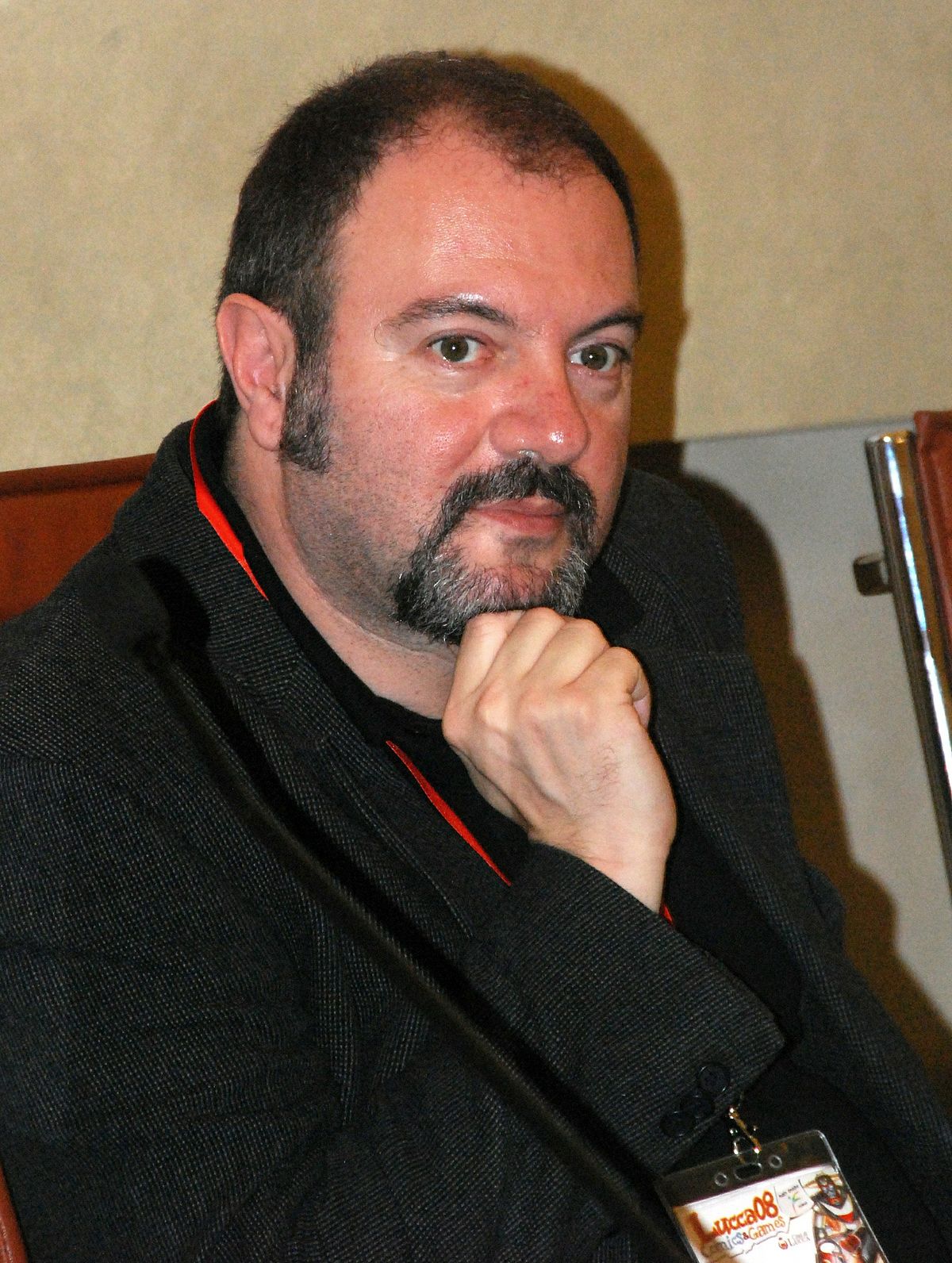
Carlo Lucarelli, an influential Italian author, television host, and screenwriter, was born on October 26, 1960, in Parma, Italy. He has become a prominent figure in Italian noir fiction and investigative journalism. Over the decades, Lucarelli has made a name for himself through his masterful blending of various literary genres, which has garnered him a dedicated following and widespread recognition among both readers and professionals in the entertainment industry. His works span novels, short stories, television series, and films, making him a versatile and dynamic figure in contemporary Italian culture.
Early Life and Education
Carlo Lucarelli was born into a family with a rich cultural and historical background. One of his ancestors is Antonio Meucci, the inventor of the telephone, which perhaps suggests that creativity and innovation run in his blood. Lucarelli grew up in a culturally vibrant environment, which undoubtedly influenced his later career choices. However, details about his early education are scarce. What is known is that he developed an early interest in writing and storytelling, which led him to pursue a career in literature and media.
Rise to Fame: The 1990s
Lucarelli’s career took off in the early 1990s when he became a key member of “Gruppo 13,” a collective of Italian crime writers. His early works were featured in various anthologies, and he quickly gained a reputation for his ability to craft intricate and engaging stories. One of his most significant early successes was the publication of the “Commissario De Luca” trilogy, which includes “Carta Bianca,” “L’estate Torbida,” and “Via delle Oche.” These novels, set in the turbulent period of Italian history during and after World War II, introduced readers to a complex and morally ambiguous detective, Commissario De Luca, and established Lucarelli as a leading voice in Italian crime fiction.
In 1993, Lucarelli won the prestigious “Premio Alberto Tedeschi” for his novel “Indagine non autorizzata,” solidifying his place in the Italian literary scene. Three years later, in 1996, he received the “Premio Mistery” for “Via delle Oche,” and his novel “L’isola dell’Angelo Caduto” was shortlisted for the “Premio Bancarella” in 2000. These accolades not only highlighted his talent but also broadened his audience, both in Italy and internationally.
Television Career: The Birth of a New Genre
Carlo Lucarelli’s transition from literature to television marked a significant milestone in his career. In the late 1990s, he began hosting “Mistero in Blu,” a RAI television program that was later renamed “Blu Notte.” The show, which delved into unsolved murder cases and other mysteries, was presented in a narrative style that resembled a noir thriller, blending investigative journalism with storytelling. Lucarelli’s approach to true crime on television was innovative, and it resonated with viewers, making “Blu Notte” a cultural phenomenon in Italy.
Lucarelli’s success on television was further cemented by the popularity of “Blu Notte,” which ran for several seasons. His distinctive style and the show’s compelling content made him a household name, and his work in television expanded his influence beyond the literary world. The show also led to Lucarelli being parodied by comedian Fabio De Luigi and the comedy trio Aldo, Giovanni, and Giacomo, which further demonstrates his impact on Italian popular culture.
Writing and Literary Contributions in the 2000s
The 2000s were a prolific period for Carlo Lucarelli. During this decade, he continued to write extensively, producing novels, short stories, and essays that were well-received both by critics and readers. Some of his most notable works from this period include “Laura di Rimini” (2001), “Il lato sinistro del cuore” (2003), and “L’ottava vibrazione” (2008). These works showcased Lucarelli’s ability to explore the darker aspects of human nature while maintaining a deep understanding of the historical and social contexts in which his stories are set.
In addition to his novels, Lucarelli contributed to the development of the television series “Il Commissario De Luca,” based on his earlier trilogy. The series, which aired in 2008, brought his character De Luca to life on screen, reaching a wider audience and further establishing Lucarelli’s reputation as a master of noir fiction.
Lucarelli also demonstrated his versatility by collaborating on various projects outside of traditional literature. He wrote screenplays for films, including adaptations of his own works, and even dabbled in music, singing with the post-punk band “Progetto K.” His creative output during this period was nothing short of extraordinary, and his ability to navigate different media with ease is a testament to his talent and adaptability.
The 2010s and Beyond: Continued Success and Evolution
The 2010s saw Carlo Lucarelli continuing to build on his earlier successes while exploring new creative avenues. He published several new novels, including “Intrigo Italiano” (2017) and “Peccato Mortale” (2018), both of which featured his iconic character Commissario De Luca. These works continued to explore the themes of morality, power, and corruption that have become hallmarks of Lucarelli’s writing.
In addition to his literary work, Lucarelli remained active in television. One of his most significant contributions during this period was the creation of the TV series “La Porta Rossa” in 2017. The show, which blends elements of crime fiction and the supernatural, was well-received and added another dimension to Lucarelli’s already impressive body of work.
Lucarelli also continued to collaborate with other writers and creators. Notably, he co-wrote “Acqua in Bocca” (2010) with Andrea Camilleri, another giant of Italian literature. This collaboration brought together two of Italy’s most beloved crime writers and resulted in a novel that was both engaging and critically acclaimed.
Impact and Legacy
Carlo Lucarelli’s impact on Italian literature and media is profound. Over the course of his career, he has redefined the crime fiction genre in Italy, introducing new narrative techniques and exploring themes that resonate with readers and viewers alike. His work has been translated into multiple languages, and his novels have been published in countries across Europe, including France, Germany, and Spain.
Lucarelli’s influence extends beyond his writing. As a television host and screenwriter, he has brought true crime and noir fiction to a broader audience, making these genres more accessible and popular in Italy. His work on shows like “Blu Notte” and “La Porta Rossa” has set new standards for crime television in Italy, blending storytelling with investigative journalism in a way that is both entertaining and thought-provoking.
Moreover, Lucarelli’s role as an educator cannot be overlooked. He has taught creative writing at the Scuola Holden in Turin, founded by Alessandro Baricco, and in other institutions, including the “Due Palazzi” prison in Padua. Through his teaching, Lucarelli has influenced a new generation of writers, passing on his knowledge and passion for storytelling.
Conclusion
Carlo Lucarelli is a multifaceted and influential figure in contemporary Italian culture. His contributions to literature, television, and education have left an indelible mark on the crime fiction genre and beyond. Lucarelli’s ability to blend genres, explore complex themes, and engage with his audience in various media has made him one of Italy’s most important cultural figures.
As Lucarelli continues to write and create, his influence will undoubtedly continue to grow, inspiring future generations of writers and creators. His work serves as a testament to the power of storytelling and the enduring appeal of crime fiction, making him a true icon of Italian literature and television.


