
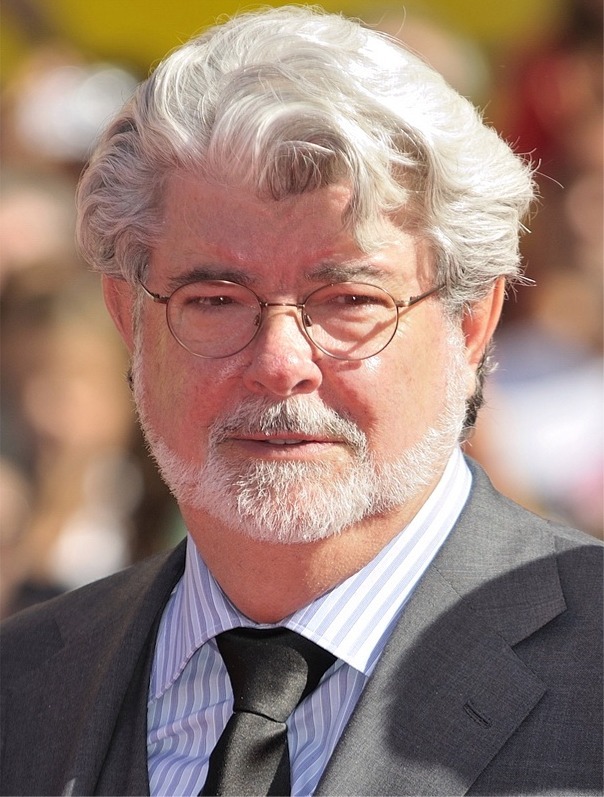
Introduction
George Lucas, born on May 14, 1944, in Modesto, California, is a legendary filmmaker, screenwriter, producer, and entrepreneur who has left an indelible mark on the world of cinema. Best known as the creator of the iconic Star Wars and Indiana Jones franchises, Lucas has been a pioneering force in the film industry, particularly in the realm of special effects, sound design, and digital filmmaking. His work has not only redefined the science fiction genre but has also revolutionized the way films are made and experienced by audiences worldwide. This article explores the life, achievements, and lasting impact of George Lucas, delving into the nuances of his career and the historical context that shaped his creative genius.
Early Life and Education
George Walton Lucas Jr. was born into a middle-class family in Modesto, California, where his father owned a stationery store. Lucas’s early years were spent on a walnut ranch, and he initially had little interest in academics or filmmaking. Instead, he was passionate about cars and racing, aspiring to become a professional race car driver. However, a near-fatal car accident at the age of 18 forced him to reconsider his future and pursue a different path.
Lucas enrolled at Modesto Junior College, where he developed an interest in photography and cinematography. This newfound passion led him to transfer to the University of Southern California (USC) School of Cinematic Arts, one of the most prestigious film schools in the country. At USC, Lucas honed his filmmaking skills and made several short films, including THX-1138: 4EB (1967), which won first prize at the National Student Film Festival. His success as a student filmmaker caught the attention of Warner Bros., earning him a scholarship to observe the production of films at the studio.
Early Career and Breakthrough with American Graffiti
After graduating from USC, Lucas co-founded the production company American Zoetrope with his friend and mentor, Francis Ford Coppola. The company was established to produce innovative, independent films outside the traditional Hollywood studio system. Lucas’s first feature-length film, THX 1138 (1971), was a dystopian science fiction film based on his earlier student short. Although it received mixed reviews and was not a commercial success, the film demonstrated Lucas’s potential as a visionary filmmaker.
Lucas’s breakthrough came in 1973 with the release of American Graffiti, a semi-autobiographical film set in the early 1960s that chronicled a group of teenagers on their last night of summer before heading off to college. The film was a critical and commercial success, earning five Academy Award nominations, including Best Picture, and winning the Golden Globe for Best Motion Picture – Musical or Comedy. American Graffiti showcased Lucas’s ability to capture the nostalgia of a bygone era while resonating with contemporary audiences, establishing him as a major talent in Hollywood.
The Creation of Star Wars and Rise to Fame
Following the success of American Graffiti, Lucas began working on what would become his magnum opus—Star Wars. Inspired by classic adventure serials like Flash Gordon and Buck Rogers, as well as the works of Akira Kurosawa and Joseph Campbell’s monomyth theory, Lucas set out to create a space opera that combined mythic storytelling with cutting-edge special effects.
Lucas faced numerous challenges in bringing Star Wars to the big screen. The project was initially met with skepticism by Hollywood studios, and Lucas struggled to secure financing. However, 20th Century Fox eventually agreed to fund the film, and production began in 1976. Lucas’s vision was ambitious, requiring the development of new special effects technologies, which led him to establish Industrial Light & Magic (ILM), a visual effects company that would go on to revolutionize the industry.
Star Wars, released in 1977, was an unprecedented success, becoming the highest-grossing film of its time and a cultural phenomenon. The film’s groundbreaking special effects, memorable characters, and epic storytelling captivated audiences worldwide, establishing Star Wars as a cornerstone of modern popular culture. The success of Star Wars allowed Lucas to finance two sequels, The Empire Strikes Back (1980) and Return of the Jedi (1983), both of which were also critically acclaimed and commercially successful.
Expansion of the Star Wars Universe and Technological Innovations
With the success of the original Star Wars trilogy, Lucas became one of the most powerful and influential figures in Hollywood. He used his newfound wealth and creative freedom to expand the Star Wars universe beyond the films. He licensed a wide range of merchandise, including toys, books, and video games, turning Star Wars into a multi-billion-dollar franchise. This pioneering approach to film merchandising set a new standard in the industry and demonstrated the potential for movies to generate revenue through ancillary products.
In addition to expanding the Star Wars universe, Lucas continued to push the boundaries of filmmaking technology. His company, Industrial Light & Magic, became the leading visual effects studio in the world, working on a wide range of films, including the Indiana Jones series, Jurassic Park (1993), and Terminator 2: Judgment Day (1991). Lucas also developed the THX sound system, which set new standards for audio quality in cinemas.
In the late 1990s, Lucas returned to the director’s chair to create a new Star Wars trilogy, known as the prequel trilogy. The first film, The Phantom Menace, was released in 1999, followed by Attack of the Clones (2002) and Revenge of the Sith (2005). While the prequels received mixed reviews from critics, they were commercially successful and introduced a new generation of fans to the Star Wars universe.
The Indiana Jones Series and Collaborations with Steven Spielberg
In addition to his work on Star Wars, George Lucas collaborated with director Steven Spielberg to create another iconic film franchise—the Indiana Jones series. The first film, Raiders of the Lost Ark (1981), introduced audiences to the adventurous archaeologist Indiana Jones, played by Harrison Ford. The film was a massive success, earning multiple Academy Awards and spawning three sequels: Indiana Jones and the Temple of Doom (1984), Indiana Jones and the Last Crusade (1989), and Indiana Jones and the Kingdom of the Crystal Skull (2008).
The Indiana Jones series combined Lucas’s love of classic adventure serials with Spielberg’s dynamic direction, resulting in some of the most beloved and influential films in cinematic history. The character of Indiana Jones became a cultural icon, and the series further solidified Lucas’s reputation as a master storyteller and visionary filmmaker.
Legacy and Impact on the Film Industry
George Lucas’s contributions to the film industry extend far beyond his work as a director and producer. His pioneering use of special effects, sound design, and digital technology has had a lasting impact on the way films are made. Industrial Light & Magic has become the industry leader in visual effects, and THX continues to set standards for audio quality in cinemas and home theaters.
Lucas’s commitment to pushing the boundaries of technology has inspired countless filmmakers and led to the development of new tools and techniques that have transformed the industry. His influence can be seen in the work of directors like James Cameron, Peter Jackson, and the Wachowskis, who have all built on the innovations that Lucas helped to pioneer.
In 2012, Lucas sold Lucasfilm to The Walt Disney Company for $4.05 billion, marking the end of his direct involvement with the Star Wars franchise. However, his legacy continues to be felt in the ongoing success of the franchise, which has expanded to include new films, television series, and other media. The Star Wars universe remains one of the most popular and influential franchises in entertainment history, a testament to Lucas’s vision and creativity.
Personal Life and Philanthropy
George Lucas’s success in the film industry has also allowed him to pursue his passion for education and philanthropy. In 1991, he established the George Lucas Educational Foundation, which is dedicated to promoting innovation in education. The foundation’s website, Edutopia, provides resources and tools for educators, focusing on project-based learning, social and emotional learning, and other progressive educational practices.
Lucas has also been a generous philanthropist, donating millions of dollars to various causes, including education, health, and the arts. In 2010, he signed the Giving Pledge, committing to donate at least half of his wealth to charitable causes. His philanthropic efforts reflect his belief in the power of education and creativity to change the world.
In his personal life, Lucas has been married twice. He married film editor Marcia Griffin in 1969, but the couple divorced in 1983. In 2013, Lucas married businesswoman Mellody Hobson, with whom he has a daughter, Everest. Lucas also has three adopted children from his first marriage.
Conclusion
George Lucas’s life and career are a testament to the power of imagination and innovation. From his early days as a student filmmaker to his creation of the Star Wars and Indiana Jones franchises, Lucas has consistently pushed the boundaries of what is possible in cinema. His pioneering use of technology, combined with his talent for storytelling, has made him one of the most influential figures in the history of film.
Lucas’s impact extends beyond the films he has created. His work has inspired a new generation of filmmakers and has helped to shape the modern entertainment landscape. Through his philanthropic efforts, he continues to make a difference in the world, using his success to promote education and creativity.
As we look back on George Lucas’s remarkable career, it is clear that his contributions to the film industry will be felt for generations to come. His legacy is not just the films he has made, but the way he has changed the way we experience movies and the world around us.


