
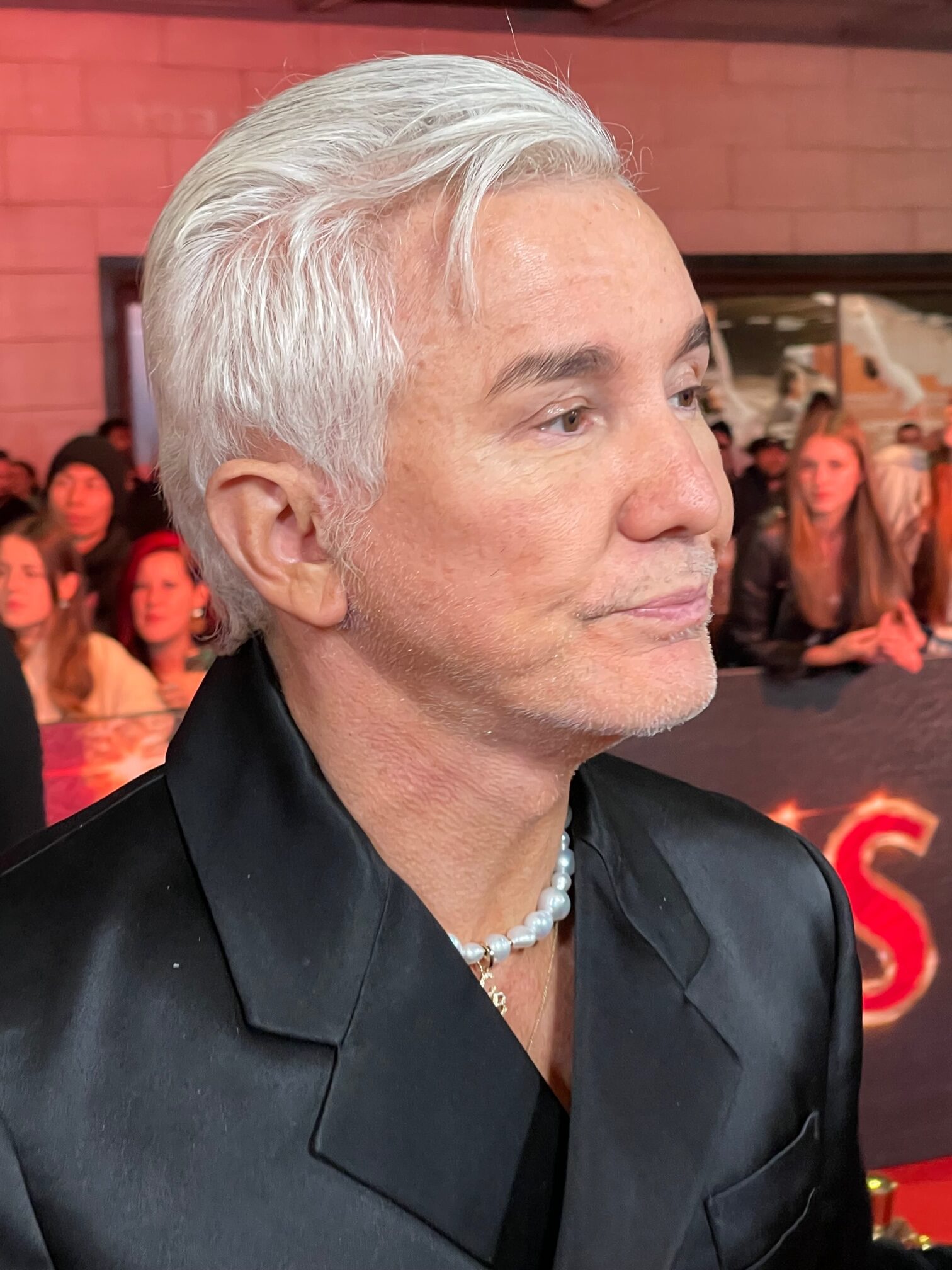
Baz Luhrmann, born Mark Anthony Luhrmann on September 17, 1962, in Sydney, Australia, is a renowned filmmaker, director, and producer known for his distinctive and flamboyant style. Over the course of his career, Luhrmann has become synonymous with visually striking, musically driven films that blend high drama with innovative storytelling techniques. His work has left a significant mark on modern cinema, earning him a reputation as one of the most visionary directors of his generation.
Early Life and Influences
Baz Luhrmann grew up in the small rural town of Herons Creek in New South Wales, Australia. His father managed a gas station, ran a pig farm, and also operated the local cinema, which exposed young Luhrmann to the world of film from an early age. This eclectic upbringing, surrounded by the Australian countryside and the cinematic stories he watched, significantly influenced his creative vision.
After his parents separated, Luhrmann moved to Sydney with his mother and siblings. It was in Sydney that he first began to cultivate his passion for the performing arts. As a teenager, Luhrmann developed an interest in acting and dreamed of a career on stage and screen. He enrolled at the prestigious National Institute of Dramatic Art (NIDA) in Sydney, where he began to explore the world of theater in greater depth. Although he initially pursued acting, Luhrmann soon discovered that his true passion lay in directing and producing.
Early Career and Breakthrough with Strictly Ballroom
Luhrmann’s first major success came with the stage production of Strictly Ballroom, a play he co-wrote and directed while still a student at NIDA. The play, which was inspired by his own experiences in competitive ballroom dancing, became a sensation in the Australian theater scene. In 1987, Luhrmann and his newly formed theater company, the Six Year Old Company, took Strictly Ballroom on a national tour, where it was met with widespread acclaim.
Encouraged by the success of the stage play, Luhrmann adapted Strictly Ballroom into a feature film in 1992. The film, which was his directorial debut, was a critical and commercial hit in Australia and internationally. Strictly Ballroom is a vibrant, offbeat romantic comedy that combines the traditional elements of dance films with Luhrmann’s unique visual style and love for exuberant storytelling. The film won several awards, including the Prix de la Jeunesse at the Cannes Film Festival, and firmly established Luhrmann as a director to watch.
The Red Curtain Trilogy: Romeo + Juliet, Moulin Rouge!, and Global Fame
Building on the success of Strictly Ballroom, Luhrmann began working on what would become known as the “Red Curtain Trilogy,” a series of films characterized by their theatrical style, vibrant colors, and integration of music as a narrative device. The first film in this trilogy was Romeo + Juliet (1996), an adaptation of William Shakespeare’s classic tragedy set in a modern, fictionalized city while retaining the original Elizabethan dialogue.
Romeo + Juliet starred Leonardo DiCaprio and Claire Danes as the titular characters, and its innovative approach to Shakespeare’s text, combined with a pulsating soundtrack, made it a cultural phenomenon. The film’s dynamic visuals, rapid editing, and contemporary music appealed to a younger generation and helped to revitalize Shakespearean cinema for a modern audience. Romeo + Juliet was both a critical and commercial success, earning several awards and solidifying Luhrmann’s reputation as a groundbreaking director.
In 2001, Luhrmann released the second film in the Red Curtain Trilogy, Moulin Rouge!, which became one of his most iconic works. Starring Nicole Kidman and Ewan McGregor, the film is a lavish musical set in the bohemian underworld of Paris at the turn of the 20th century. Moulin Rouge! is a visual and auditory feast, featuring a soundtrack that mashes up contemporary pop songs with the film’s narrative, creating a surreal and immersive experience. The film was a critical triumph, winning two Academy Awards for Best Art Direction and Best Costume Design, as well as three Golden Globe Awards, including Best Motion Picture – Musical or Comedy.
Moulin Rouge! further cemented Luhrmann’s status as a visionary filmmaker and brought him international acclaim. The film’s influence extended beyond the cinema, revitalizing the musical genre and inspiring a wave of musicals in the early 2000s. Luhrmann’s ability to blend different artistic elements into a cohesive and emotionally resonant story became his trademark, making him a unique voice in Hollywood.
Continued Success: Australia and The Great Gatsby
Following the success of the Red Curtain Trilogy, Luhrmann took on his most ambitious project yet with Australia (2008), a sweeping historical epic starring Nicole Kidman and Hugh Jackman. The film, set against the backdrop of World War II, is a grand, romantic saga that explores themes of love, identity, and national pride. Australia was a box office success, particularly in Australia, where it became one of the highest-grossing Australian films of all time. However, it received mixed reviews from critics, with some praising its scale and ambition, while others felt it lacked the emotional depth of Luhrmann’s earlier works.
In 2013, Luhrmann returned to the world of literary adaptations with The Great Gatsby, a film based on F. Scott Fitzgerald’s classic novel. Starring Leonardo DiCaprio as Jay Gatsby, Carey Mulligan as Daisy Buchanan, and Tobey Maguire as Nick Carraway, the film brought Luhrmann’s signature style to the Jazz Age of the 1920s. The Great Gatsby was a box office hit, grossing over $350 million worldwide, and won two Academy Awards for Best Production Design and Best Costume Design.
Luhrmann’s adaptation of The Great Gatsby was notable for its use of contemporary music, blending hip-hop, jazz, and pop to create a soundtrack that resonated with modern audiences while still capturing the spirit of the Roaring Twenties. The film’s extravagant visuals, combined with its thematic exploration of wealth, decadence, and the American Dream, made it a cultural touchstone and reinforced Luhrmann’s reputation as a director who could bring new life to classic stories.
Recent Work and the Legacy of Elvis
In 2022, Baz Luhrmann made a triumphant return to the big screen with Elvis, a biographical film about the life and career of the legendary musician Elvis Presley. The film stars Austin Butler as Elvis and Tom Hanks as his enigmatic manager, Colonel Tom Parker. Elvis explores the complex relationship between Presley and Parker, as well as the cultural and social impact of Presley’s music during the 1950s and 1960s.
Elvis was a critical and commercial success, praised for Butler’s transformative performance, Luhrmann’s direction, and its dynamic storytelling. The film’s success highlighted Luhrmann’s continued relevance in the film industry and his ability to captivate audiences with his bold, innovative approach to filmmaking. Elvis also underscored Luhrmann’s talent for blending music, history, and drama into a cohesive narrative that resonates with viewers on multiple levels.
Luhrmann’s Impact on Cinema
Baz Luhrmann’s impact on modern cinema is undeniable. His films are characterized by their bold use of color, dynamic camera work, and innovative integration of music and visuals. Luhrmann’s work often blurs the line between film and theater, creating a unique cinematic experience that is both immersive and emotionally engaging.
Luhrmann’s ability to take classic stories and present them in a way that feels fresh and relevant has made him a distinctive voice in the film industry. His films often explore themes of love, identity, and the power of art, all while pushing the boundaries of traditional filmmaking techniques. Luhrmann’s influence can be seen in the resurgence of musicals in contemporary cinema, as well as in the way modern filmmakers approach the adaptation of literary classics.
Conclusion
Baz Luhrmann is a visionary filmmaker whose work has left a lasting imprint on the world of cinema. From his early success with Strictly Ballroom to the global phenomenon of Moulin Rouge! and the cultural impact of Elvis, Luhrmann has consistently pushed the boundaries of storytelling and visual art. His films are a testament to the power of creativity and the enduring appeal of bold, innovative cinema.
As Luhrmann continues to explore new stories and themes, his work will undoubtedly inspire future generations of filmmakers and audiences alike. His ability to combine spectacle with substance, and to create films that are both visually stunning and emotionally resonant, ensures that Baz Luhrmann will remain a key figure in the world of cinema for years to come.


