
Introduction
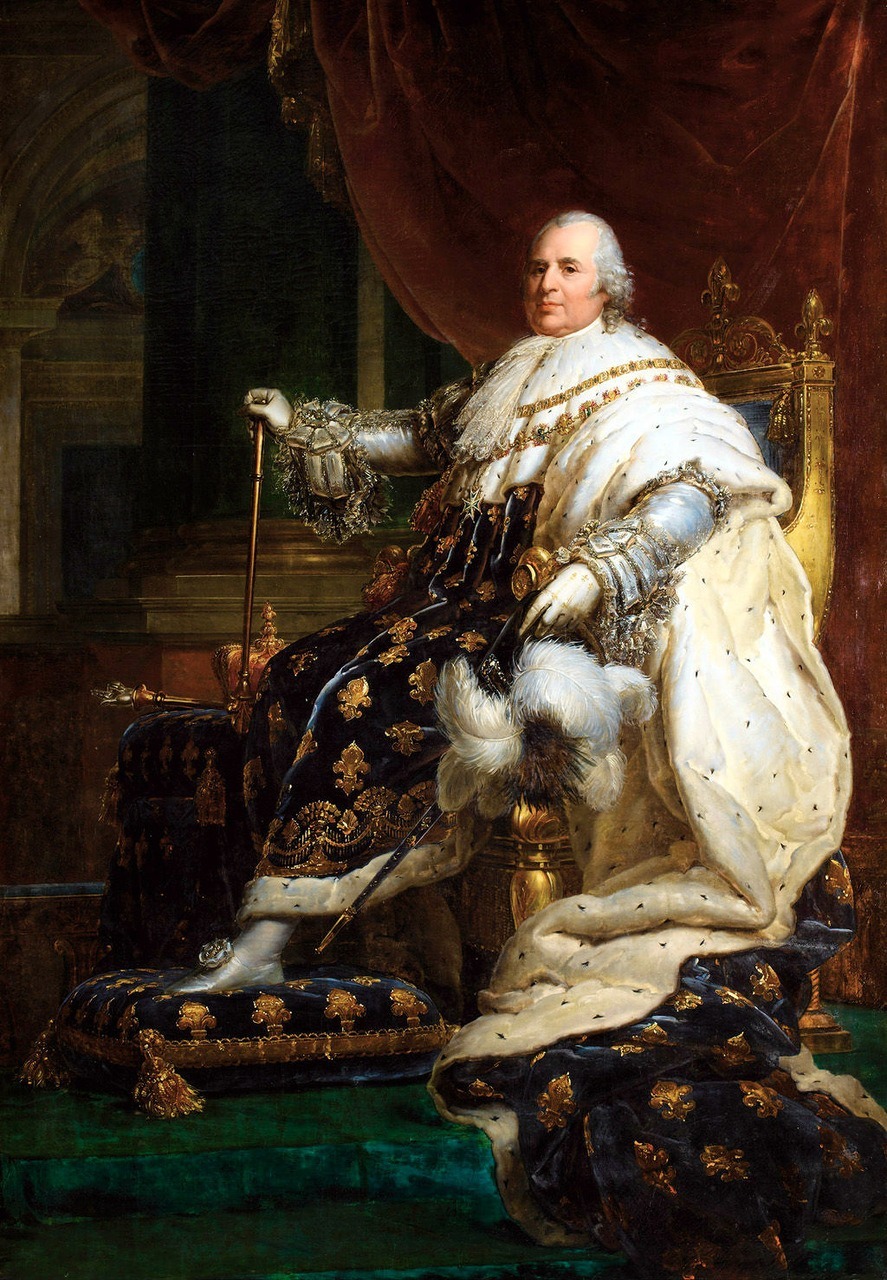
Louis XVIII, born on November 17, 1755, in Versailles, France, was the last French monarch to die while reigning. He played a pivotal role during one of the most tumultuous periods in French history, navigating the restoration of the Bourbon monarchy after the fall of Napoleon Bonaparte. His reign, often seen as a bridge between the old absolutist regime and modern constitutional monarchy, reflects the complex political dynamics of early 19th-century Europe. This article provides a comprehensive overview of Louis XVIII’s life, his rise to power, the challenges he faced, and the legacy he left behind.
Early Life and Education
Born Louis Stanislas Xavier de France, Louis XVIII was the fourth son of Louis Ferdinand, Dauphin of France, and Maria Josepha of Saxony. As the younger brother of Louis XVI, the future king of France, Louis XVIII was not originally expected to ascend the throne. However, his upbringing was typical of the French nobility, steeped in the traditions of the Ancien Régime.
Louis received an extensive education, focusing on languages, history, and political theory, which prepared him for the role of a statesman. His early life was marked by the privileges and responsibilities of royalty, and he was deeply ingrained with a sense of duty to his country and his dynasty. In 1771, he married Maria Giuseppina Luisa of Savoy, daughter of King Victor Amadeus III of Sardinia. However, the marriage was childless, which later became a point of concern for the Bourbon dynasty.
Exile and the French Revolution
The French Revolution, beginning in 1789, drastically altered the course of Louis XVIII’s life. As the revolution intensified, the royal family’s power eroded, leading to the execution of his brother, Louis XVI, in 1793. With the death of Louis XVI, Louis XVIII assumed the title of Regent and, after the death of his nephew, the ill-fated Louis XVII in 1795, he declared himself King of France, despite being in exile.
During the revolution, Louis fled France, first seeking refuge in the Austrian Netherlands, and later moving through various European courts, including those of Italy, Russia, and England. His years in exile were spent tirelessly working to restore the Bourbon monarchy, maintaining contact with royalist supporters and seeking the backing of European powers. However, the political landscape of Europe, dominated by the rise of Napoleon Bonaparte, made this an increasingly difficult task.
The Restoration and Reign
The fall of Napoleon in 1814 provided Louis XVIII with the long-awaited opportunity to return to France and reclaim the throne. On May 2, 1814, Louis entered Paris, greeted by a population weary of revolution and eager for stability. His return marked the beginning of the Bourbon Restoration, a period characterized by the reestablishment of the monarchy under a constitutional framework.
Louis XVIII was well aware of the delicate balance he needed to maintain. The years of revolution and Napoleonic rule had drastically changed French society, and the king recognized the need to reconcile the old royalist traditions with the new political realities. To this end, he granted the Charter of 1814, a constitutional document that established a bicameral legislature and guaranteed certain civil liberties while preserving the monarchy’s authority.
However, Louis XVIII’s reign was not without its challenges. The so-called “Hundred Days” in 1815, during which Napoleon escaped from exile on Elba and briefly regained power, forced Louis to flee to Ghent. After Napoleon’s final defeat at Waterloo, Louis returned to the throne, but the period highlighted the fragility of his rule and the deep divisions within French society.
Political Challenges and Governance
Louis XVIII’s reign was marked by a series of political struggles between the ultra-royalists, who sought to restore the old absolutist regime, and the liberals, who pushed for more extensive reforms and greater political freedoms. The king, who had spent years in exile observing the political dynamics of Europe, sought to position himself as a mediator between these opposing forces.
Initially, Louis XVIII adopted a moderate approach, attempting to reconcile the revolutionary changes with monarchical tradition. He retained many of Napoleon’s administrative reforms and sought to heal the wounds of the revolution by promoting a policy of national reconciliation. This approach was reflected in his choice of ministers, such as the moderate Duc de Richelieu and the more conservative Count of Villèle, who tried to balance the demands of both royalists and liberals.
The assassination of Charles Ferdinand, Duke of Berry, in 1820, marked a turning point in Louis XVIII’s reign. The Duke of Berry was the king’s nephew and the presumptive heir to the throne, and his death intensified the political tensions in France. Ultra-royalists, outraged by the assassination, pushed for a more reactionary government, leading to a period of repression known as the “White Terror.” This period saw the persecution of former revolutionaries, republicans, and Bonapartists, further deepening the divisions within French society.
Despite these challenges, Louis XVIII managed to maintain his throne, thanks in part to his diplomatic skills and his ability to navigate the complex political landscape of post-Napoleonic Europe. His reign saw the reintegration of France into the European diplomatic community, exemplified by the successful intervention in Spain in 1823, where French forces helped restore King Ferdinand VII to the throne, further cementing France’s role as a key player in the post-Napoleonic order.
Legacy and Impact
Louis XVIII died on September 16, 1824, in Paris at the age of 68, marking the end of an era. His reign is often viewed as a transitional period in French history, bridging the gap between the absolutist Ancien Régime and the modern constitutional monarchy. While his efforts to reconcile the old and new France were only partially successful, they set the stage for the subsequent developments in French political life.
One of the most significant aspects of Louis XVIII’s legacy is his role in the Bourbon Restoration. His reign demonstrated the possibility of a constitutional monarchy in France, even though it was fraught with tension and opposition. The Charter of 1814, while not fully democratic by modern standards, was a significant step towards constitutional government in France and influenced future political developments.
Louis XVIII’s attempts to moderate between the extremes of the political spectrum also highlight the challenges of governing a deeply divided nation. His reign exposed the limitations of monarchical power in a changing society and underscored the difficulties of achieving true national unity in the aftermath of revolution and war.
Conclusion
Louis XVIII’s life and reign were marked by significant challenges and achievements. As the last French monarch to die while reigning, he played a crucial role in the history of France, navigating the complex political landscape of the early 19th century and attempting to reconcile the legacy of the revolution with the restoration of the Bourbon monarchy. His efforts, though not without shortcomings, laid the groundwork for the future of constitutional government in France and left a lasting impact on the nation’s political and social development.
Louis XVIII’s legacy is a testament to the complexities of leadership during times of profound change. His ability to adapt to the evolving political realities of his time, while maintaining the dignity of the monarchy, ensures his place in history as a key figure in the transition from absolutism to constitutionalism in France.


