
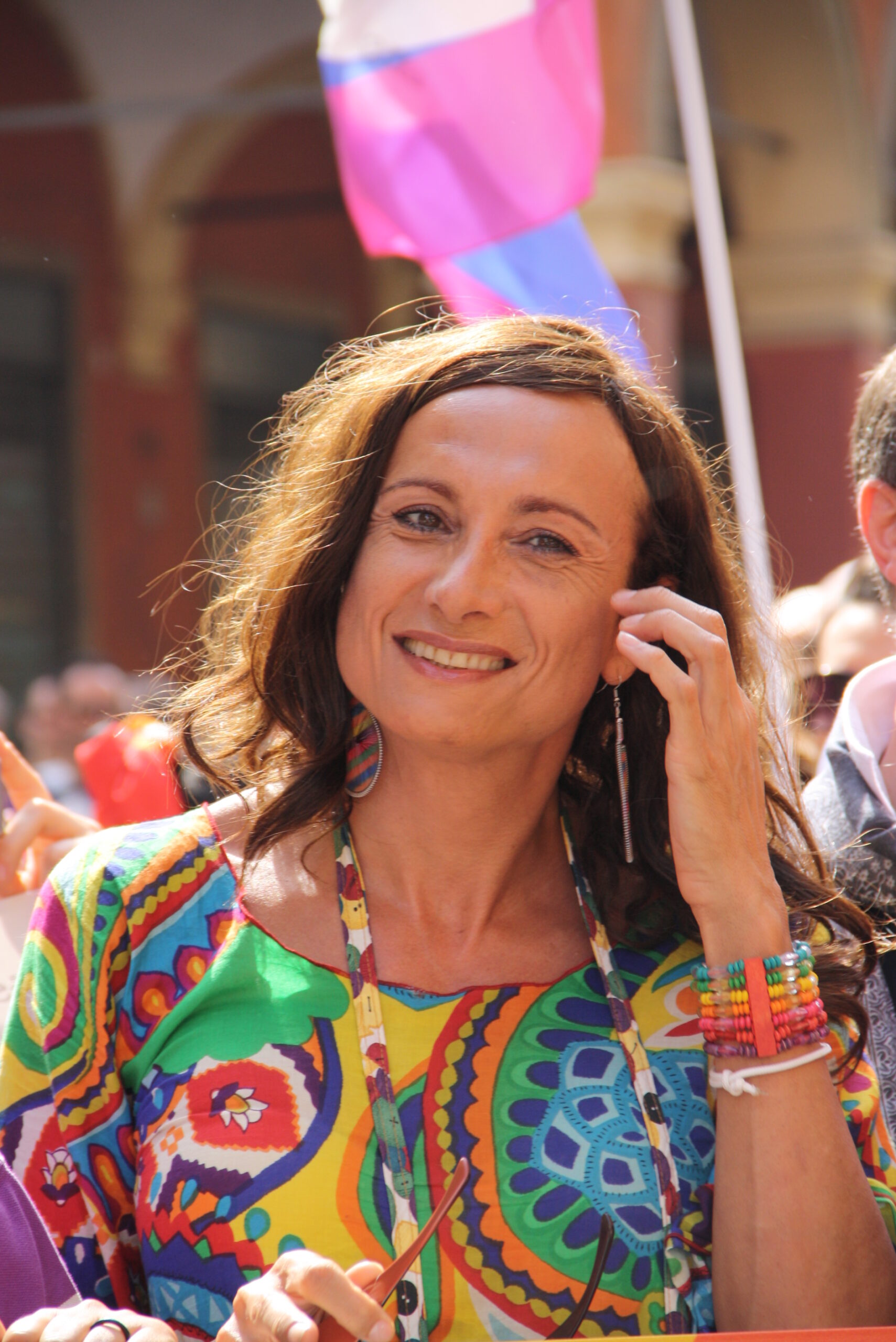
Vladimir Luxuria, born Wladimiro Guadagno on June 24, 1965, in Foggia, Italy, is a prominent figure in Italian entertainment, politics, and LGBTQ+ activism. Luxuria’s journey from the early days of her career in the arts to becoming a trailblazing transgender politician offers a compelling narrative of courage, resilience, and the relentless pursuit of equality.
Early Life and Background
Vladimir Luxuria was born in a conservative town in Southern Italy, where the cultural landscape was not particularly open to diversity, especially regarding gender identity and sexual orientation. From a young age, Luxuria felt a disconnect with the gender assigned to her at birth. However, rather than conforming to societal expectations, she embraced her identity, eventually adopting the pseudonym Vladimir Luxuria.
Luxuria’s early life was marked by a struggle to reconcile her identity with the rigid norms of the time. Despite these challenges, she pursued an education in foreign languages and literature, moving to Rome in 1985 to attend university. This move to the capital was a pivotal moment in her life, providing the freedom and opportunities to explore her identity and passions fully.
Entry into the Arts and Activism
In Rome, Luxuria immersed herself in the vibrant cultural and artistic scene. She began organizing events at the “Dirty Dixy Club,” the only transgressive nightclub in her hometown of Foggia, before transitioning to the Roman nightlife scene. By 1982, she was performing at venues like the “Taverna del Gufo,” a popular spot where many Italian artists, including the famed Renzo Arbore, started their careers.
Luxuria’s unique blend of artistry and activism began to take shape during this period. Her performances were not just entertainment but also a form of social commentary, using her platform to challenge the traditional views on gender and sexuality.
In 1991, she landed a role in Paolo Breccia’s film “Cena alle nove,” marking the beginning of her acting career. However, it was her involvement in LGBTQ+ activism that truly defined her public persona. Luxuria became deeply involved in the gay rights movement, eventually taking on the role of artistic director for “Muccassassina,” a weekly event organized by the Mario Mieli Homosexual Culture Circle. This event became one of the most notable alternative cultural manifestations in Italy, symbolizing a space of freedom and expression for the LGBTQ+ community.
Political Ascent
Vladimir Luxuria’s activism naturally led her to politics, where she made history by becoming one of the first openly transgender members of a national parliament in Europe. In the 2006 Italian general elections, Luxuria was elected to the Chamber of Deputies as a member of the Communist Refoundation Party. Her election was a significant milestone for the LGBTQ+ community in Italy and across the world.
During her time in parliament, Luxuria focused on promoting civil rights, particularly for LGBTQ+ individuals. Her legislative efforts were aimed at combating discrimination and advocating for equality, reflecting her lifelong commitment to these issues. Luxuria’s presence in parliament was both symbolic and practical, highlighting the need for more inclusive policies and representation.
However, Luxuria’s political career was not without its challenges. She faced significant opposition from conservative factions within Italy and was often the target of transphobic attacks. Despite these obstacles, Luxuria remained steadfast in her advocacy, using her platform to raise awareness about the issues facing the LGBTQ+ community.
Media Presence and Cultural Impact
Vladimir Luxuria’s influence extended beyond the political arena into the broader cultural landscape. She became a well-known figure on Italian television, frequently appearing on popular talk shows and reality programs. Luxuria was a regular guest on the Maurizio Costanzo Show, one of Italy’s most popular talk shows, and later on Markette, a late-night show hosted by Piero Chiambretti.
In 2008, Luxuria reached a new level of fame by participating in the reality show L’isola dei famosi, the Italian version of Celebrity Survivor, hosted by Simona Ventura. Luxuria’s participation in the show was groundbreaking, as she became the first transgender woman to win a major reality TV competition in Italy. Her victory was seen as a significant step forward for transgender visibility in mainstream media.
Luxuria continued to leverage her media presence to advocate for LGBTQ+ rights and to challenge societal norms around gender and sexuality. Her work in television and media was not just about entertainment; it was about changing perceptions and creating a more inclusive society.
Literary Contributions and Awards
In addition to her work in entertainment and politics, Vladimir Luxuria is also a respected author. Her first novel, Eldorado, published in 2011, is a poignant exploration of an elderly homosexual man’s life in Nazi Germany. The novel sheds light on the persecution of homosexuals during the Holocaust, a topic that is often overlooked in discussions about this dark period of history. Eldorado was well-received, earning Luxuria the Margutta Prize for literature in 2011.
Luxuria’s writing is characterized by its focus on marginalized voices and its exploration of themes related to identity, discrimination, and resilience. Her work as an author is another facet of her broader commitment to social justice and equality.
Later Career and Ongoing Activism
Throughout the 2010s, Vladimir Luxuria remained a prominent figure in Italian culture and politics. She continued to appear on television, both as a guest and a host. In 2011, she co-hosted the eighth season of L’isola dei famosi with Alba Parietti, and in 2012, she co-hosted the ninth season with Nicola Savino.
Luxuria also continued her activism, particularly within the LGBTQ+ community. She was the artistic director of the Gay Village in Rome, one of the largest LGBTQ+ events in Italy, where she played a key role in promoting LGBTQ+ culture and rights.
In 2014, Luxuria served as a commentator on the 13th edition of Grande Fratello, the Italian version of Big Brother. Her continued presence on popular television programs helped to maintain visibility for transgender issues in the public eye.
Luxuria’s advocacy work was recognized with several awards throughout her career. In 2011, she received the Gay Village Award for being the most beloved LGBT personality in Italy, further cementing her status as a leading figure in the community.
Legacy and Impact
Vladimir Luxuria’s life and career have had a profound impact on Italian society. She has been a pioneer in multiple fields, breaking barriers for transgender individuals in politics, media, and literature. Her work has not only raised awareness about LGBTQ+ issues but has also contributed to significant cultural shifts in how gender and sexuality are understood in Italy.
Luxuria’s legacy is one of courage and determination. She has faced considerable adversity throughout her life, from the challenges of growing up transgender in a conservative society to the obstacles she encountered in her political career. Despite these challenges, Luxuria has remained committed to her principles and has used her platform to advocate for a more inclusive and just society.
Conclusion
Vladimir Luxuria’s story is a testament to the power of resilience and the importance of representation. As one of the most prominent transgender figures in Italy, she has played a crucial role in advancing the rights and visibility of LGBTQ+ individuals. Her work in politics, media, and literature has had a lasting impact on Italian culture, and her legacy continues to inspire new generations of activists and artists.
As we look back on Vladimir Luxuria’s life and career, it is clear that she has not only made history but has also paved the way for a more inclusive future. Her contributions to Italian society serve as a reminder of the importance of diversity and the ongoing fight for equality.


