
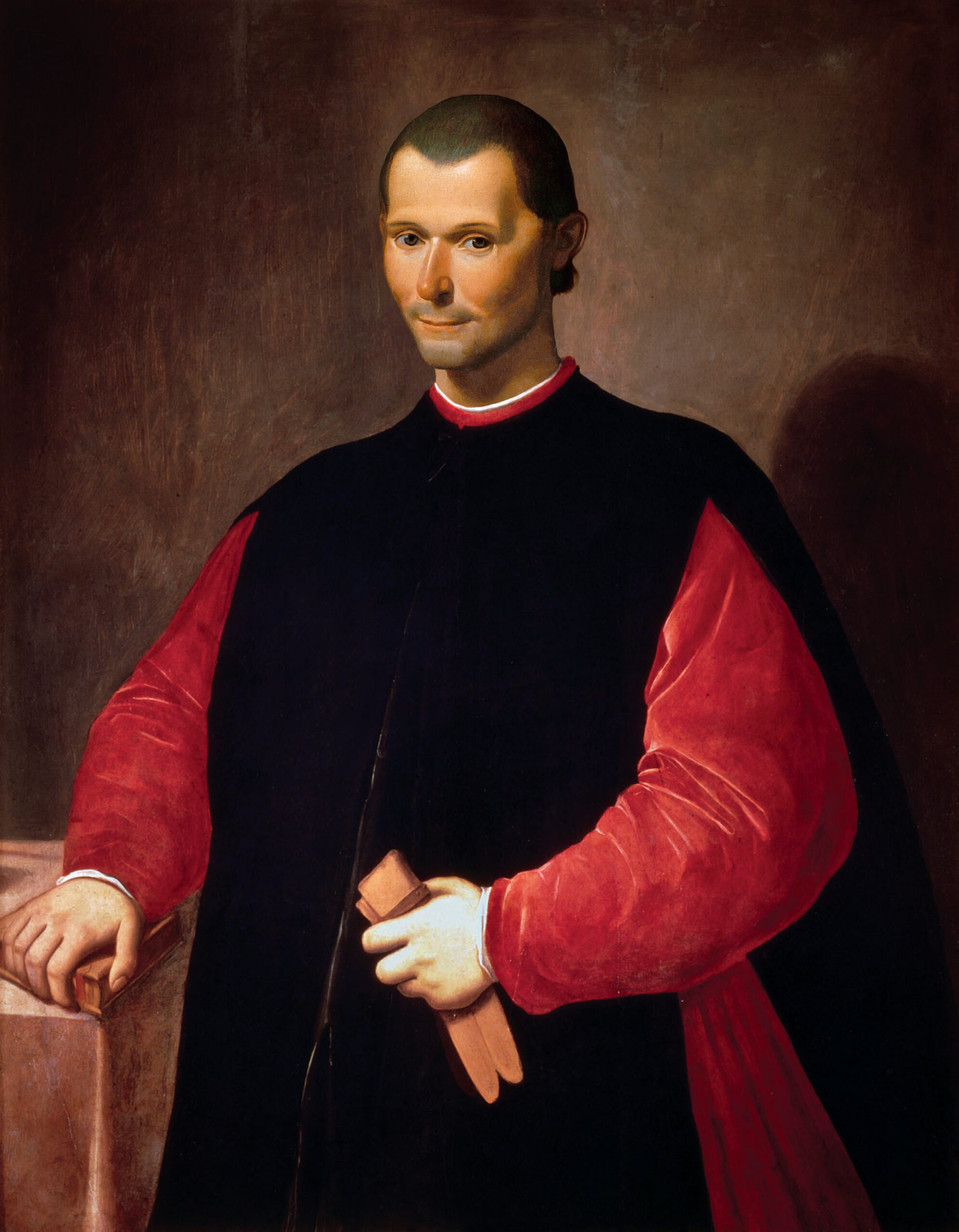
Niccolò Machiavelli, born on May 3, 1469, in Florence, Italy, is one of the most influential figures in political theory and history. His writings and ideas have profoundly shaped the understanding of political power, statecraft, and governance. Known primarily for his work “The Prince,” Machiavelli’s legacy extends far beyond this single text, influencing both historical and contemporary political thought. This article delves into the life, achievements, and lasting impact of Niccolò Machiavelli, exploring the nuances of his ideas and their relevance in today’s world.
Early Life and Education: Florence’s Intellectual Climate
Niccolò Machiavelli was born into a middle-class family in Florence, a city that was, during his lifetime, one of the cultural and intellectual hubs of the Renaissance. Florence was not only a center of art and culture but also of political experimentation and turbulence. This environment played a crucial role in shaping Machiavelli’s thinking and career.
From a young age, Machiavelli was immersed in the study of classical Latin literature, particularly the works of Roman historians and philosophers. This early education laid the groundwork for his later writings, which often drew on examples from Roman history to illustrate his political theories. Machiavelli’s exposure to the political life of Florence also began early, as he observed the workings of the Florentine Republic, which would later influence his ideas on governance and power.
Early Career: Diplomat and Political Advisor
Machiavelli’s official career began in 1498 when he was appointed as the head of the second chancery of the Florentine Republic after the fall of the Dominican friar Girolamo Savonarola. This position made him responsible for the Republic’s internal and external communications, giving him direct involvement in the political and diplomatic affairs of Florence.
One of Machiavelli’s primary duties was to serve as an envoy to various European courts. His diplomatic missions took him to France, the Holy Roman Empire, and the Papal States, among others. These experiences were invaluable to Machiavelli, providing him with firsthand insights into the political strategies and statecraft of different rulers. It was during these missions that he encountered figures like Cesare Borgia, whose ruthless pragmatism would later serve as a model for Machiavelli’s concept of the ideal ruler in “The Prince.”
The Fall of the Republic and Machiavelli’s Downfall
The political landscape of Florence was volatile, and in 1512, the Republic fell, leading to the restoration of the Medici family to power. This event marked a significant turning point in Machiavelli’s life. He was dismissed from his position, imprisoned, and subjected to torture under suspicion of conspiracy against the Medici. Although he was eventually released, Machiavelli found himself politically sidelined, with no prospects of returning to public service.
During this period of forced retirement, Machiavelli retreated to his estate in Sant’Andrea in Percussina, near Florence. It was here, away from the political intrigues of Florence, that he began writing the works that would secure his place in history.
“The Prince”: Realpolitik and the Separation of Politics from Morality
Machiavelli’s most famous work, “The Prince” (Il Principe), was written in 1513 but was not published until 1532, five years after his death. “The Prince” is a treatise on political power and the art of ruling, and it is often regarded as one of the first works of modern political philosophy. Unlike previous political theorists who emphasized the moral and ethical responsibilities of rulers, Machiavelli focused on the pragmatic and sometimes ruthless strategies necessary for maintaining power.
One of the most revolutionary aspects of “The Prince” is Machiavelli’s argument that politics should be viewed as separate from morality. He believed that the success of a ruler depended not on their adherence to conventional ethical norms but on their ability to adapt to the realities of power. According to Machiavelli, a successful ruler must be willing to act immorally if necessary, using deceit, manipulation, and even cruelty to achieve their goals.
This pragmatic approach to politics is encapsulated in Machiavelli’s famous assertion that it is better for a prince to be feared than loved if he cannot be both. He argued that fear is a more reliable means of maintaining control, as love is fickle and can be lost, whereas fear can be maintained through the threat of punishment.
Machiavelli’s Broader Political Philosophy: Republicanism and the Role of Virtù
While “The Prince” is often viewed as advocating for absolute power and autocracy, Machiavelli’s broader political philosophy is more complex. In other works, such as “Discourses on Livy” (Discorsi sopra la prima deca di Tito Livio), Machiavelli expressed a preference for republican forms of government. In these writings, he explored the importance of civic virtue (virtù) and the role of the people in maintaining a stable and just society.
Machiavelli’s concept of virtù is central to his political thought. Unlike the modern understanding of virtue as moral goodness, Machiavelli’s virtù refers to the qualities that enable a ruler or a state to achieve success and maintain power. These qualities include wisdom, strength, decisiveness, and the ability to adapt to changing circumstances. For Machiavelli, virtù was not just about individual qualities but also about the collective strength of a society.
In “Discourses on Livy,” Machiavelli argued that the success of the Roman Republic was due to its balanced constitution, which allowed for the participation of both the elites and the common people in governance. He believed that a mixed government, where power is shared among different social classes, was more likely to achieve stability and prevent tyranny.
Historical Context: The Renaissance and Political Turmoil
To fully understand Machiavelli’s ideas, it is essential to consider the historical context in which he lived. The late 15th and early 16th centuries were a time of significant political upheaval in Italy. The Italian city-states were constantly at war with each other, and foreign powers such as France, Spain, and the Holy Roman Empire frequently intervened in Italian affairs.
Machiavelli’s experiences during this tumultuous period profoundly influenced his political thinking. He witnessed firsthand the dangers of political instability and the failure of weak rulers to protect their states from external threats. These experiences led him to advocate for a strong, centralized authority capable of maintaining order and defending the state from both internal and external enemies.
Machiavelli’s emphasis on the importance of military strength and preparedness also reflects the realities of his time. He was a strong critic of the reliance on mercenary armies, which he believed were unreliable and prone to desertion. Instead, he advocated for the establishment of a citizen militia, arguing that a state should be defended by its own people, who have a personal stake in its survival.
Machiavelli’s Later Years and Legacy
After his release from prison in 1513, Machiavelli spent the remainder of his life attempting to regain favor with the Medici and secure a position in the government. Although he wrote several letters to influential figures and dedicated “The Prince” to Lorenzo de’ Medici, his efforts were largely unsuccessful. Machiavelli’s only significant appointment during this period was as a historiographer for the Medici, a role in which he wrote “The History of Florence” (Istorie Fiorentine).
Machiavelli died on June 21, 1527, at the age of 58. At the time of his death, he was not widely recognized as a significant political thinker. However, in the centuries that followed, his writings gained considerable attention and sparked intense debate among scholars, politicians, and philosophers.
The Controversy of Machiavellianism
Machiavelli’s name has become synonymous with political cunning and deceit, often associated with the phrase “the ends justify the means.” This interpretation, known as Machiavellianism, has been the subject of both criticism and admiration. While some view Machiavelli as a proponent of unscrupulous power politics, others argue that he was simply a realist who sought to describe the world as it is, rather than as it should be.
The term “Machiavellian” is often used pejoratively to describe individuals or actions that are perceived as manipulative, duplicitous, or ruthless. However, this interpretation overlooks the complexity of Machiavelli’s thought and his contributions to the understanding of power dynamics and statecraft.
Machiavelli’s emphasis on the separation of politics from morality and his focus on the practicalities of ruling were groundbreaking for his time. His ideas challenged the prevailing notions of governance, which were heavily influenced by Christian ethics and the belief in a divinely ordained order. Machiavelli’s willingness to question these established norms and explore the darker aspects of political power set him apart as a pioneering thinker.
Machiavelli’s Influence on Modern Political Thought
Machiavelli’s impact on political thought is profound and far-reaching. His works have been studied by generations of political leaders, scholars, and theorists, and his ideas continue to resonate in contemporary discussions of power and governance.
“The Prince” has been interpreted in various ways, from a guidebook for tyrants to a satirical critique of autocratic rule. Some scholars argue that Machiavelli intended the work as a warning against the dangers of unchecked power, while others believe he genuinely sought to provide practical advice for rulers.
Machiavelli’s influence extends beyond political philosophy into fields such as psychology, ethics, and organizational theory. The concept of Machiavellianism has been used in psychological studies to describe personality traits associated with manipulativeness and a lack of empathy. In organizational theory, Machiavelli’s insights into power dynamics and leadership strategies have been applied to the study of corporate governance and management.
Conclusion
Niccolò Machiavelli was a thinker ahead of his time, whose ideas continue to provoke debate and inspire reflection. His contributions to political theory, particularly his exploration of power, statecraft, and the role of morality in governance, have left a lasting legacy that transcends the historical context in which he lived. Machiavelli’s work challenges us to confront the complexities of political power and to consider the difficult choices that leaders must make to ensure the survival and success of their states.
As we navigate the challenges of the modern world, Machiavelli’s insights remain as relevant as ever. His recognition of the harsh realities of political life, and his willingness to engage with the darker aspects of human nature, offer valuable lessons for understanding the dynamics of power and the responsibilities of leadership. Whether viewed as a cynic or a realist, Niccolò Machiavelli’s contributions to political thought will continue to shape our understanding of governance and the pursuit of power for generations to come.


