
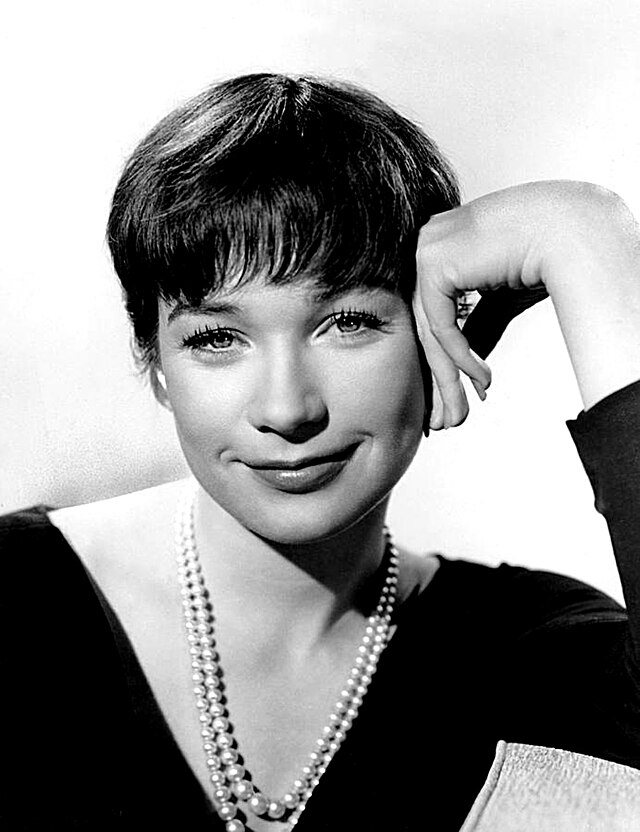
Shirley MacLaine, born Shirley MacLean Beaty on April 24, 1934, in Richmond, Virginia, is an iconic American actress whose career spans over six decades. With a multifaceted life marked by her accomplishments in film, theater, and literature, MacLaine has remained a significant cultural figure. Her journey from a young dancer to an Academy Award-winning actress and author reflects both the evolution of her career and the broader shifts in American entertainment.
Early Life and Career Beginnings
Shirley MacLaine’s artistic journey began early, influenced by her mother, an aspiring actress. At the tender age of two, MacLaine began taking dance lessons, and by four, she had already appeared in a commercial. This early exposure to performance set the stage for her future career.
After relocating to New York City at sixteen to pursue professional ballet, MacLaine made her Broadway debut in 1950. Her breakthrough came in 1954 when she replaced Carol Haney in the musical “The Pajama Game.” This role caught the attention of Hollywood, leading to a film contract with producer Hal Wallis and marking the start of her cinematic career.
Rise to Fame
MacLaine’s film debut came with Alfred Hitchcock’s “The Trouble with Harry” (1955), and she soon gained recognition for her role in “Artists and Models” (1955), alongside Jerry Lewis and Dean Martin. Her performance in “Can-Can” (1960) and Billy Wilder’s “The Apartment” (1960) solidified her reputation, earning her nominations for both the Academy Award and Golden Globe.
The pinnacle of MacLaine’s early career came with the film “Irma la Douce” (1963), where her portrayal of a Parisian courtesan brought her another Oscar nomination and a Golden Globe award. Her comedic timing and charismatic presence in these roles established her as one of Hollywood’s leading actresses.
Political and Social Engagement
Beyond her acting career, MacLaine was known for her activism and political involvement. In the 1960s, she began to focus more on feminist issues and political activism, reflecting her commitment to social change. This shift in focus led her to explore different avenues, including writing.
In 1970, she published her first autobiographical book, “Don’t Fall Off the Mountain,” which provided insights into her personal life and career. This was followed by various other writings that showcased her interest in spirituality and reincarnation, further diversifying her professional endeavors.
Notable Achievements in the 1970s and 1980s
The 1970s were marked by both personal and professional milestones for MacLaine. She received critical acclaim for her role in “The Turning Point” (1977), which highlighted her dramatic capabilities. Her performance in “Terms of Endearment” (1983) earned her the Academy Award for Best Actress, a testament to her enduring talent and versatility.
Throughout the 1980s, MacLaine continued to explore new roles and genres. She delved into spiritual and transcendental themes, aligning with her personal interests and studies. This period also saw her return to the spotlight with notable performances in “Madame Sousatzka” (1988) and “Steel Magnolias” (1989).
The 1990s and 2000s: Continued Success and Evolution
In the 1990s, MacLaine’s career continued to flourish. Her role in “The Americanization of Emily” (1964) and “The Evening Star” (1996) further demonstrated her adaptability and range as an actress. MacLaine also explored television with significant roles in “La vedova americana” (1993) and “Coco Chanel” (2008), showcasing her ability to transition between mediums.
The 2000s saw MacLaine participating in various film and television projects, including “Bewitched” (2005) and “In Her Shoes” (2005). Her performance in these films highlighted her continued relevance and ability to connect with contemporary audiences.
Spirituality and Personal Life
MacLaine’s interest in spirituality, mysticism, and reincarnation has been a defining feature of her later years. Her exploration of these themes influenced her writing and public persona, setting her apart from many of her peers. This spiritual journey, combined with her acting career, has contributed to her unique place in the entertainment industry.
Her personal life, including her marriage to Steve Parker and their daughter Sachi, has also been a significant part of her narrative. Despite the challenges of a high-profile career, MacLaine has managed to maintain a balance between her professional and personal life, reflecting a dedication to both her craft and her family.
Legacy and Impact
Shirley MacLaine’s legacy is multifaceted, encompassing her contributions to film, theater, and literature. Her roles in classic films, her involvement in social and political causes, and her exploration of spirituality have cemented her status as a cultural icon.
MacLaine’s career has not only been marked by her artistic achievements but also by her ability to adapt and evolve. Her impact on the entertainment industry and her contributions to discussions about spirituality and social change continue to resonate with audiences and critics alike.
Her story is a testament to the power of reinvention and the impact of personal passion on professional success. Shirley MacLaine remains a celebrated figure whose influence extends beyond the screen, reflecting a life lived with purpose and creativity.


