
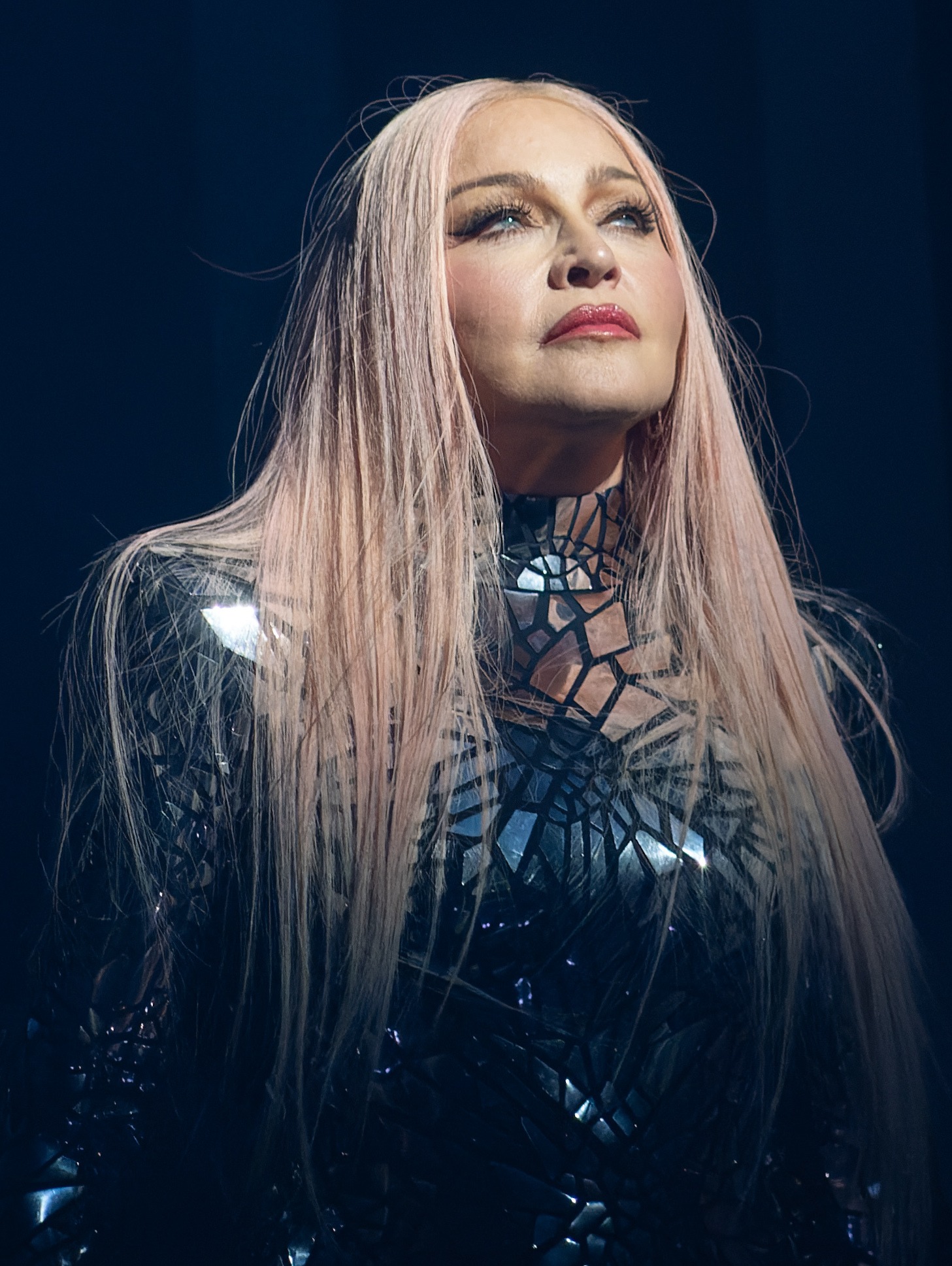
Madonna Louise Ciccone, born on August 16, 1958, in Bay City, Michigan, is an iconic figure in the world of music, entertainment, and popular culture. Known universally by her first name, Madonna has redefined the landscape of pop music, continually pushing boundaries and setting trends throughout her decades-long career. This article explores the life of Madonna, examining her rise to fame, significant life events, and her enduring impact on global culture.
Early Life and Formation of a Star
Madonna was born into a large family of Italian descent, the daughter of a Chrysler engineer and a homemaker. Tragically, her mother passed away when Madonna was just six years old, an event that would leave a profound impact on her life and work. Raised in a devout Catholic household, she attended Catholic schools where she first began to develop a sense of rebellion, which would later become a defining characteristic of her public persona.
From a young age, Madonna was drawn to the arts, particularly dance. Despite her father’s insistence on learning a musical instrument, Madonna’s passion for dance led her to pursue it as a career. She took her first dance lessons with the determination to become a star, a dream that she openly confessed she harbored from an early age.
In the late 1970s, Madonna moved to New York City with just $35 in her pocket, a bold move that would set the stage for her future success. She joined the Alvin Ailey American Dance Theater, where she honed her skills in modern dance. However, the realities of surviving in New York were harsh, and Madonna took on various odd jobs, including working as a waitress at Dunkin’ Donuts and posing nude for art classes. It was during this period that she began experimenting with music, learning to play the guitar and drums, and writing her own songs.
Breaking into the Music Scene
Madonna’s first foray into the music industry came with her collaboration with Dan Gilroy, a musician who taught her to play instruments and co-wrote several songs with her. Together, they formed the band Breakfast Club, where Madonna played drums and sang. However, it was her collaboration with college friend Steven Bray that would lead to her breakthrough. The duo created several dance tracks that caught the attention of DJ Mark Kamins, who helped Madonna secure a record deal with Sire Records.
In 1982, Madonna released her debut single, “Everybody,” which became an instant hit in New York’s dance clubs. This early success was followed by the release of her self-titled debut album, Madonna, in 1983. The album featured hits like “Holiday,” “Borderline,” and “Lucky Star,” establishing her as a rising star in the pop music scene.
However, it was her second album, Like a Virgin (1984), that catapulted Madonna to international fame. The title track, produced by Nile Rodgers, became a cultural phenomenon, thanks in part to its provocative lyrics and Madonna’s performance at the first-ever MTV Video Music Awards, where she rolled around the stage in a wedding dress. This bold display of sexuality and confidence marked the beginning of Madonna’s reputation as a controversial and trendsetting artist.
The 1980s: Madonna’s Reign as the Queen of Pop
The mid-1980s saw Madonna solidify her status as the “Queen of Pop.” Her image, a mix of punk-inspired fashion and glamor, became iconic, influencing fashion trends worldwide. The release of the single “Material Girl” in 1985 further cemented her image as a symbol of the consumerist culture of the decade, though Madonna later expressed ambivalence about the song’s message.
Madonna’s foray into acting also began in the 1980s, with her starring role in the film Desperately Seeking Susan (1985). The movie was a commercial success, and her performance was praised for its charm and wit. This success led to more acting roles, though her film career would prove to be a mixed bag over the years.
Madonna’s third album, True Blue (1986), continued her streak of success, producing hits like “Papa Don’t Preach,” “Open Your Heart,” and “La Isla Bonita.” The album’s themes of love, relationships, and social issues resonated with a wide audience, and it became one of the best-selling albums of the decade. The song “Papa Don’t Preach,” in particular, sparked controversy for its narrative about a young woman deciding to keep her baby despite societal pressures, showcasing Madonna’s ability to address provocative topics through her music.
By the end of the 1980s, Madonna had become one of the most successful and influential artists in the world. Her 1989 album Like a Prayer marked a significant artistic evolution, blending religious imagery with personal themes of love, loss, and self-discovery. The title track’s music video, which featured burning crosses and depictions of religious ecstasy, was met with both critical acclaim and condemnation, particularly from religious groups who accused Madonna of blasphemy. Despite the controversy, Like a Prayer is often regarded as one of Madonna’s most important works, reflecting her complex relationship with her Catholic upbringing and her fearless approach to challenging societal norms.
The 1990s: Reinvention and Controversy
As the 1990s began, Madonna continued to reinvent herself, both musically and visually. Her 1990 Blond Ambition World Tour was a theatrical extravaganza that set new standards for live performances. The tour was a commercial success, but it also attracted controversy due to its explicit content, particularly the simulated masturbation during the performance of “Like a Virgin.” Despite the backlash, the tour cemented Madonna’s reputation as a boundary-pushing artist who was unafraid to challenge taboos.
In 1992, Madonna further pushed the envelope with the release of her book Sex, a coffee-table book filled with provocative and explicit photographs. The book was a commercial success, selling over 1.5 million copies, but it also attracted widespread criticism for its explicit content. The release of the book was accompanied by her fifth studio album, Erotica, which explored themes of sexuality, desire, and power. While the album received mixed reviews, it produced several hit singles, including the title track, “Deeper and Deeper,” and “Rain.”
During this period, Madonna also launched her own entertainment company, Maverick, which would go on to sign successful artists like Alanis Morissette. Her business acumen, combined with her artistic talents, showcased her ability to navigate the commercial aspects of the entertainment industry effectively.
Madonna’s acting career in the 1990s was marked by both successes and failures. While films like Dick Tracy (1990) and A League of Their Own (1992) were well-received, her role in Body of Evidence (1993) was widely panned. However, her portrayal of Eva Perón in the 1996 film Evita was a critical and commercial success, earning her a Golden Globe Award for Best Actress. The role demonstrated Madonna’s ability to take on more serious acting roles and helped solidify her status as a multifaceted entertainer.
The 2000s: Continued Success and Evolution
The new millennium saw Madonna continue to evolve as an artist. Her 2000 album Music was a commercial success, blending electronic and dance music with introspective lyrics. The album’s title track became one of Madonna’s most iconic songs, reaching the top of the charts in several countries.
Madonna’s personal life also saw significant changes during this period. In 2000, she married British director Guy Ritchie in a lavish ceremony in Scotland. The couple had a son, Rocco, and Madonna also adopted a daughter, Mercy, from Malawi. While her marriage to Ritchie ended in divorce in 2008, it was during this time that Madonna began exploring new spiritual and cultural influences, including Kabbalah, which would inform much of her later work.
Madonna’s 2003 album American Life was a departure from her previous work, offering a critique of American culture and politics. The album received mixed reviews, with some praising its boldness and others criticizing its heavy-handedness. The music video for the title track, which featured Madonna throwing a grenade at a George W. Bush look-alike, was highly controversial and was ultimately pulled from airplay due to the sensitive political climate at the time.
In 2005, Madonna returned to her dance roots with the album Confessions on a Dance Floor, which was a commercial and critical success. The album’s lead single, “Hung Up,” became one of her most successful songs, and the accompanying Confessions Tour was one of the highest-grossing tours of the decade. The album marked a return to the upbeat, dance-oriented sound that had originally made her a star, while also incorporating modern electronic elements.
The 2010s and Beyond: A Legacy of Reinvention
As Madonna entered her sixth decade, she showed no signs of slowing down. Her 2012 album MDNA and the subsequent world tour demonstrated her continued relevance in the music industry. The tour was a commercial success, further establishing Madonna as one of the highest-grossing solo touring artists of all time.
In 2015, Madonna released Rebel Heart, an album that blended introspective ballads with upbeat dance tracks. The album received positive reviews, with critics praising Madonna’s ability to balance vulnerability with her trademark confidence. The Rebel Heart Tour that followed was another commercial success, reinforcing Madonna’s status as a pop icon.
Madonna’s influence extends beyond music and entertainment. She has been a vocal advocate for LGBTQ+ rights, women’s rights, and humanitarian causes. Her philanthropic efforts, particularly in Malawi, where she has established several educational and healthcare initiatives, have earned her recognition as a global humanitarian.
Madonna’s ability to continually reinvent herself has been key to her longevity in the entertainment industry. She has remained relevant by adapting to changing musical trends while staying true to her artistic vision. Her influence can be seen in countless artists who have followed in her footsteps, from Lady Gaga to Beyoncé, who have cited Madonna as a major inspiration.
Conclusion: The Enduring Impact of Madonna
Madonna’s career is a testament to her resilience, creativity, and unwavering commitment to pushing boundaries. From her early days as a struggling artist in New York to her current status as a global icon, Madonna has consistently defied expectations and redefined what it means to be a pop star. Her ability to navigate the complexities of fame, controversy, and artistic expression has made her a trailblazer in the music industry and beyond.
As we look back on Madonna’s life and career, it is clear that her impact on popular culture is unparalleled. She has not only shaped the sound and style of pop music but has also challenged societal norms and empowered generations of fans to embrace their individuality. Madonna’s legacy is one of reinvention, resilience, and relentless pursuit of artistic expression, ensuring that she will remain an enduring figure in the annals of music history.


