
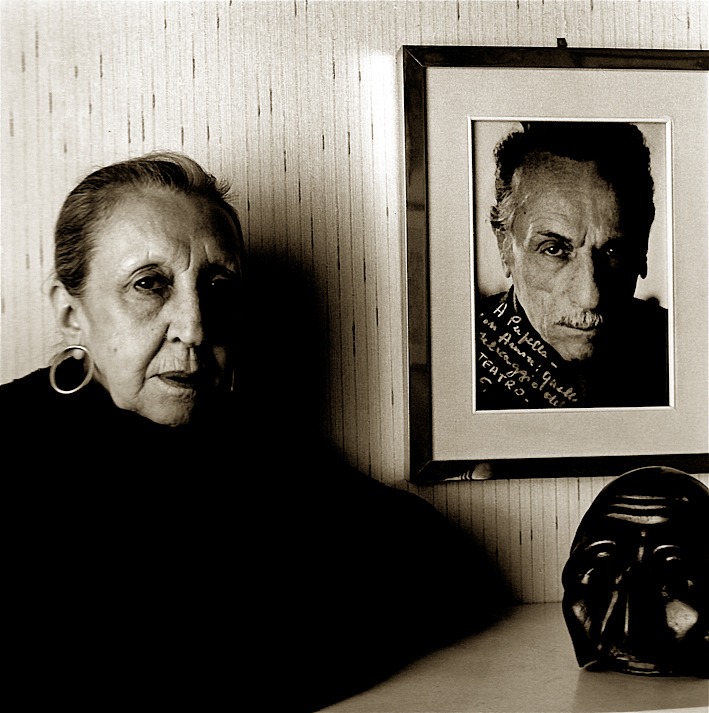
Pupella Maggio, born Giustina Maggio on April 24, 1910, in Naples, Italy, is a celebrated figure in Italian theater and cinema. Known as the “Queen of Neapolitan Theater,” her life was intricately woven with the rich cultural fabric of Naples, and her legacy continues to resonate in the world of performing arts. This article delves into the life of Pupella Maggio, exploring her journey from her early days in a family of performers to her rise as an iconic actress, offering insights into her career, her influence, and the historical context that shaped her life.
Early Life and Family Background
Pupella Maggio was born into a family steeped in the arts. Her father, Domenico “Mimì” Maggio, was a well-known theater actor, and her mother, Antonietta Gravante, was an actress and singer from a lineage of wealthy circus performers. Growing up in such an environment, Pupella was destined for the stage from birth. In fact, she was born in the dressing room of the Teatro Orfeo, a theater that no longer exists but remains significant in her life’s narrative.
Pupella was one of fifteen siblings, though not all survived, a harsh reality of the early 20th century. Her nickname, which stuck with her throughout her life, has an interesting origin. As the story goes, it was derived from the title of the first play she appeared in at just one year old: Una Pupa Movibile by Eduardo Scarpetta. Carried onto the stage by her father in a box and tied up like a doll to prevent her from slipping, she became known as “Pupatella,” which eventually evolved into Pupella.
The Early Years in Theater
Pupella’s career began within her father’s traveling theater company, where she performed alongside her six siblings, including Icario, Rosalia, Dante, Beniamino, Enzo, and Margherita. The life of a traveling performer was challenging, especially for a young girl who left school after just two years of elementary education. Pupella, however, was not just an actress; she was a multi-talented performer who could sing and dance, often partnering with her younger brother, Beniamino, on stage.
Despite the demands of life on the road, Pupella’s talent shone through, and her early experiences laid a solid foundation for her later successes. However, it wasn’t until she was in her forties that her career took a significant turn. After the dissolution of her father’s theater company, Pupella decided to step away from the erratic life of an itinerant actress. She briefly worked as a modiste in Rome and later as a laborer in a steel mill in Terni, where she also organized theater performances for workers during their leisure time.
Meeting Eduardo De Filippo: A Turning Point
Pupella’s passion for the theater never waned, and it wasn’t long before she returned to the stage. Her big break came in 1954 when she met Eduardo De Filippo, a giant of Italian theater. This meeting would prove to be a pivotal moment in her career. De Filippo was impressed by Pupella’s talent and invited her to join his company, where she performed in plays that he had inherited from his father, Eduardo Scarpetta.
The real breakthrough for Pupella came after the death of Titina De Filippo, Eduardo’s sister, who had been his leading actress. Eduardo began to cast Pupella in the major female roles in his plays, recognizing her extraordinary ability to convey deep emotion and complexity on stage. She played iconic characters such as Filumena Marturano and Donna Rosa Priore in Sabato, domenica e lunedì, a role that De Filippo wrote specifically for her. Her portrayal of these characters was so powerful that it earned her the prestigious Maschera D’Oro award. Perhaps one of her most memorable performances was as Concetta in Natale in casa Cupiello, a role that has become legendary in Italian theater.
The Split and Continued Collaboration
Despite their successful collaboration, the relationship between Pupella and Eduardo De Filippo was not without its difficulties. In 1960, the two parted ways due to personal and professional disagreements. De Filippo was known for his strict and demanding nature, which sometimes led to tensions within his company. However, their separation was short-lived, and Pupella soon rejoined De Filippo’s company, where she continued to deliver outstanding performances.
Throughout her career, Pupella demonstrated her versatility by taking on a wide range of roles, both in theater and cinema. Her work with directors like Giovanni Testori and Luchino Visconti further cemented her status as a leading actress of her time. Her performance in Testori’s L’Arialda, directed by Visconti, was a notable success and marked the beginning of a fruitful period where she alternated between stage and screen.
Transition to Cinema
Pupella Maggio’s transition from theater to cinema was seamless, thanks to her profound understanding of character and her ability to bring authenticity to every role she played. She worked with some of the most respected directors in Italian cinema, contributing to films that have since become classics.
Her filmography includes roles in La Ciociara (1960) by Vittorio De Sica, Le Quattro Giornate di Napoli (1962) by Nanni Loy, and Sperduti nel buio (1947) by Camillo Mastrocinque. In John Huston’s epic film The Bible (1966), she portrayed Noah’s wife, demonstrating her ability to take on roles in international productions as well.
One of her most famous film roles was in Federico Fellini’s Amarcord (1973), where she played the mother of the protagonist. Her performance in this film was widely praised for its warmth and depth, contributing to the movie’s success and cementing her place in the history of Italian cinema. Another significant role was in Giuseppe Tornatore’s Nuovo Cinema Paradiso (1988), a film that won the Academy Award for Best Foreign Language Film and became one of the most beloved Italian films worldwide.
Later Career and Legacy
In the later years of her career, Pupella Maggio continued to be a prominent figure in Italian theater. She collaborated with directors such as Giuseppe Patroni Griffi and Francesco Rosi, performing in plays like Napoli notte e giorni and In memoria di una signora amica. Her versatility and talent were evident in her work with Tonino Calenda, where she took on challenging roles in La madre by Bertolt Brecht, Aspettando Godot by Samuel Beckett, and Questa sera… Amleto.
One of the highlights of her later career was her ability to reunite with her surviving siblings, Rosalia and Beniamino, in the play Na sera… e Maggio, directed by Tonino Calenda in 1983. The play was a critical success, winning the Premio della Critica Teatrale as the best play of the year. Unfortunately, this period was marred by tragedy when Beniamino suffered a stroke backstage at the Teatro Biondo in Palermo and passed away.
Personal Life and Memoirs
Pupella Maggio’s personal life was as rich and varied as her professional one. In 1962, she married actor Luigi Dell’Isola, with whom she had a daughter, Maria. The marriage ended in divorce in 1976, but Pupella remained close to her daughter, with whom she spent much of her later life in the town of Todi, which she considered her second home.
In 1997, Pupella published her memoirs titled Poca luce in tanto spazio, a book that offers a glimpse into her personal life, her experiences in theater and cinema, and her reflections on a career that spanned more than six decades. The memoirs are also a collection of her poetry, showcasing another facet of her artistic expression.
Final Years and Death
Pupella Maggio’s health began to decline in her later years, but she continued to work in theater and cinema until she was nearly 90 years old. Her contributions to the arts were recognized by numerous awards and accolades, but perhaps her greatest legacy is the impact she had on the generations of actors and directors who followed her.
Pupella Maggio passed away on December 8, 1999, in Rome, leaving behind a rich legacy of performances that continue to inspire and captivate audiences. She is remembered not only for her talent and versatility but also for her deep love of the theater and her unwavering dedication to her craft.
Conclusion
Pupella Maggio’s life and career are a testament to the enduring power of the arts and the unique cultural heritage of Naples. From her early days in a traveling theater company to her iconic roles in both theater and film, Pupella’s contributions to the Italian performing arts are immeasurable. Her ability to convey the complexities of the human experience with authenticity and emotion has left an indelible mark on the world of theater and cinema.
As we reflect on Pupella Maggio’s legacy, it is clear that she was more than just an actress; she was a cultural icon who brought the rich traditions of Neapolitan theater to the world stage. Her story is one of resilience, passion, and a lifelong commitment to the arts, making her a true legend in Italian theater and cinema.


