
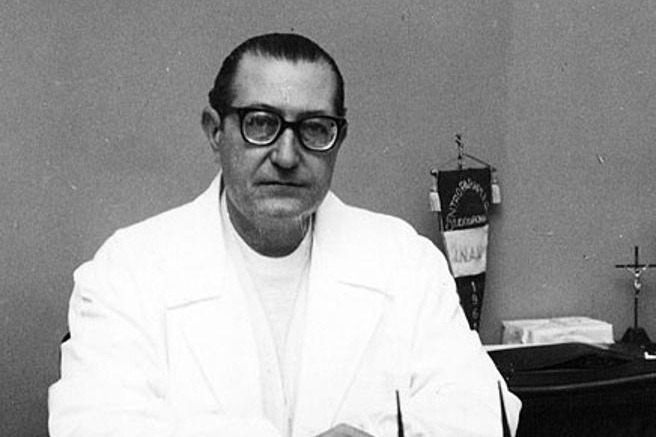
Antonio Maglio, a name that resonates with groundbreaking contributions to medical science and the Paralympic movement, was born on July 8, 1912, in Cairo, Egypt. His life, deeply rooted in the principles of rehabilitation and empowerment, left an indelible mark on the world, particularly through his pioneering efforts in the creation of the Paralympic Games. This article explores the life, achievements, and enduring legacy of Antonio Maglio, a visionary who forever changed the landscape for people with disabilities.
Early Life and Education: Foundations of a Visionary
Born in Cairo, Antonio Maglio’s early years were marked by a rich cultural environment, which may have played a role in shaping his inclusive worldview. He moved to Italy for his education, where he enrolled at the University of Bari. In 1935, Maglio graduated with a degree in Medicine and Surgery, a field in which he would go on to make significant contributions, particularly in the realm of rehabilitation for individuals with disabilities.
From the outset, Maglio displayed an intense interest in the rehabilitation of people with disabilities, a field that was still in its infancy at the time. His early work involved developing new therapies aimed at improving the quality of life for individuals who had suffered spinal cord injuries. Maglio’s passion for this field was not just about medical treatment; he believed in the holistic recovery of individuals, including their reintegration into society.
The Birth of Adaptive Sports: A Revolutionary Approach
The late 1940s and 1950s were a transformative period in the field of rehabilitation, particularly for those affected by spinal cord injuries. Traditional approaches often left patients isolated, with little hope of returning to a fulfilling life. Maglio, however, had a different vision. He believed that sport could play a crucial role in the rehabilitation process, providing not only physical benefits but also psychological and social advantages.
Maglio’s work gained significant momentum when he became the medical consultant for the Italian National Institute for Insurance against Accidents at Work (INAIL). In 1957, he was appointed director of the newly established Centro Paraplegici “Villa Marina” in Ostia, a suburb of Rome. This center became a hub of innovation, where Maglio could implement and refine his ideas on rehabilitation through sport.
Drawing inspiration from Sir Ludwig Guttmann, a neurologist who had introduced the concept of sport for people with spinal cord injuries in the UK, Maglio began incorporating sports such as archery, swimming, and basketball into his rehabilitation programs. The immediate results were promising: patients experienced reduced mortality rates and improved mental health, including a significant decrease in depression.
Maglio’s efforts were groundbreaking, especially in a time when society largely marginalized people with disabilities. His work was not just about physical healing but also about restoring dignity and purpose to individuals who had suffered life-altering injuries.
The Stoke Mandeville Connection: Building an International Movement
Antonio Maglio’s contributions to the field of rehabilitation and adaptive sports gained international recognition when he began participating in the Stoke Mandeville Games in England. These games, organized by Sir Ludwig Guttmann, were one of the first major international sporting events for wheelchair athletes. In 1956, Maglio started taking his patients from Villa Marina to compete in these games, marking the beginning of Italy’s involvement in what would later become the Paralympic movement.
Maglio’s vision extended beyond national borders. He understood the power of international collaboration and was determined to bring the Stoke Mandeville Games to Italy. In 1958, he persuaded Guttmann to allow Rome to host the 1960 edition of the games, coinciding with the XVII Olympic Games. This was a strategic move, as it allowed the games for athletes with disabilities to take place in the same venues as the Olympic athletes, utilizing the same facilities and receiving similar media attention.
The 1960 Rome Games were a monumental success and are now considered the first official Paralympic Games. Held at the Tre Fontane Sports Complex and the swimming pools of the Foro Italico, these games featured 400 athletes from 23 countries, competing in eight different sports. This event not only marked the beginning of the Paralympic Games as we know them today but also solidified Maglio’s legacy as a pioneer of adaptive sports.
The Legacy of the Paralympic Movement: A New Era of Inclusivity
The success of the 1960 Paralympic Games in Rome was a watershed moment in the history of sports and rehabilitation. It demonstrated the potential of sports as a powerful tool for social integration and empowerment for people with disabilities. Antonio Maglio’s vision had come to fruition, and the world was beginning to recognize the importance of inclusive sports.
Following the success of the Rome Games, Maglio continued to advocate for the rights and recognition of athletes with disabilities. Throughout the 1960s and 1970s, he remained deeply involved in the Paralympic movement, working tirelessly to promote and organize more events, both in Italy and internationally. His efforts were instrumental in the growth of the Paralympic Games, which evolved from a small competition in Stoke Mandeville to one of the largest sporting events in the world.
Maglio’s work extended beyond sports; he was a staunch advocate for the rights of people with disabilities, pushing for greater accessibility and inclusion in all areas of society. His contributions laid the foundation for future generations of Paralympians and set the stage for the development of adaptive sports as a recognized and respected field.
The Final Years: Continuing the Mission
Antonio Maglio’s dedication to his mission continued well into the 1980s. Despite the challenges and resistance he faced, he remained committed to promoting the Paralympic movement and ensuring that people with disabilities had access to the resources and opportunities they needed to lead fulfilling lives. His tireless efforts made a lasting impact on countless individuals and communities.
Maglio passed away in Rome on January 7, 1988, at the age of 75. His death marked the end of an era, but his legacy lived on. The principles he championed—dignity, inclusivity, and empowerment—continue to guide the Paralympic movement and the broader field of rehabilitation.
In 2022, the Italian national broadcaster RAI honored Antonio Maglio’s legacy with a biographical drama titled “A Muso Duro” (With a Hard Face). The film, in which the role of Maglio was played by actor Flavio Insinna, brought Maglio’s story to a new generation, highlighting his contributions to sports, medicine, and social justice.
Historical Context: The Evolution of Disability Rights and Sports
To fully appreciate Antonio Maglio’s contributions, it’s essential to understand the historical context in which he worked. The mid-20th century was a time of significant social change, particularly in the wake of World War II. The war had left many people with disabilities, both civilians and veterans, and there was a growing recognition of the need for better rehabilitation services and support.
In many parts of the world, including Italy, people with disabilities were often marginalized and excluded from mainstream society. Rehabilitation services were limited, and there was little emphasis on social integration or improving the quality of life for people with disabilities. In this context, Maglio’s work was revolutionary. He not only developed new therapeutic techniques but also challenged societal norms and attitudes towards disability.
Maglio’s introduction of sports as a rehabilitation tool was part of a broader movement towards recognizing the rights and potential of people with disabilities. This movement was gaining momentum globally, with figures like Sir Ludwig Guttmann in the UK and others advocating for more inclusive approaches to rehabilitation and social integration.
The success of the 1960 Rome Paralympic Games was a significant milestone in this movement, demonstrating that athletes with disabilities could compete at the highest levels and that sports could be a powerful tool for social change. The games helped shift public perceptions of disability and laid the groundwork for the development of more inclusive policies and practices in many countries.
The Impact of Antonio Maglio’s Work: A Global Perspective
Antonio Maglio’s influence extends far beyond Italy. His pioneering work in adaptive sports and rehabilitation has had a lasting impact on the global Paralympic movement. Today, the Paralympic Games are one of the largest sporting events in the world, with thousands of athletes from around the globe competing in a wide range of sports.
Maglio’s emphasis on the importance of sports in rehabilitation has also been adopted by many countries as a core component of their disability services. His ideas have inspired countless programs and initiatives aimed at improving the quality of life for people with disabilities, and his legacy continues to influence the field of rehabilitation medicine.
In addition to his contributions to the Paralympic movement, Maglio’s work has had a broader impact on disability rights. His advocacy for greater inclusion and accessibility has helped pave the way for more progressive policies and practices, both in Italy and internationally. Today, people with disabilities have more opportunities than ever before to participate in sports, education, employment, and other areas of society, thanks in part to the groundwork laid by pioneers like Antonio Maglio.
Conclusion: The Enduring Legacy of Antonio Maglio
Antonio Maglio’s life and work are a testament to the power of vision, dedication, and compassion. His pioneering efforts in the field of rehabilitation and adaptive sports have had a profound and lasting impact, not only on the individuals he helped but also on the world as a whole. The Paralympic Games, which began as a small event in Rome in 1960, have grown into a global movement that continues to inspire millions of people.
Maglio’s legacy is not just about sports; it’s about the broader principles of dignity, inclusion, and empowerment. His work has helped to change the way society views disability, and his contributions continue to resonate today. As we look to the future, Antonio Maglio’s story serves as a reminder of the importance of fighting for equality and the belief that everyone, regardless of their abilities, deserves the opportunity to reach their full potential.


